Prediction markets were supposed to be the "clean" alternative to the murky world of political polling. They promised a cold, hard look at reality by forcing participants to put their money where their mouths were. But that logic collapses when the people being bet on start holding the tickets.
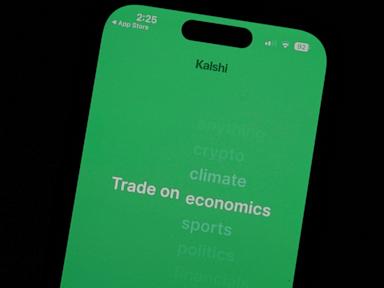
On Wednesday, the U.S.-regulated exchange Kalshi announced it had fined and suspended three congressional candidates for wagering on the outcome of their own races. The names—Mark Moran (Virginia), Ezekiel Enriquez (Texas), and Matt Klein (Minnesota)—represent a bipartisan cross-section of a new, uncomfortable reality: the convergence of political ambition and high-stakes speculative "event contracts."
While the dollar amounts were small, the implications are massive. This is not just a story about three men breaking a user agreement. It is the first major crack in the regulatory dam holding back a flood of "political insider trading" that could fundamentally alter the incentive structures of American campaigns.
The Fine Print of the Fix
Kalshi, which fought a grueling legal battle against the Commodity Futures Trading Commission (CFTC) to keep election markets legal, is now in the unenviable position of having to police its own gold mine. The exchange recently rolled out specific prohibitions against candidates, campaign staffers, and their immediate families trading in markets where they have "direct influence."
The enforcement actions taken this week were tiered based on cooperation, revealing a glimpse into how these platforms intend to manage their optics:
- Matt Klein (D-MN): Fined $539.85. Klein, a state senator, claimed "curiosity" as his motive.
- Ezekiel Enriquez (R-TX): Fined $784.20. Enriquez participated in the Republican primary for Texas’s 21st District.
- Mark Moran (I-VA): Fined $6,229.30. Moran, an investment banker turned independent Senate candidate, received the heaviest penalty after refusing to sign a settlement or post a company-scripted apology.
All three have been banned from the platform for five years. But to critics like U.S. Representative Mike Levin, these penalties are nothing more than a "parking ticket." When a candidate can influence their own odds by making a strategic announcement, a withdrawal, or a sudden spending spree, the potential for market manipulation far outweighs a four-digit fine.
The Moral Hazard of Performance Betting
Mark Moran’s defiance offers the most chilling insight into this new landscape. He didn't just place a bet; he treated the violation as a campaign tactic. Moran claims he traded on himself specifically to trigger the enforcement mechanism and highlight what he calls the "unjust sway" these platforms hold over the democratic process.
This is the feedback loop that market purists ignore. In a traditional commodity market, a farmer cannot "decide" to make it rain to increase the value of a corn contract. In a prediction market, a candidate can decide to drop out of a race, shift their platform, or manufacture a scandal. If they have a short position on themselves—or if a surrogate does—the financial incentive to fail becomes a viable business model.
We are seeing the birth of the "performance bet," where the act of wagering is itself a form of political theater or, worse, a way to signal viability to donors. If a candidate’s "price" on Kalshi or Polymarket spikes, it creates a sense of inevitability that traditional media often picks up and amplifies, regardless of the underlying polling data.
The CFTC’s Regret
The current regulatory environment is a patchwork of "friendly" oversight and lingering litigation. Michael Selig, the current chair of the CFTC, has been viewed as more permissive toward these markets than his predecessors. However, even a permissive regulator cannot ignore the "public interest" mandate that prohibits contracts involving illegal activity or those that are contrary to the integrity of the system.
The core problem is attribution. While Kalshi requires identity verification, platforms like the blockchain-based Polymarket operate in a more decentralized, pseudonymous environment. If a candidate uses a proxy or a "whale" supporter to move the needle on their own race, the paper trail becomes nearly impossible to follow.
The Mechanism of Manipulation
How exactly does a candidate-trader "cheat"? It isn't always about betting on a win. Consider these hypothetical scenarios:
- The Exit Hedge: A candidate realizes their campaign is bankrupt. They bet heavily against themselves on a prediction market, then announce their withdrawal, netting a profit that exceeds their remaining campaign debt.
- The Momentum Fake: A fringe candidate’s supporters buy up "Yes" contracts to artificially inflate their perceived win probability, hoping to bait a mainstream news outlet into reporting them as a "rising dark horse."
- The Insider Leak: A staffer knows internal polling showing a 10-point drop before it hits the press. They dump their "Yes" contracts at the current high price, effectively front-running the public's realization of the candidate's decline.
The Seventh State and the Future of Enforcement
State governments are moving faster than the feds. Illinois Governor JB Pritzker recently led a move to make Illinois the seventh state to bar state employees from using non-public information to trade on prediction markets. This creates a messy jurisdictional overlap where an action might be legal under federal commodity law but a crime under state ethics codes.
Kalshi’s decision to go public with these three names is a survival strategy. By self-policing, they are attempting to prove to Congress that they don't need the "nuclear option" of a total ban. They want to be seen as a mature financial exchange, not a digital casino for political insiders.
Yet, as long as the rewards for winning an election—or effectively sabotaging one—remain in the millions, a few hundred dollars in fines will never be a deterrent. We have entered an era where the ballot box and the betting slip are becoming one and the same. If the "wisdom of the crowd" is actually just the "manipulation of the participant," then the very foundation of the prediction market isn't just flawed—it's dangerous.
The five-year ban for Moran, Enriquez, and Klein is a symbolic gesture. The real test will come when a top-tier presidential or gubernatorial candidate is caught in the same web. At that point, a "parking ticket" won't suffice, and the exchange itself might find its license to operate suddenly revoked by a public that finally realizes the game is rigged.