The Beijing Ask
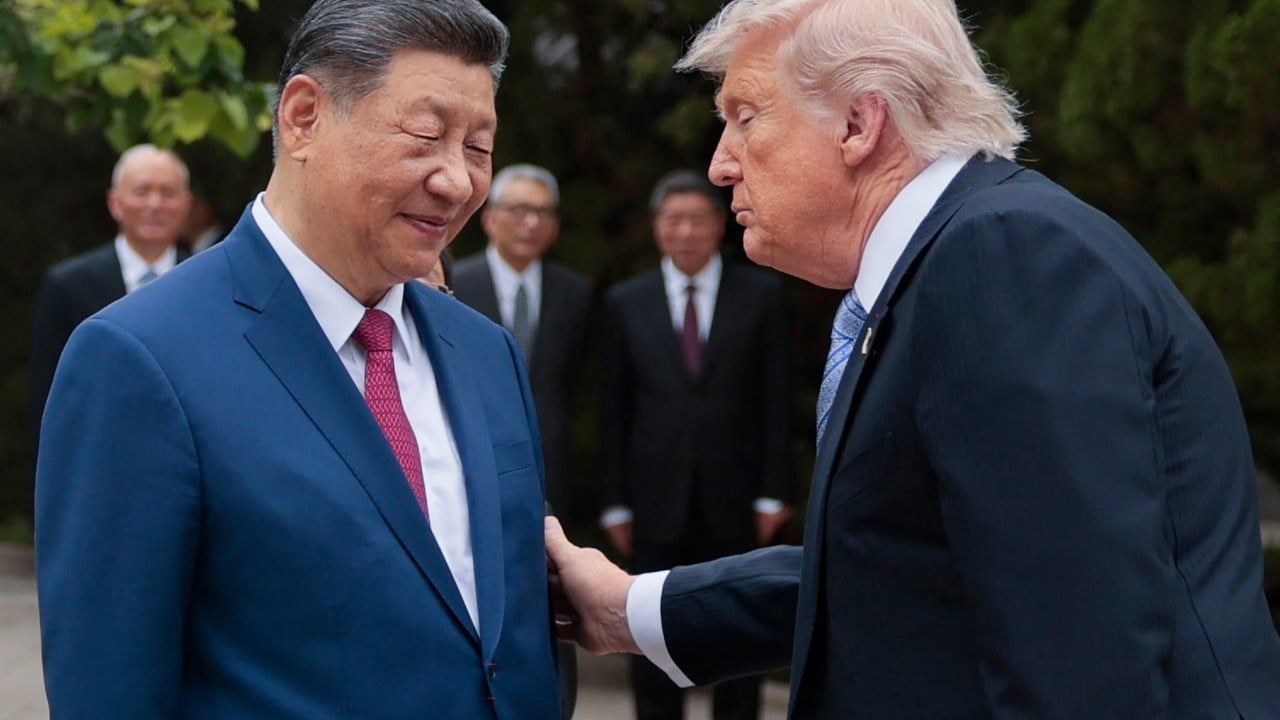
The recent diplomatic theater in Beijing confirmed what seasoned observers of global trade and warfare have long suspected. United States President Donald Trump used his high-stakes mid-May summit with Chinese President Xi Jinping to personally request Beijing's intervention to bring an end to the war in Ukraine.
Faced with a devastating, coordinated Russian air assault that shattered Kyiv’s residential districts on the eve of the talks, the American president shifted from his trademark campaign bluster to a pragmatism born of geopolitical gridlock. He openly acknowledged that Ukraine was a central pillar of the agenda.
The strategy relies on a flawed premise. Washington is operating under the assumption that China possesses the leverage—and the willingness—to force Vladimir Putin to the negotiating table. The reality inside the Great Hall of the People tells a completely different story.
China is not preparing to pull America’s chestnuts out of the fire. Instead, Beijing is using Washington’s eagerness for a settlement to secure sweeping concessions on tariffs, technology transfer, and the future of Taiwan.
The Illusion of Chinese Leverage
For nearly four years, Western capitals have treated Beijing as the ultimate arbiter of the conflict in Eastern Europe. The logic seems straightforward. China is Russia’s economic lifeline, purchasing vast quantities of discounted oil and supplying the dual-use chips and machinery keeping the Russian defense sector operational.
If Xi Jinping turned off the tap, the Kremlin's war machine would sputter.
This perspective misjudges the nature of the Sino-Russian partnership. It is not an alliance of affection, but a cold marriage of convenience built on shared opposition to American hegemony. Xi cannot afford a defeated, unstable Russia on his northern border, nor can he tolerate a pro-Western regime taking root in Moscow.
When the American delegation pressed for concrete pressure on Moscow, the Chinese response remained stubbornly non-committal. The official Chinese readouts from the mid-May summit barely touched on the "Ukraine crisis," preferring to emphasize a new framework of "constructive strategic stability."
While Donald Trump point-blank told reporters that a settlement was "going to happen" despite the brutal Russian missile strikes, the Chinese Ministry of Commerce was quietly reinforcing its own priorities. Beijing's primary concern remains the domestic economy, currently battling demographic stagnation and property market woes. They are using the Ukraine conflict not as a problem to solve, but as a diplomatic shield.
The Price of Admission
Nothing in Beijing is free. If the United States wants China to modify its support for Moscow, the cost will be extracted in American economic and strategic concessions.
The summit occurred against the backdrop of a brutal trade landscape, where earlier escalations had pushed some US tariffs on Chinese goods to historic highs. While a fragile truce was maintained, the Chinese delegation made it clear that long-term stability requires the removal of these barriers.
What Beijing Demands
- Tariff Relief: Rollbacks on the punitive duties that have disrupted Chinese export volumes.
- Technology Access: A relaxation of U.S. export controls on advanced semiconductors and artificial intelligence equipment.
- Strategic De-escalation: Explicit American restraint regarding multilateral defense pacts like AUKUS and the Quad.
Consider the handling of critical supply chains during the talks. In late 2025, China instituted sweeping export controls on rare earth elements essential for defense manufacturing. During a preliminary meeting in South Korea, Beijing offered a temporary one-year suspension of these curbs.
During the Beijing summit, this temporary pause was transformed into a powerful negotiating lever. The White House announced that China would "address concerns" over key materials like neodymium and indium. In return, the American president openly questioned the wisdom of greenlighting a new $14 billion arms package for Taiwan, publicly labeling the defense aid as a "very good negotiating chip."
The Taiwan Equivalence
This is where the transactional approach to foreign policy encounters severe structural friction. By treating long-term security commitments as bargaining chips for short-term diplomatic victories in Europe, Washington risks destabilizing the Pacific theater.
Xi Jinping used the summit to issue an explicit warning. According to Chinese state media, Xi reminded his American counterpart that Taiwan remains the most sensitive issue in bilateral relations, stating bluntly that mismanagement could cause the two nations to collide.
By linking progress in Ukraine to concessions in the Taiwan Strait, the administration plays directly into Beijing's hands.
China’s strategy has long been to exhaust American resolve across multiple theaters. With U.S. attention divided between support for Ukraine, a volatile security environment in the Middle East, and maritime tensions in Asia, Beijing can present itself as the steady, stabilizing force.
The strategy is working. The White House readout of the summit conspicuously omitted explicit mentions of Taiwan, focusing instead on commercial victories, such as a Chinese commitment to purchase 200 Boeing aircraft. It is a return to a classic playbook: offering high-profile corporate contracts to satisfy Washington's domestic political messaging while securing fundamental strategic silence in return.
The Red Lines Remain
Despite the public displays of personal chemistry, the fundamental geopolitical realities between the two superpowers have not shifted. The summit was less about achieving a breakthrough and more about establishing a controlled stalemate. Both leaders face significant internal challenges and required a temporary truce.
The American administration needs a foreign policy victory to validate its transactional approach to global alliances ahead of the upcoming midterm elections. Xi Jinping requires economic predictability to steady a faltering domestic market and manage ongoing reshuffles within the People’s Liberation Army.
They have opted for a temporary de-escalation.
This superficial calm should not be mistaken for a permanent resolution. The fundamental contradictions between an assertive, state-directed Chinese economy and a defensive Western security architecture remain unresolvable by personal diplomacy alone.
When the United States asks China to help end the war in Europe, it is asking a competitor to solve a problem that serves that competitor's strategic interests. The war keeps Western resources depleted and forces Russia into a subordinate, dependent relationship with Beijing.
Xi Jinping will not surrender that advantage for a handful of aircraft purchases and a temporary tariff pause. If Washington continues to pursue a grand bargain with Beijing over the fate of Kyiv, it will find that the price demanded by China is far higher than the American security architecture can safely afford to pay.