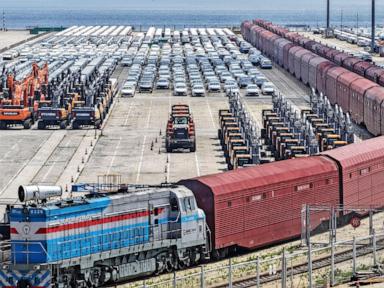
The financial press is currently celebrating a 27% surge in Chinese exports, pinning the triumph squarely on the global appetite for artificial intelligence. It makes for a comforting headline. Silicon Valley designs the chips, the world demands the infrastructure, and Shenzhen builds the boxes. Everybody wins.
Except they do not.
This mainstream narrative misses the fundamental mechanics of macroeconomic hardware manufacturing. Celebrating a top-line export spike in raw hardware is like cheering for a restaurant because its food budget went up. It confuses volume with value, and it completely misinterprets who is actually capturing the wealth in this cycle.
The reality is starkly different: China is currently exporting low-margin physical enclosures, power supplies, and legacy components while importing hyper-expensive, high-margin silicon. This is not a position of strength. It is an infrastructure tax paid by manufacturing hubs to the entities that own the actual intellectual property.
The Low-Margin Assembly Trap
When a 27% surge hits the wires, amateur analysts assume a proportional explosion in profitability. Having spent two decades auditing supply chains across East Asia, I have seen this exact movie play out with smartphones, laptops, and solar panels. The top-line number screams dominant growth. The internal balance sheets tell a story of desperate, razor-thin survival.
Look at what makes up an AI server cluster. The true value sits almost entirely in the advanced accelerators, the high-bandwidth memory (HBM), and the proprietary software stack that links them together. The rest of the machine—the chassis, the copper wiring, the cooling fans, and the standard printed circuit boards—is treated as a commodity.
China excel at producing commodities at scale. But when the global supply chain demands thousands of liquid-cooled server racks, the factories spinning up to meet that demand are locked into fierce price wars with each other. They operate on single-digit operating margins. If a factory secures a massive order to assemble AI infrastructure, its revenue skyrockets, but its net income barely moves. Meanwhile, the specialized chip designers tracking that same demand curve enjoy gross margins north of 75%.
To understand where the money goes, consider a basic thought experiment. Imagine a scenario where a state-of-the-art server rack costs $250,000 to manufacture. The silicon brain inside that rack, sourced from external IP holders, accounts for $200,000 of the cost. The remaining $50,000 covers the sheet metal, power delivery, cooling systems, and assembly labor. If a Chinese factory builds and ships this rack, the export data reflects a massive $250,000 win for local trade metrics. In reality, the domestic economic value added is a fraction of that total. The real wealth immediately repatriates to the IP owners.
Dismantling the Flawed Premises of Trade Analysts
The public frequently asks variations of the same question: Will the AI boom make manufacturing nations economically dominant? The premise itself is broken. Volume does not equal leverage. If you are easily replaceable by another factory in Vietnam, India, or Mexico, you do not possess economic dominance. You possess a temporary logistical advantage.
Does a surge in tech exports prove structural independence?
Absolutely not. It proves dependency. The current surge is heavily reliant on the components that manufacturing hubs cannot build domestically due to strict export controls and lithography bottlenecks. To scale their export numbers, these factories must first buy the highly complex components they are forbidden from manufacturing themselves, assemble them, and ship them back out. It is a gloriously inefficient circle that creates a massive trade volume on paper while masking a deep, structural vulnerability.
Can manufacturing hubs pivot to capture software value?
Not easily, and certainly not via the current hardware pipeline. Software and algorithmic infrastructure require entirely different capital allocation models, regulatory environments, and talent pools. You cannot build a world-class AI ecosystem merely by owning the factories that bend the sheet metal for the server racks.
The Hidden Headwinds of the Hardware Supercycle
The downside to exposing this illusion is that it forces an acknowledgement of macroeconomic risk. If you accept that the export boom is built on low-margin commodity hardware, you must also accept that it is highly cyclical and violently exposed to capital expenditure pullbacks.
Right now, global hyperscalers are spending capital at an unprecedented, almost reckless pace. They are building data centers ahead of actual demand because the fear of missing out outweighs the fear of overcapacity. This massive capital deployment is what is driving that 27% export figure.
But what happens when tech giants realize that the monetization of software tools is lagging behind the cost of the infrastructure? The moment capital expenditure budgets cool down, the high-margin IP owners will see their stock prices correct, but they will survive on their massive cash cushions. The contract manufacturers, however, will be left with massive overcapacity, expensive factory upgrades that have not been paid off, and cratering order books.
We saw this during the telecom boom of the late 1990s. Companies built enough fiber-optic cable to encircle the earth thousands of times. The factories manufacturing the physical glass cable recorded staggering export growth. When the bubble burst, the factories went bankrupt, while the companies that owned the core protocols and software architectures pivoted and dominated the next decade.
Stop Looking at Top-Line Export Data
If you want to understand who is winning the technological shift, stop looking at gross export volumes reported by customs bureaus. They are a lagging, distorted indicator of economic health.
Instead, track the velocity of capital. Look at where the net profit pools are concentrating. If a nation is exporting massive amounts of goods but its domestic currency remains under pressure and its local equity markets are stagnant, the trade surplus is a ghost. The money is simply passing through on its way to someone else's bottom line.
True industry insiders know that the physical box is just the delivery vehicle for the intellectual property. Until a manufacturing ecosystem owns the architecture inside the silicon and the models running in the cloud, a 27% jump in exports is not a sign of a superpower flexing its muscles. It is the sound of a factory floor running at maximum capacity to make someone else rich.