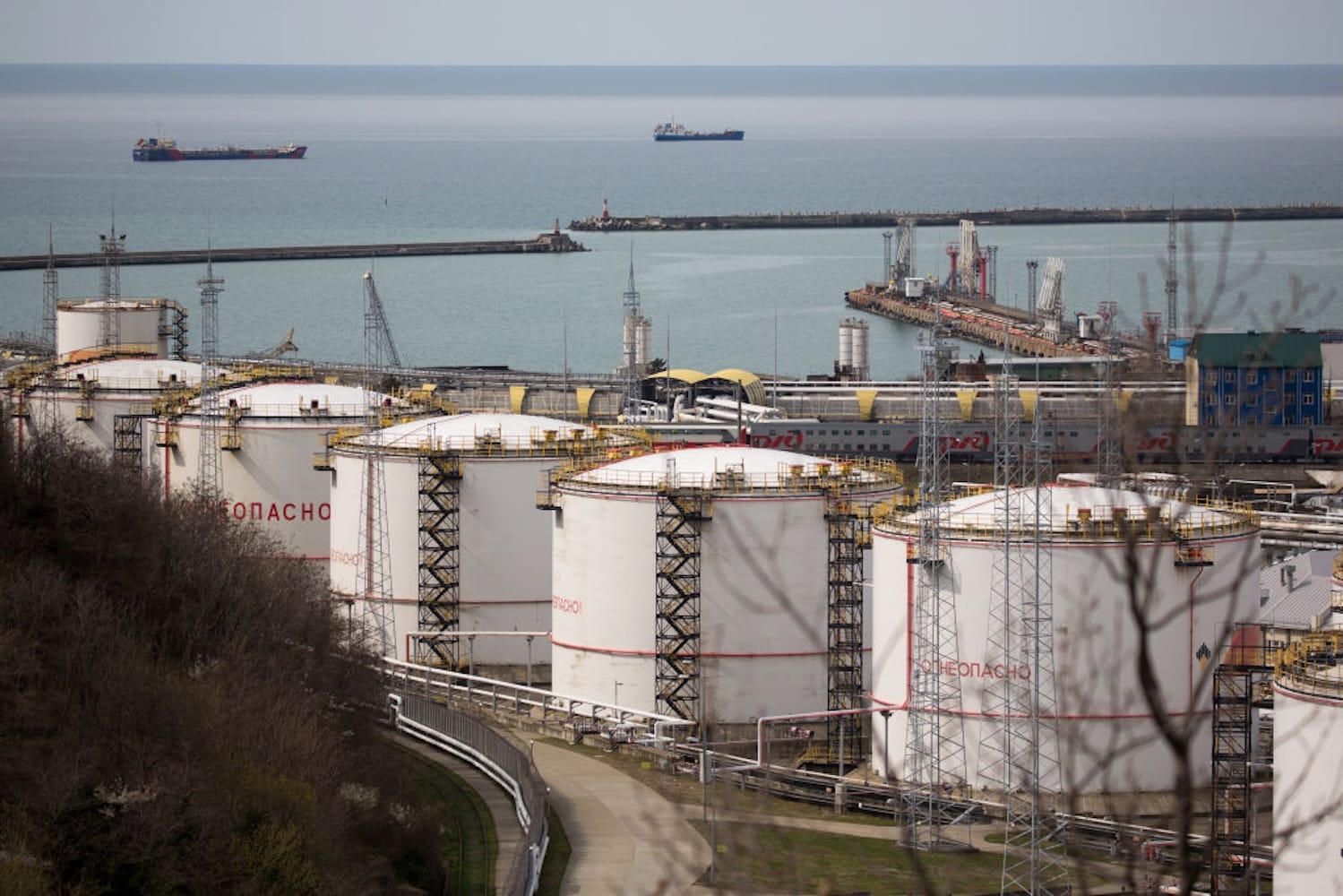
The International Energy Agency is reading the spreadsheet upside down again.
When the IEA dropped its latest report trumpeting that UAE oil exports have clawed their way back to 85% of Abu Dhabi’s pre-war levels, the financial press did exactly what it always does. It copy-pasted the headline, nodded sagely at the "remarkable recovery," and moved on.
It is a comforting narrative. It suggests a global supply chain stabilizing, a state apparatus successfully navigating geopolitical crosswinds, and a predictable return to the status quo.
It is also complete nonsense.
Measuring Abu Dhabi’s structural economic power by its gross export volume is like measuring a tech company’s health solely by its server uptime. It tells you the hardware is plugged in. It tells you absolutely nothing about the margin, the systemic risk, or the fact that the underlying equity is burning.
I have spent fifteen years parsing Gulf energy infrastructure data and sitting in rooms where these export targets are hammered out. Let me tell you what the IEA missed while they were celebrating their 85% milestone: the UAE is not recovering. It is radically, permanently altering its risk profile to maintain an illusion of stability, and the market is pricing it entirely wrong.
The Volume Fallacy: What 85% Actually Costs
The lazy consensus loves a percentage. "85% recovered" sounds like a solid B-plus. It implies that with just a little more operational runway, the ship rights itself.
But volume is a vanity metric. To understand why this headline is a mirage, you have to look at the divergence between crude extraction capacity and actual net export value.
To pump at these levels under current regional constraints, Abu Dhabi National Oil Company (ADNOC) has been forced to accelerate its secondary and tertiary recovery mechanisms. We are talking about massive water-alternating-gas (WAG) injection schemes and heavy chemical flooding just to maintain reservoir pressure in mature fields like Upper Zakum.
The Reality Check: Maintaining high export volumes from compromised supply routes does not mean efficiency. It means you are burning your future production runway to satisfy today's spot market.
When you factor in the soaring cost of marine insurance premiums for transit through the Strait of Hormuz—which have spiked by over 400% since regional hostilities flared—the net netback pricing on those barrels drops off a cliff. Abu Dhabi is exporting more physical oil to clear a fraction of the net cash flow it enjoyed pre-war. The IEA counts the barrels at the terminal. They do not count the capital destruction required to get them there.
Dismantling the Flawed Premise of Stable Supply
If you look at the standard "People Also Ask" queries surrounding Gulf energy right now, you see variations of the same fundamental question: How can the UAE keep exporting oil during a regional conflict?
The question itself is broken. It assumes that as long as the tankers are moving, the system is working.
Let's do a quick calculation using basic reservoir mechanics. When an energy state pushes its infrastructure to meet arbitrary volume targets during a logistics crisis, it operates outside its optimal economic recovery rate. If you pull crude out of the ground too fast under suboptimal pressure conditions, you risk water coning—where bottom water breaks through into the oil zone, permanently bypassing salvageable reserves.
Imagine a scenario where a producer ruins 5% of its total ultimate recoverable reserves just to sustain a headline export number for three quarters. That is not resilience. That is a liquidation sale disguised as corporate strength. I have watched national oil companies execute this exact panic strategy during previous market disruptions, throwing long-term asset integrity under the bus to soothe western bondholders.
The Fujairah Pipeline Myth
The core of the competitor argument relies heavily on the UAE’s bypass infrastructure—specifically the Habshan-Fujairah pipeline. The narrative claims that because Abu Dhabi can pipe 1.5 million barrels per day directly to the Gulf of Oman, it is insulated from the choke points of the Arabian Gulf.
This is administrative fiction.
- The Capacity Gap: Habshan-Fujairah's nameplate capacity is roughly 1.5 million barrels per day. Abu Dhabi's total production capacity exceeds 4 million barrels per day. You cannot fit a gallon of water into a pint glass, no matter how optimistic your IEA press release is.
- The Single Point of Failure: The pipeline relies on a concentrated network of pumping stations and a singular coastal storage terminal. In a high-intensity regional conflict, a fixed overland pipeline is not a security asset; it is a static, highly visible target.
- The Quality Discount: Blending different grades of crude (Murban vs. Upper Zakum) to push maximum volume through a single pipeline degradation system lowers the API gravity and increases sulfur variance. The result? Refiners in Asia are demanding steep discounts on these patched-together shipments.
The market treats the Fujairah bypass as a total insurance policy. In reality, it is a bottleneck that actively degrades the premium value of UAE crude.
The Hard Truth About the UAE's Next Moves
Stop looking at the 85% export figure as a sign of strength. It is an act of desperation from a state that knows its windows are closing.
The real play happening behind the scenes isn’t about oil at all—it is about the frantic monetization of upstream assets before structural demand peak collides with regional instability. ADNOC has been aggressively selling off minority stakes in its drilling, gas, and logistics subsidiaries to international private equity firms.
Why? Because the insiders know what the IEA won't admit: the cost of defending these barrels is becoming higher than the value of the crude itself. They are transferring the long-term risk to western pension funds and institutional investors while the headline volume numbers still look respectable.
If you are allocating capital based on the idea that the Gulf energy sector has normalized, you are walking into a trap. The volumes are back because the taps are being turned until they break, not because the ecosystem is healthy.
Turn off the IEA dashboard. Watch the reservoir pressures, watch the insurance premiums, and look at who is quietly selling down their exposure to the infrastructure. The data isn't telling you a story of recovery; it's telling you the party is being kept alive by burning the floorboards.