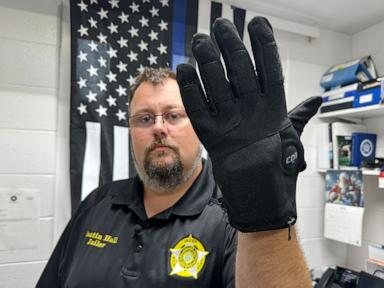
You've probably heard about the $16.7 million contract U.S. Immigration and Customs Enforcement signed for 6,000 pairs of electric shock gloves. But the real story isn't the price tag. It's the military study sitting quietly behind the purchase, proving these items were explicitly designed to inflict high-intensity distress.
An internal U.S. Army assessment from October 2024 tested these exact devices, branded as GLOVE (Generated Low Output Voltage Emitter). The results weren't subtle. Role-playing soldiers subjected to the shocks stopped resisting within seconds, reporting sharp torment and lingering anxiety about getting hit again.
When federal agencies adopt gear that military trials label as extreme, we need to talk about what "compliance" actually means on the ground.
Inside the Army Trial at Fort Leavenworth
The testing didn't happen in a sterile laboratory. The Army put these shock gloves through real-world stress scenarios at the military prison in Fort Leavenworth, Kansas. Soldiers played the part of combative prisoners and protesters to see how the gear held up during escorts and scuffles.
Unlike traditional Tasers that lock up muscles by interrupting electrical signals through the nervous system, these gloves operate differently. They overload peripheral nerve endings directly on the skin. The result is pure, unadulterated sensory overload.
The Army's findings were crystal clear. Participants didn't just experience physical soreness; they experienced immediate psychological deterrence. The report noted that simply looking at the gloves afterward was enough to make test subjects fall in line. Fear did the heavy lifting before a single current even flowed.
The Problem With Pain Compliance Tools
Proponents argue that tools like these provide a middle ground to avoid lethal force, especially after a series of high-profile shootings involving federal agents. Border officials and agency defenders frame them as a safer alternative to firearms.
Critics and oversight groups look at the exact same data and see a very different picture. Organizations like American Oversight point out that an Army test proving a device hurts intensely does nothing to establish long-term safety.
When you build a compliance model entirely around inflicting severe discomfort, you open the door to widespread misuse.
Think about how dynamic an enforcement raid or a public protest gets. If an officer uses a shock glove because a detainee is tense or flinching—which happens naturally when people are terrified—it creates a dangerous escalation loop. Pain causes a physical reaction. Officers often interpret that exact reaction as "resisting arrest," which then justifies even harsher measures.
Where the Rollout Stands Now
Despite pushback from lawmakers—including sixteen Democratic senators who demanded answers on safety and operational guidelines—ICE is moving ahead. Administrative policies and training modules are currently being finalized to govern how agents wear and deploy them.
The friction between administrative goals and human rights concerns isn't going away. When gear designed to terrify and hurt enters everyday civilian operations, public accountability usually takes a backseat to operational convenience.
Keep an eye on how these training guidelines shape up. The transition from military trials to domestic enforcement streets is happening right now, and the fallout will define how modern security handles resistance.
Exploring the impact of non-lethal compliance tech on civil liberties