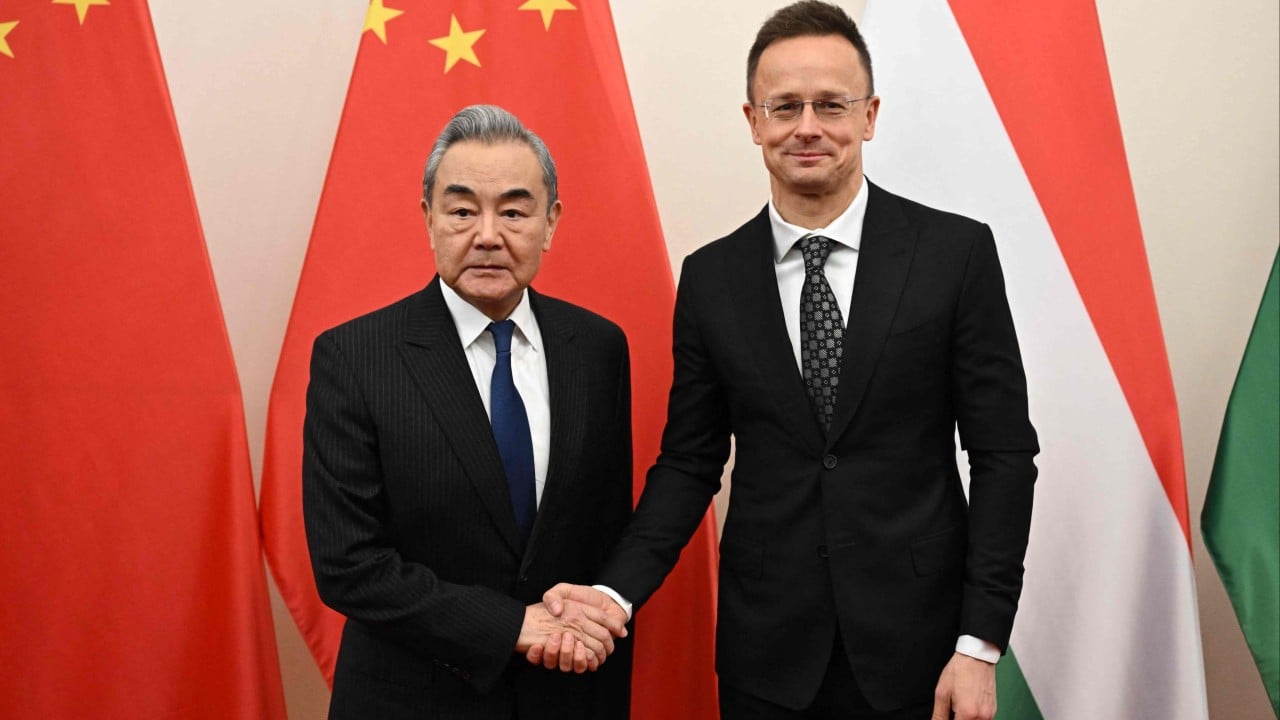
The media is choking on its own self-righteousness over Hungary opening an investigation into its deal with Chinese EV giant BYD. The catalyst for this sudden bout of moral panic? Former Hungarian Foreign Minister Péter Szijjártó took a job at the automaker.
Cue the predictable headlines. The hand-wringing. The ominous warnings about national security, Chinese influence, and the "corruption" of the revolving door between government and big business. For a different perspective, check out: this related article.
It is a lazy, textbook consensus. And it misses the entire point of how modern industrial strategy actually works.
Western commentators want you to believe this is a story about a rogue European nation selling its soul to Beijing. They frame the investigation as a necessary cleanup operation. They are wrong. This probe is not a triumph of ethics; it is a desperate, politically motivated attempt to slow down an inevitable economic shift. Further coverage on the subject has been shared by The Motley Fool.
If you think a former politician joining a massive foreign investor is a scandal, you do not understand how global business operates. In fact, you are asking the wrong question entirely. The question isn't "How do we stop politicians from working for foreign firms?" The question is "Why is the West so terrible at using the exact same playbook to defend its own industries?"
The Naive Myth of the Pure Politician
Let us dismantle the core premise of the outcry. The mainstream narrative assumes that when a public official leaves office, they should fade into academic obscurity or write unreadable memoirs. If they dare to bring their Rolodex and geopolitical expertise to a foreign competitor, it is labeled a conflict of interest.
Let us be brutally honest. Every major multinational corporation on earth—from Boeing to BMW to Lockheed Martin—is staffed at the executive level by former government officials, military brass, and diplomats.
When a retired US general joins the board of a defense contractor, the financial press calls it "strategic governance." When a former European commissioner takes a seat at a Silicon Valley tech giant, it is branded as "regulatory expertise." But when a Hungarian official jumps to a Chinese EV company, the narrative morphs into a thriller about espionage and compromised sovereignty.
I have spent two decades watching corporate boards navigate international expansions. Companies do not hire former foreign ministers because they want to break the law. They hire them because global supply chains are a geopolitical minefield. You need people who know where the landmines are buried, who can speak the language of local regulators, and who can cut through red tape that would otherwise stall a multi-billion-dollar factory for a decade.
BYD is not buying political favors after the fact. They are hiring the only asset class that matters in a fragmented global economy: transactional intelligence.
Why Hungary’s Strategy is Rational, Not Rogue
The Western European establishment loves to lecture Budapest about democratic backsliding and economic over-reliance on the East. What they conveniently ignore is the stark economic reality facing Central and Eastern Europe.
For decades, countries like Hungary, Slovakia, and Poland served as the low-cost assembly backyard for German automakers. They provided cheap labor, took the environmental hits, and watched the high-margin engineering profits flow back to Stuttgart, Munich, and Wolfsburg.
But the German automotive machine is stalling. It dragged its feet on electrification, choked on software development, and is now forced to downsize.
Hungary recognized this shift years ago. They realized that if they stayed exclusively shackled to the legacy European auto industry, their economy would sink with it.
The EV Investment Race
| Country | Key EV/Battery Partners | Strategic Focus |
|---|---|---|
| Hungary | BYD, CATL | Gateway for Asian EV supply chains into Europe |
| Germany | Intel (Delayed), Northvolt (Struggling) | Subsidizing legacy transitions and stumbling tech |
| France | Protean, Local Gigafactories | Protectionism and tariff-heavy market insulation |
Budapest did what any cutthroat, rational actor would do: they diversified. By securing BYD’s first major European passenger vehicle plant in Szeged, Hungary positioned itself as the indispensable hub for the next generation of automotive manufacturing.
This is not a betrayal of Europe. It is basic economic survival. If the European Union wants to slap 38% tariffs on Chinese-made EVs, Chinese companies will simply build those cars inside the EU market to bypass the duties. Hungary saw the wave coming and built the pier.
Dismantling the PAA Fallacies
Look at the standard questions driving the public discourse around this probe. They are built on fundamentally flawed assumptions.
"Does China's investment in Hungary threaten EU security?"
This question assumes that economic interdependence is a one-way street. When BYD pours billions of euros into concrete, steel, and local jobs in Szeged, that capital is held hostage by European jurisdiction. BYD cannot pack up a physical manufacturing plant and fly it back to Shenzhen if political winds shift. Hungary gains leverage, not the other way around. The factory is subject to EU labor laws, EU environmental standards, and EU courts.
"How can Europe stop the brain drain of politicians to foreign state-backed firms?"
You cannot ban talent from seeking market-rate compensation without turning your nation into an economic prison. The real problem is that European legacy industries no longer offer the growth or the long-term vision to attract high-tier talent. If a former minister sees more future in building an EV empire with a Chinese disruptor than in rearranging deckchairs on the Titanic of legacy European manufacturing, that is a market signal. Fix the market, don't blame the signal.
The Dark Side of the Contrarian Reality
Let us be completely transparent about the risks here. There is a downside to this aggressive, transactional approach to industrial policy.
When you become the playground for competing superpowers, you risk getting caught in the crossfire. Hungary is betting that it can remain a bridge between East and West. But bridges get stepped on by both sides.
- Targeted Bureaucracy: The EU can—and will—use anti-subsidy regulations and foreign subsidies regulations (FSR) to tie up Hungarian-made BYD vehicles in endless administrative audits.
- Political Isolation: By breaking ranks with Brussels on industrial policy, Budapest loses diplomatic chips that it might need for other critical negotiations, such as eurozone stability or regional security funding.
- Over-Concentration: Swapping dependence on German combustion engines for dependence on Chinese batteries leaves the Hungarian workforce vulnerable to the whims of an economy thousands of miles away.
But even with these risks, the alternative—sitting quietly while your industrial base evaporates in the name of Brussels-approved solidarity—is far worse.
Stop Investigating the Deal and Start Copying the Playbook
The investigation into the BYD deal will likely yield plenty of paperwork, zero evidence of actual criminality, and a massive amount of political theater. It is a distraction from the real crisis facing Western industrial policy.
The West has forgotten how to build things fast, and it has forgotten how to align state power with corporate execution. We have become an economy of hall monitors, specializing in compliance, regulations, and investigations, while the rest of the world specializes in production.
While European regulators spend the next eighteen months auditing emails to see if a former minister helped optimize a zoning permit, BYD will be laying foundation stones, installing robotics, and hiring thousands of local workers. They will be iterating their battery chemistry at a speed that makes legacy OEMs look like they are moving through molasses.
If Europe wants to compete, it needs to stop treating industrial recruitment like a white-collar crime. It needs to stop crying foul when a competitor uses the exact same executive-poaching tactics that Western companies pioneered decades ago.
The era of cheap Western moral superiority in global manufacturing is dead. The future belongs to those who build, who adapt, and who recruit the talent necessary to win—regardless of what passport they used to hold. Stop auditing the future. Build it.