The transition of a developing nation from a resource-importing economy to an offshore hydrocarbon exporter is rarely characterized by an immediate influx of sovereign wealth. Instead, it triggers a complex fiscal and operational restructuring governed by international concession agreements, sunk capital recovery mechanisms, and structural balance-of-payments shifts. When major commercial discoveries such as the Sangomar oil field and the Grand Tortue Ahmeyim gas project moved toward production phases off the coast of Senegal, public narratives frequently conflated gross resource valuation with net state appropriation. Deconstructing this transition requires analyzing the actual mechanics of modern production-sharing contracts, capital expenditure amortization, and the macroeconomic friction that accompanies mega-projects in West Africa.
The foundational misconception in public discourse centers on the distinction between in-situ resource value and realized fiscal capture. Market valuations of multi-trillion cubic feet gas reserves or hundreds of millions of barrels of crude oil represent gross extraction potential over multi-decade lifespans, not immediate liquid cash flows. The distribution of these revenues is dictated by contractual frameworks where international energy operators recover exploration, development, and operational expenditures before net profits are partitioned with the national state entity, such as Petrosen.
This cost-recovery mechanism creates a temporal lag in state revenue generation. During the initial production phases, a substantial percentage of the cash flow generated from hydrocarbon sales is allocated to "cost oil" or "cost gas," reimbursing the consortium partners for upfront capital investments that frequently run into billions of dollars. Consequently, the immediate fiscal yield delivered to the national budget during the first several years of exploitation remains a fraction of the gross export value. The economic equation is further complicated by sovereign debt dynamics, fiscal deficits, and the operational vulnerability of relying on single-commodity export streams in a volatile global pricing environment.
Simultaneously, the mechanics of capital-intensive offshore extraction generate minimal domestic labor absorption compared to traditional sectors such as agriculture or artisanal fishing. Modern deep-water drilling and liquefied natural gas processing facilities operate through highly automated, capital-intensive engineering systems requiring specialized technical expertise that is predominantly imported during early extraction cycles. While auxiliary service sectors experience localized stimulation, the macroeconomic multiplier effect is constrained by high import propensities for equipment, engineering services, and specialized maritime logistics.
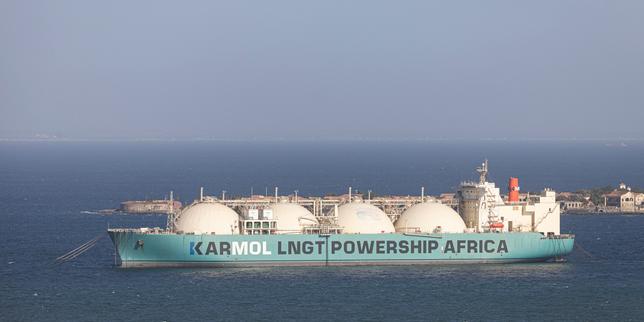
Local economic displacement compounds this structural friction. Coastal communities engaged in traditional artisanal fishing face immediate operational disruption due to maritime security perimeters established around offshore extraction infrastructure and liquefied natural gas floating production units. The loss of coastal catch yields and the alteration of marine migration routes caused by industrial illumination and infrastructural density impose direct economic costs on local populations, creating an asymmetry where localized ecological and economic losses are borne by traditional sectors while macro-fiscal revenues accrue to the centralized state apparatus.
Furthermore, national macro-planning must navigate the fiscal hazards associated with resource windfalls, commonly modeled as the Dutch disease phenomenon. An influx of hard currency from hydrocarbon exports tends to appreciate the real effective exchange rate, reducing the international competitiveness of traditional export-oriented sectors like agriculture and manufacturing. To mitigate this structural distortion, fiscal frameworks must deliberately decouple short-term commodity price cycles from recurrent public expenditure. Establishing transparent intergenerational savings vehicles and stabilization funds is theoretically sound, but execution depends entirely on institutional discipline and legislative consensus regarding budget deficits and sovereign borrowing limits.
Strategic management of new hydrocarbon sectors requires an operational shift away from uncalibrated revenue expectations toward rigorous cost auditing, transparent fiscal monitoring, and deliberate integration of gas-to-power domestic infrastructure. Rather than viewing hydrocarbon assets as a sovereign panacea, fiscal authorities must model returns under conservative price scenarios, enforce rigorous oversight on cost-recovery statements submitted by international operators, and insulate national budgets from commodity price volatility. The ultimate economic viability of extraction is measured not by the volume extracted, but by the precision with which resource rents are channeled into productivity-enhancing domestic capital formation.