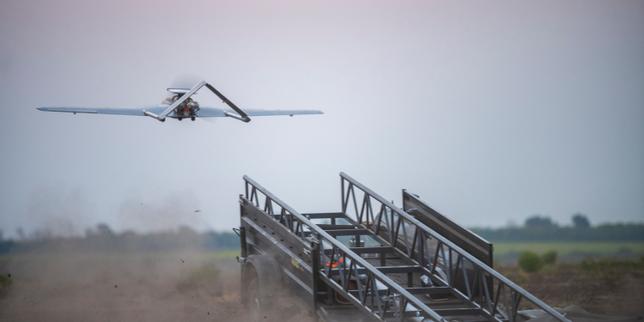
Skies over Eastern Europe have turned into a testing ground for mass aerial warfare. When ministries report hundreds of flying objects neutralized in a single day, standard military calculus shatters. You're looking at a fundamental shift in how modern nations protect their borders.
Russia recently claimed the interception of massive waves of unmanned aircraft, including figures soaring past hundreds of targets neutralized within hours. These numbers sound astronomical, yet they reflect the sheer scale of saturation tactics currently deployed on both sides.
The Anatomy of Mass Drone Raids
Why rely on cheap flying munitions instead of traditional ballistic missiles? Cost and volume dictate modern battlefields. A multi-rotor or fixed-wing loitering munition costs a fraction of sophisticated interceptor rockets. Launching them by the hundreds forces defenders into an impossible economic trap.
- Saturation: Flooding radar sectors forces automated defense systems to burn through scarce ammunition reserves.
- Asymmetry: Cheap components assembled in makeshift workshops counter multi-million dollar defense batteries.
- Adaptability: Operators constantly rewrite flight paths and radio frequencies to bypass electronic jamming.
When authorities state that 180 or even 500-plus drones were tracked and intercepted in extended sweeps, the hidden story involves burnt-out radar units, exhausted anti-aircraft crews, and depleted stockpiles.
Strategic Implications for Urban Centers
Protecting a capital city from a swarm is entirely different from defending a frontline trench. Moscow, Kyiv, and secondary regional hubs face constant night-time alerts. Debris falling from intercepted craft frequently causes civilian casualties and structural damage, even when defense batteries successfully detonate targets mid-air.
Urban populations now live with a soundtrack of buzzing engines and sudden explosions. Governments scramble to deploy localized counter-measures, ranging from mobile machine-gun teams mounted on pickup trucks to advanced electronic suppression units. Yet, closing every gap in a massive airspace remains technically impossible.
What This Means for Global Defense
Military attachés from around the world are taking frantic notes. The lessons learned daily in this conflict are rewriting doctrine manuals from Washington to Tokyo. Traditional air defense umbrellas designed decades ago to catch fast-moving fighter jets are poorly optimized for swarms of slow, low-flying aerial vehicles.
Countries are pivoting hard toward directed-energy weapons and interceptor drones designed specifically to hunt other drones. Relying on surface-to-air missiles for every single threat will bankrupt even the wealthiest treasuries.
The threshold has shifted permanently. Aerial dominance no longer belongs solely to those with the most expensive stealth jets, but to those who can manufacture, launch, and neutralize autonomous flying machines at scale.