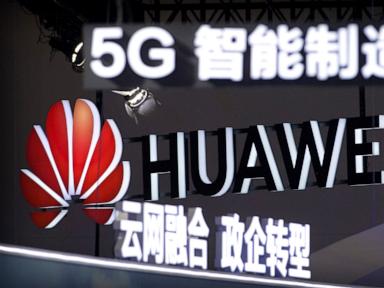
The federal courthouse in Brooklyn is rarely a quiet place, but the trial beginning inside its walls marks a collision years in the making. Chinese telecommunications titan Huawei is finally facing a jury trial on a sprawling racketeering conspiracy indictment. The charges read like a geopolitical thriller, spanning decades of alleged bank fraud, sanctions evasion tied to Iran, and systematic intellectual property theft.
For years, mainstream coverage treated this case as a simple corporate corruption story or an isolated spillover from broader trade wars. That framing misses the structural reality. This proceeding is an aggressive attempt by the United States Department of Justice to criminalize the industrial policy of a geopolitical rival, using the Racketeer Influenced and Corrupt Organizations Act (RICO) as a weaponized instrument of foreign policy.
The Anatomy of the Prosecution
To understand why this trial matters, look past the headlines and examine the docket. Federal prosecutors in the Eastern District of New York have accused Huawei and its subsidiaries of operating through a pattern of racketeering activity. The core of the financial fraud allegation rests on a familiar narrative involving Skycom, a Hong Kong shell company that allegedly conducted business in Iran in direct violation of American economic sanctions.
The government claims Huawei misled international financial institutions, specifically HSBC, processing over one hundred million dollars in transactions while hiding its direct operational control over Skycom. When global banks process U.S. dollar transactions, they must adhere to American compliance mandates. Deceiving those institutions about the ultimate beneficiary of a transaction exposes banks to severe regulatory penalties.
Yet, treating this purely as a bank fraud case ignores the broader scale of the indictment. Prosecutors have layered on charges of trade secret theft, pointing to internal corporate policies that allegedly rewarded employees for acquiring proprietary competitor data. Items ranging from robotic testing mechanisms to cellular antenna layouts and router source code were allegedly targeted to accelerate Huawei’s research cycles.
The Geopolitical Engine
The timing of this courtroom battle cannot be separated from the shifting architecture of international power. When the initial indictments dropped years ago during the height of the Trump administration's trade confrontation with Beijing, critics wondered if the charges were primarily diplomatic leverage. The high-profile arrest of Chief Financial Officer Meng Wanzhou in Canada and her eventual release via a deferred prosecution agreement fueled the perception that corporate executives served as pawns in a superpower chess match.
Now, the legal machinery grinds forward without Meng, targeting the corporate entity itself. Huawei has maintained a posture of absolute defiance, arguing through its legal counsel that the prosecution is a politically motivated fabrication designed to hobble a market leader. The corporation points out that its rise is the product of sustained, multi-billion-dollar investments in research and development over four decades, rather than a criminal enterprise.
The irony is stark. While Washington sought to suffocate Huawei by cutting off its access to American semiconductors and software, the company adapted. Stripped of traditional supply chains, Huawei pivoted aggressively toward domestic semiconductor manufacturing and advanced artificial intelligence hardware infrastructure. The sanctions intended to cripple the company instead forced an acceleration of China's technological self-sufficiency.
Overlooked Factors in the Courtroom
Most legal analysts focus heavily on the evidentiary hurdles of proving intent across international borders. Extraterritoriality remains a weak spot for American prosecutors attempting to apply domestic criminal statutes to actions executed by foreign nationals on foreign soil. Proving that foreign commercial disputes cross the threshold into racketeering conspiracy requires establishing a continuous, structured pattern of criminal conduct that directly impacts U.S. commerce.
Another ignored dimension is the chilling effect this proceeding casts over global technology standards. Modern telecommunications infrastructure is built on collaborative, cross-border engineering. When a foundational hardware supplier is subjected to criminal prosecution, the entire supply chain fractures. Telecommunications operators across Europe, Asia, and Latin America have spent years navigating the fragmented reality of choosing between Western security mandates and cost-effective Chinese network gear.
If the jury returns a guilty verdict, the financial penalties and asset forfeitures will be staggering. More importantly, a conviction will validate the aggressive posture of the Justice Department's China Initiative and its successors, setting a precedent for how federal courts handle foreign corporations accused of systemic economic espionage.
The Unspoken Reality
The courtroom in Brooklyn is debating the specific legality of wire transfers and confidentiality agreements, but the subtext is entirely about technological supremacy. Western intelligence agencies spent years warning that Huawei hardware presented a backdoor for state espionage, though public evidence of active sabotage in Western networks remains fiercely contested. By shifting the battlefield from vague national security warnings to concrete criminal charges like fraud and racketeering, the government found a mechanism it could actually argue in front of a jury.
Whether the prosecution can successfully bridge the gap between aggressive corporate espionage and a formal criminal enterprise remains to be seen. The trial is scheduled to stretch across months, exposing internal corporate communications, clandestine code names for sanctioned nations like Iran and North Korea, and the inner workings of a global manufacturing giant.
The verdict will not stop the global race for technological dominance. It will merely codify a new set of rules for how superpowers clash in the digital age.