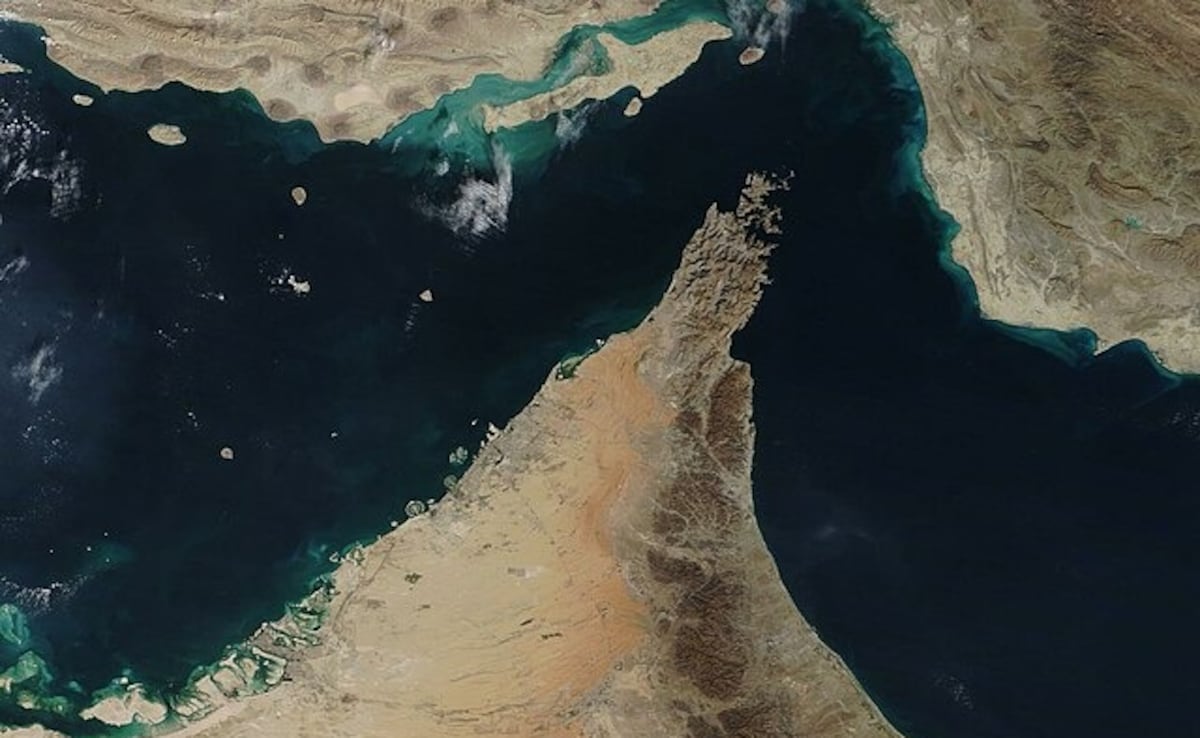
Geopolitics is currently suffering from a collective fever dream where we pretend that "permission" is the same thing as power. The recent reports suggesting Iran is "allowing" Chinese vessels safe passage through the Strait of Hormuz aren’t just news; they are a masterclass in missing the point. If you think this is a diplomatic breakthrough or a sudden shift in maritime law, you are reading the map upside down.
Most analysts are stuck in a 1990s mindset, viewing the Persian Gulf through the lens of Westphalian sovereignty and UNCLOS (United Nations Convention on the Law of the Sea) compliance. They see a "deal" between Tehran and Beijing. I see the formalization of a protection racket that the West is currently subsidizing with its own indecision.
The Myth of Iranian Generosity
Let’s kill the first sacred cow: Iran isn’t "allowing" anything. To allow something implies you have a choice to forbid it without consequence.
China is Iran's largest oil customer. Beijing is the only reason the Iranian economy hasn't turned into a literal barter system of rugs for spare parts. If Iran even breathed on a Chinese tanker, the resulting economic retaliation from the CCP would be more devastating than forty years of US sanctions. This isn't a diplomatic concession. It’s a landlord acknowledging that the biggest tenant in the building doesn't have to pay for parking.
The "lazy consensus" in mainstream reporting frames this as a blow to Western influence. That’s half-right, but for the wrong reasons. The real story isn't that China got a pass; it's that the concept of "international waters" is being replaced by "bilateral corridors."
The Architecture of the Two-Tier Sea
We are witnessing the end of the global commons. For decades, the US Navy guaranteed the safety of the Strait of Hormuz for everyone—friends, foes, and neutrals. It was a massive, expensive gift to global trade.
That era is over. We are moving toward a fractured maritime reality where your safety is determined by the flag on your stern and the depth of your bilateral treaties.
- Tier 1 Vessels: Chinese, Russian, and perhaps certain "aligned" emerging markets. These ships move with digital immunity. They don't need the US Fifth Fleet because they have the political weight of a superpower that Tehran actually fears.
- Tier 2 Vessels: Everyone else. These ships are now hostages to the news cycle. A stray drone strike in Damascus or a frozen asset in London suddenly turns a Greek or British tanker into a target.
Insurance markets are already pricing this in. If you are operating a fleet today, you aren't looking at "maritime law" anymore. You’re looking at your country’s voting record at the UN. That is a fundamental shift in how global business functions, and it’s one most logistics firms are completely unprepared for.
Why Your Supply Chain Logic Is Obsolete
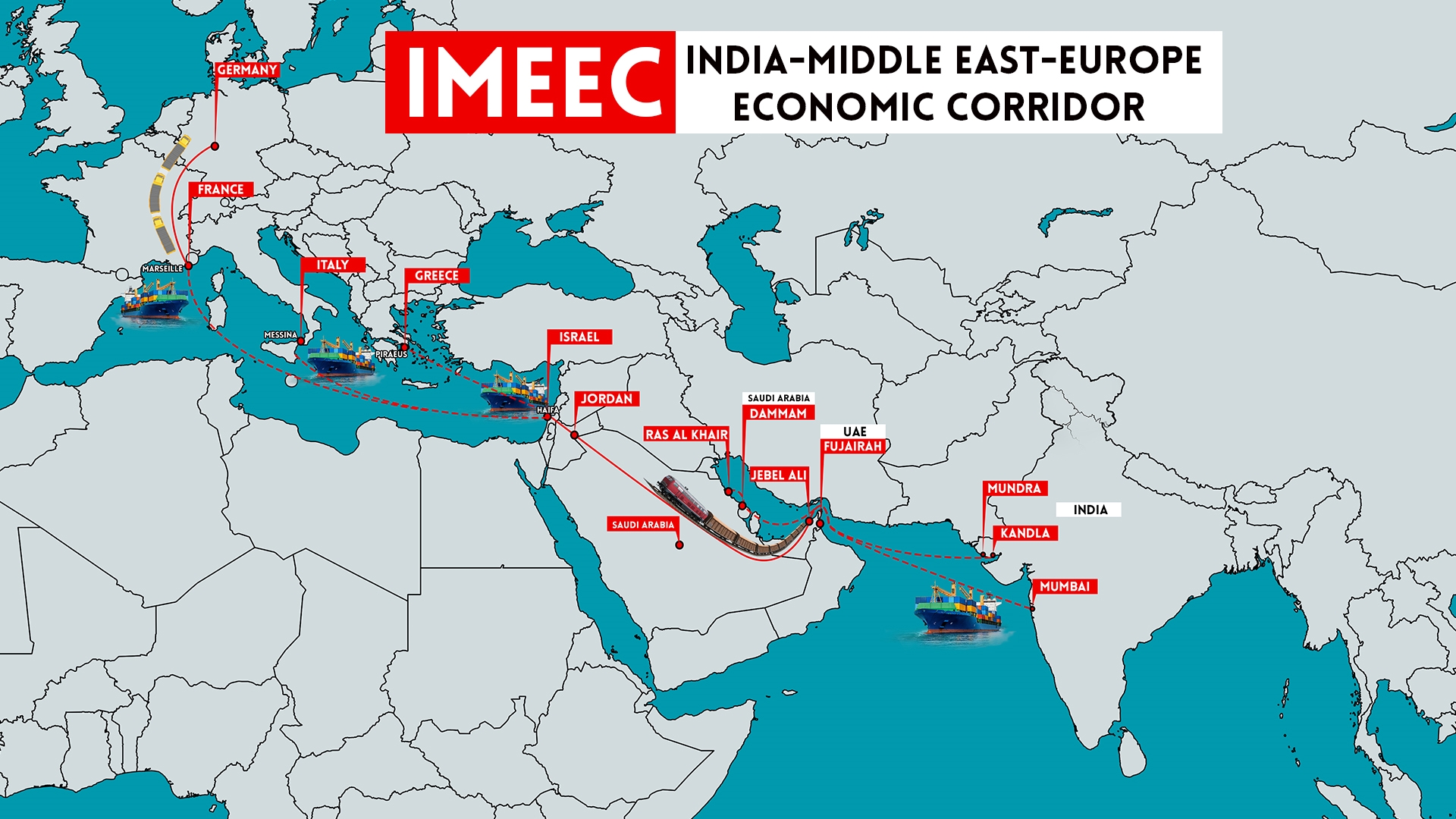
I’ve seen shipping giants dump hundreds of millions into "diversifying" their routes, thinking that moving from Suez to the Cape of Good Hope is a solution. It isn't. It's a retreat.
The Strait of Hormuz handles roughly 20% of the world’s petroleum and nearly $20%$ of the world's liquefied natural gas (LNG). You cannot "route around" the jugular vein of the global energy market. The "Chinese Pass" proves that the new bottleneck isn't physical—it's algorithmic and political.
Imagine a scenario where the "permission" granted to China isn't just about physical passage, but about priority. In a congested, high-tension strait, who gets the pilots first? Who gets the tugs? Who gets the "all-clear" from the Islamic Revolutionary Guard Corps (IRGC) fast-attack boats?
The Failure of "Freedom of Navigation" Operations
The West keeps trying to solve a 21st-century geopolitical software problem with 20th-century hardware. Sending a billion-dollar destroyer to play chicken with a $50,000 drone is a losing trade. The IRGC knows this. They aren't looking for a naval battle; they are looking to increase the "cost of doing business" for the West until it becomes prohibitive.
By "allowing" China through, Iran creates a massive competitive advantage for Chinese industry. If a Chinese factory gets its energy 10% cheaper because its tankers don't face a "war risk" premium at the insurance desk, that factory wins. Every time. This isn't about ships; it's about the total cost of landed goods.
The Brilliantly Brutal Reality of Iranian Leverage
The mistake people make is thinking Iran wants to close the Strait. They don't. Closing the Strait is a suicide pact.
What they want—and what they are successfully achieving—is the ability to discriminate.
They have turned a global choke point into a private toll road where the currency isn't money, but political alignment. By letting China pass, they signal to the rest of the world that safety is available for purchase. If you want your ships to be "Chinese" in the eyes of the IRGC, you need to change your foreign policy.
This is the "nuance" the competitor articles missed. They treated it as a one-off news item. It’s actually a blueprint for the new world order.
The Hidden Data Points
- Insurance Premiums: Since the "reports" of Chinese immunity surfaced, war risk premiums for non-aligned vessels have remained volatile, while "Dark Fleet" tankers (often carrying Iranian or Russian oil) see no such spikes.
- Transponder Behavior: We are seeing a surge in "identity masking" where vessels attempt to mimic the AIS signatures of protected classes.
- The LNG Factor: This isn't just about oil. Qatar's LNG exports through the Strait are the only thing keeping Europe's lights on since the Russian pipeline shutoffs. If Iran decides to apply "selective passage" to LNG, the Eurozone collapses in a single winter.
The Actionable Truth for the C-Suite
Stop waiting for the US Navy to "fix" the Strait. They can’t. Not without a full-scale kinetic conflict that no one has the stomach for.
If you are a global business leader, you have to accept that the "Global Commons" is a dead concept. Your logistics strategy must now include a "Geopolitical Risk Buffer" that assumes certain routes are effectively closed to you while remaining wide open to your competitors.
You need to stop asking "When will the Strait be safe again?" and start asking "How do we operate in a world where our competitors have a 15% logistical head start because of their flag?"
The Chinese vessels passing through Hormuz aren't a sign of peace. They are the first visible cracks in a global trade system that is breaking into two irreconcilable halves.
If you’re still waiting for a return to "normal," you’re already underwater. Trade isn't neutral. Navigation isn't free. Power doesn't ask for permission; it just moves.