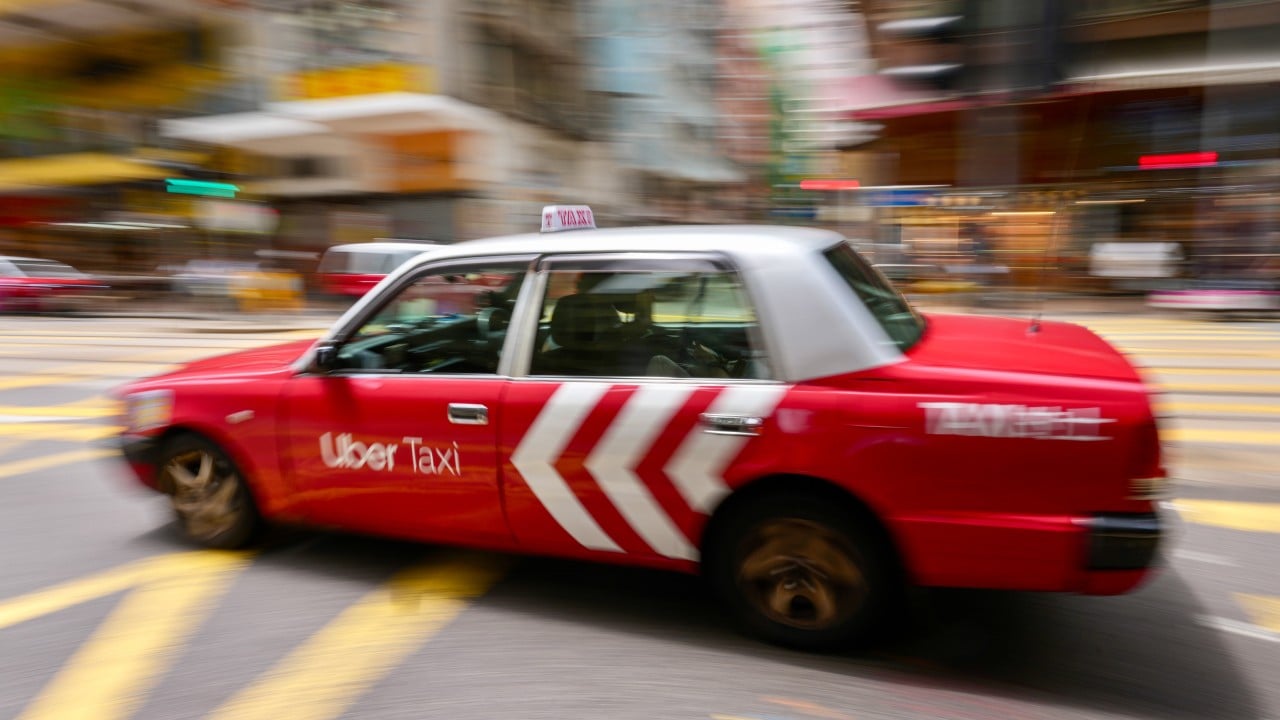
Uber wants you to believe that Hong Kong’s proposed ride-hailing vehicle cap is a bizarre, backward anomaly. They call it "unusual." They claim it stifles innovation, hurts drivers, and punishes consumers who just want a reliable ride from Central to Kowloon.
They are wrong.
The tech lobby’s tears over vehicle quotas ignore a fundamental truth about urban density and regulatory economics. Ride-hailing caps are not an outlier policy cooked up by out-of-touch bureaucrats. They are a predictable, standard response to a math problem that Silicon Valley has consistently failed to solve: you cannot scale infinite private vehicles in a finite geographic space without causing total systemic collapse.
By framing Hong Kong’s regulatory push as an existential threat to modernity, corporate platforms are running an old playbook. They want to shift the conversation away from their own structural reliance on public infrastructure subsidies. It is time to look past the corporate PR and examine the cold reality of why managing vehicle supply is the only logical move for hyper-dense transit hubs.
The Myth of the Infinite Road
Tech platforms built their empires on the premise that asset-light software could move people more efficiently than traditional, heavily regulated fleets. The narrative was simple: matching algorithms and dynamic pricing would optimize empty seats, remove private cars from the road, and reduce congestion.
The data proves the exact opposite happened.
From New York to London, the unfettered expansion of ride-hailing services flooded city centers with deadheading vehicles—cars driving around empty while waiting for their next ping. Research from the Union of Concerned Scientists demonstrated that ride-hailing trips result in nearly 70% more pollution than the trips they displace, largely due to this deadheading phenomenon.
In a sprawling metropolis like Houston or Los Angeles, the grid can absorb that inefficiency for a while. In Hong Kong, where over seven million people are packed into tightly constrained urban corridors, it is an instant recipe for gridlock.
I have watched transport departments across the globe pour billions into optimizing traffic flow, only to see those gains erased by a sudden influx of thousands of unregulated, app-based vehicles. When space is your most valuable commodity, treating road access as an infinite resource is a catastrophic management failure. A vehicle cap is not "unusual." It is basic spatial geometry.
Why the Taxi Versus Tech Debate Is a False Dichotomy
The public debate invariably devolves into a lazy shouting match: the entrenched, politically connected taxi monopoly on one side, and the hip, consumer-friendly tech platforms on the other. Critics argue that capping app-based vehicles simply protects the holders of expensive taxi licenses at the expense of the riding public.
This argument misses the entire point of public utility regulation.
Governments do not regulate transport fleets out of spite or a desire to protect legacy cartels. They regulate them because transport is a public utility that requires predictable capacity, universal service obligations, and strict safety oversight. Taxis in Hong Kong operate under a statutory framework that forces them to serve less profitable areas and accept regulated fares.
Ride-hailing platforms want all the benefits of operating a public utility with none of the obligations. They want to cream off the high-margin peak demand in premium districts while leaving the unprofitable outer territories to public transit or traditional cabs.
When a platform complains about a vehicle cap, they are not fighting for consumer freedom. They are fighting to keep their cherry-picking business model alive. If everyone relies strictly on algorithmic surge pricing and unregulated supply, the transport network becomes volatile, unpredictable, and inaccessible to lower-income segments of the population.
The Financial Reality of the Ride Hailing Mirage
Let us talk about the economic structure of these platforms. For over a decade, venture capital artificially subsidized the true cost of app-based rides. Consumers became addicted to cheap trips, and drivers enjoyed fat bonuses, all paid for by investors chasing market share.
Now that the era of free money is over, the financial illusion is cracking.
To turn a profit, platforms must simultaneously raise fares for passengers and squeeze the take-rate from drivers. The idea that an uncapped market benefits drivers is a myth. When there is no limit on the number of registered vehicles, platforms oversupply the market to ensure wait times stay under three minutes for passengers.
This oversupply forces drivers to compete fiercely against each other for a shrinking pool of rides. They spend more time idling, burn more fuel, and take home less net pay per hour.
The Fleet Efficiency Equation
Look at how asset utilization changes under different regulatory structures:
| Metric | Uncapped App Market | Capped/Regulated Market |
|---|---|---|
| Driver Idle Time | High (waiting for pings in saturated zones) | Low (higher dispatch frequency per vehicle) |
| Platform Priority | Volume of transactions over individual driver welfare | Maximizing yield per active vehicle |
| Congestion Impact | High (creates systemic drag on public buses) | Managed (aligns with mass transit capacity) |
A smart vehicle quota system actually stabilizes driver earnings by preventing market dilution. It ensures that the individuals doing the actual labor can earn a sustainable wage without working 14-hour days just to cover their vehicle leasing costs.
Capping Supply Is Global Best Practice, Not a Local Quirk
The claim that Hong Kong is doing something radical or unprecedented is completely decoupled from global regulatory trends. Major metropolitan areas discovered years ago that laissez-faire ride-hailing is unsustainable.
- New York City: Introduced a hard cap on ride-hailing vehicle licenses in 2018 to combat crippling gridlock in Manhattan and lift driver wages. The cap remains a cornerstone of its transit policy.
- London: Implemented stringent licensing requirements and removed congestion charge exemptions for private hire vehicles to curb fleet growth.
- Singapore: Utilizes a strict Certificate of Entitlement (COE) quota system that applies across the board, ensuring total vehicle population matches infrastructural capacity.
Hong Kong is not an outlier. It is actually late to the game. The city’s transit system is globally revered precisely because it prioritizes high-capacity mass transit—the MTR and public buses—over private car ownership. Over 90% of daily passenger trips in Hong Kong are made on public transport. Allowing an unmanaged surge of private hire vehicles to cannibalize mass transit ridership would be an act of policy self-sabotage.
The Downside of Regulation That Nobody Wants to Admit
While a vehicle cap is necessary, let us be honest about the collateral damage. It will not be a painless transition.
Fares for app-based rides will go up. Wait times during peak hours in Central or Tsim Sha Tsui will increase. The frictionless convenience consumers have grown accustomed to will take a hit.
Furthermore, if the government caps the number of ride-hailing vehicles without thoroughly reforming the existing taxi ecosystem, it risks reinforcing a subpar status quo. If traditional taxis do not improve their service quality, electronic payment adoption, and driver accountability, consumers lose out on both fronts.
But regulatory policy should not be designed to give affluent urbanites a cheaper ride at 6:00 PM on a Friday if the cost is a gridlocked city and a hollowed-out mass transit system. The long-term stability of the entire urban infrastructure must take priority over short-term consumer convenience.
Stop Asking the Wrong Question
The tech lobby wants the public to ask: "How can we stop the government from taking away our favorite apps?"
That is a flawed premise designed to trigger an emotional response. The real question we must confront is: "How do we integrate digital dispatch efficiency into a high-density transit network without destroying the physical functionality of the city?"
The answer is not deregulation. The answer is integration under a strict, managed framework.
Platforms must stop pretending they are just software companies matching independent peers. They are massive transport operators. They use public roads, profit from public infrastructure, and affect public mobility.
If a platform cannot survive within a regulated framework that limits vehicle volume, then its business model was never truly viable to begin with. It was just an regulatory arbitrage scheme disguised as innovation. Hong Kong's move to manage vehicle supply is a necessary correction to bring transport back into alignment with physical reality.
The era of the unregulated corporate land grab on public streets is over, and no amount of corporate posturing will change the math. Use the apps, improve the software, but cap the cars.