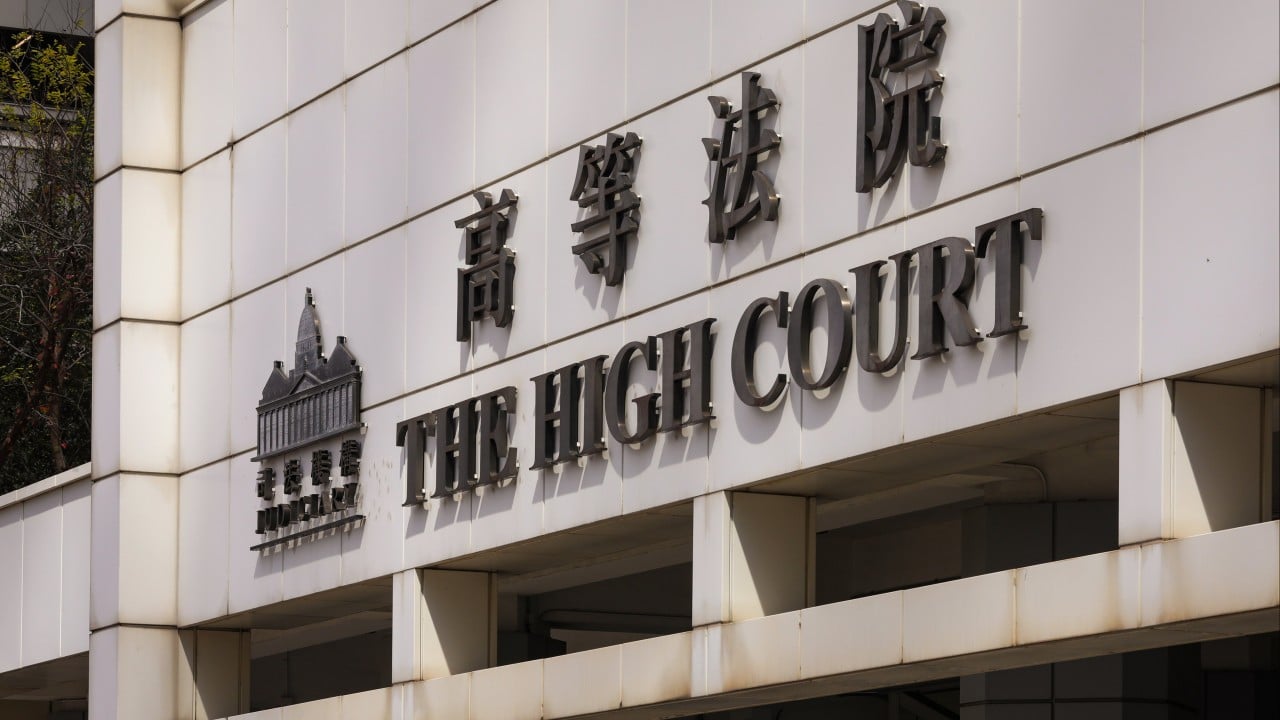
The legal fallout from the massive civil unrest that reshaped Hong Kong hasn't slowed down. It's escalating. Anyone tracking the region's judicial landscape knows that the courts aren't just handing out standard sentences anymore. They're making examples of people. The recent prison terms handed to individuals involved in high-profile bomb plots show a judicial system that has completely lost its patience.
If you think these cases are just standard political trials, you're missing the bigger picture. The courts are actively redefining public safety boundaries. They're signaling zero tolerance for anything that looks like homegrown terrorism.
The Reality of the Dragon Slayers Plot
When people talk about the 2019 and 2020 protests, they usually picture mass marches, tear gas, and clashes on the streets. But behind the scenes, a much darker undercurrent was developing. Radical factions emerged, moving away from public demonstrations toward organized, clandestine operations.
The most notorious of these was the Dragon Slaying Brigade. This group didn't just want to clash with riot police. They planned a coordinated attack using military-grade tactics. The plot involved planting two improvised explosive devices along a major protest route during an International Human Rights Day rally. To make matters worse, firearms, including an AR-15 rifle and hundreds of rounds of ammunition, were smuggled into the city.
The plan was terrifyingly simple. Trigger the bombs to draw in law enforcement, then use a sniper to pick off officers in the ensuing chaos.
The Unprecedented Legal Hammer
The judiciary responded by pulling out legal tools that had sat on the shelves for decades. For the first time since its enactment in 2002, prosecutors invoked the United Nations Anti-Terrorism Measures Ordinance.
This wasn't a standard political move. It was a deliberate shift to treat domestic plots with the same severity as international terrorism. The sentencing outcomes speak for themselves.
- Ng Chi-hung: Identified as the mastermind who organized the weapons and explosives procurement. He received a massive sentence of 23 years and 10 months. The High Court described his plan as a declaration of war against society.
- Wong Chun-keung: The leader of the Dragon Slayers group. He eventually cooperated with the prosecution and turned witness, which secured him a reduced but still substantial sentence of 13 years and six months.
- Lai Chun-pong: Unlike others who pleaded guilty early, Lai went through a grueling 80-day jury trial. He was convicted of conspiracy to cause an explosion likely to endanger life and received a heavy double-digit term.
What makes these cases fascinating is the jury split. While Lai was convicted, six of his co-defendants were completely acquitted by the jury. This sparked intense debate within Hong Kong legal circles about whether the traditional jury system can handle high-stakes national security cases, or if future trials will rely entirely on panels of handpicked judges.
Pandemic Sabotage and the Hospital Bombings
The extreme tactics didn't stop when the street protests fizzled out. As the pandemic began to take hold in early 2020, another radical group decided to use explosives to force a political outcome. Their goal? Pressure the government into completely shutting the border with mainland China to stop the spread of the virus.
To get their point across, they planted a homemade bomb inside a toilet at the Caritas Medical Centre. They followed that up by placing explosive devices at the Lo Wu MTR station, a major transit hub connecting Hong Kong to Shenzhen.
Fortunately, these devices didn't cause mass casualties, but they caused absolute panic. The High Court took a devastatingly harsh stance on this. Lukas Ho, the 41-year-old mastermind behind the transit and hospital plots, was handed an 18-year prison sentence. Justice Johnny Chan noted that Ho possessed an inflated ego and zero genuine remorse, making him a permanent risk to public safety. Ho's co-defendants, Lee Ka-pan and Cheung Ka-chun, weren't spared either. Both received sentences of 16 years and eight months.
Why the Courts Care Less About Rehabilitation Now
For decades, the common law system in Hong Kong balanced deterrence with rehabilitation, especially for younger defendants or first-time offenders. That balance is officially gone for cases involving explosives.
Justice Chan made it clear during the sentencing of the transit bombers that public abhorrence must be reflected in the punishment. When a crime crosses the line into threatening the general public in hospitals or train stations, rehabilitation becomes a secondary concern. The court's primary job now is isolation and deterrence.
If you are analyzing these legal trends, the takeaway is clear. The judicial system is drawing a hard line between political dissent and violent sabotage. While international observers often critique the political nature of these crackdowns, the court files show a deep fixation on the sheer danger of the hardware involved—rifles, pipe bombs, and commercial-grade detonators.
To understand where Hong Kong is heading next, you need to watch how prosecutors handle pending cases under both the classic Crimes Ordinance and the newer Safeguarding National Security Ordinance. The era of lenient sentences for radical activism is over. The blueprint for how the city handles internal threats has been rewritten, and the prison terms are only getting longer.


