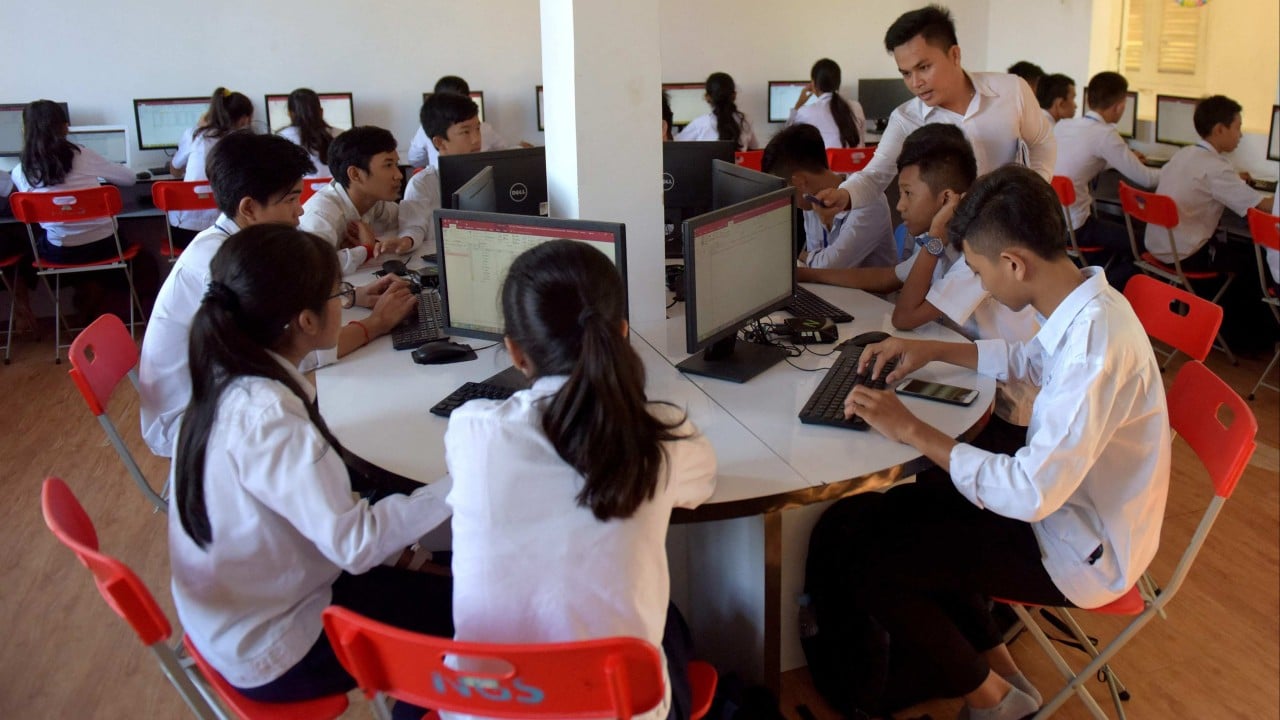
Teaching kids how to stare at a screen doesn't count as digital literacy anymore. Most school systems across Southeast Asia are rushing to hand out tablets without giving teachers any framework for actual computer training. Cambodia is taking a radically different path. Through a high-profile partnership with the Hong Kong Jockey Club Charities Trust, the Cambodian Ministry of Education, Youth and Sport is actively rolling out a proven computational framework called CoolThink@JC.
If you think this is just another corporate charity dropping off a box of dusty laptops and flying home, you're missing the point completely. This initiative targets the core software of modern education: how children actually learn to solve problems.
Moving Past Basic Computer Literacy
Let’s be honest about what standard tech education usually looks like. Students spend an hour learning how to open a word processor or type their names. That approach is entirely useless for the modern economy.
The CoolThink@JC curriculum—originally designed back in 2016 by the Hong Kong Jockey Club in collaboration with heavyweights like the Massachusetts Institute of Technology, City University of Hong Kong, and The Education University of Hong Kong—focuses entirely on computational thinking.
Instead of teaching kids to memorize software menus, the program trains young minds in logical reasoning, algorithmic planning, and structural debugging. They learn how to break massive problems down into manageable pieces. That skill translates whether you're writing Python code or managing a local logistics network.
The Scale of the Cambodia Rollout
The initiative isn't just a tiny pilot project tucked away in a wealthy suburb. Between 2025 and 2028, the adapted curriculum is scaling across one hundred public primary schools in Cambodia.
The raw numbers speak for themselves:
- Thirty thousand primary students are slated to receive direct training.
- Five hundred local educators are undergoing rigorous professional development.
- Instruction centers on hands-on coding environments and interactive problem-solving modules.
Cambodia's Deputy Prime Minister and Minister of Education, Youth and Sports, Dr. Hang Chuon Naron, alongside Trust representatives, officially launched the implementation phase in Phnom Penh. They aren't treating this as an external import. Local educators are actively shaping how the materials are translated and adapted for Cambodian classrooms, ensuring cultural relevance alongside technical precision.
Why This Cross-Border Model Actually Works
Cross-border educational aid usually fails because it ignores local infrastructure realities. Foreign NGOs design solutions for high-speed fiber internet and rich school districts, which completely collapse in rural classrooms.
The Hong Kong Jockey Club approach sidesteps this trap by treating teacher enablement as the primary metric of success. You can't scale technology without empowering the people standing at the front of the room. By running specialized training-of-trainers workshops, the initiative gives local teachers the confidence to guide students through logical puzzles and introductory coding exercises without needing a computer science degree themselves.
This mirrors the trajectory the program took in Hong Kong, where the local Education Bureau integrated the materials into formal upper-primary curricula after seeing student problem-solving capabilities double compared to control groups.
Building a Region-Wide Digital Workforce
Bridging the digital divide across ASEAN economies requires more than charitable check-writing. It requires durable institutional links. By aligning with regional frameworks like the Belt and Road Initiative, this partnership creates a pipeline for future academic research sharing and student exchanges between Hong Kong and Phnom Penh.
When these thirty thousand Cambodian students finish primary school over the next few years, they won't just enter secondary education knowing how to click around a browser. They will possess the foundational cognitive tools required to build, code, and lead in a digital economy. That is how you change a nation's educational trajectory from the ground up.


