The Confessional is Empty
There is a specific kind of silence that follows a mistake. It is the heavy, ringing quiet of a glass shattering on a kitchen floor. For a split second, the world holds its breath. You have two choices in that vacuum of time. You can reach for the broom, or you can point at the cat and insist the glass was never there to begin with.
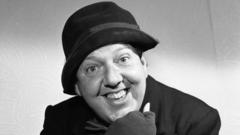
Jimmy Kimmel sat behind his desk recently, leaning into the blue glow of the late-night cameras, and poked at a wound that has been festering in the American psyche for years. He wasn’t just talking about polling data or stump speeches. He was talking about the soul. Specifically, he was dissecting the bizarre, rigid refusal of the MAGA movement to ever utter the words: "I was wrong."
To Kimmel, this isn’t just a political quirk. It is a theological crisis.
He framed it through the lens of Christianity—a faith built entirely on the foundation of the "unforced error." The central architecture of the religion is the confession. You admit you are a mess. You acknowledge you’ve tripped over your own ego. You ask for a clean slate. Without the admission of a mistake, the whole ritual collapses. Yet, we are watching a massive cultural block claim the mantle of the faith while systematically dismantling its most vital mechanism.
The Hypothetical Man in the Third Pew
Consider a man named Arthur. Arthur is a composite, but you know him. He sits in a Lutheran church in Ohio or a Baptist one in Georgia. He has spent sixty years believing that character is defined by the courage to face one's own shortcomings. He taught his kids that "sorry" is a power word.
Then, the political climate shifted.
Arthur started following a leader who treats an apology like a terminal illness. Suddenly, the world changed for Arthur. If his leader admits a mistake, the enemies win. If the leader acknowledges a policy failed or a statement was false, the entire house of cards—the "winning"—disintegrates.
So, Arthur stops apologizing, too. He mimics the posture. He hardens. He watches Kimmel on a screen and feels a prick of defensiveness, because Kimmel is pointing out the glaring paradox: Arthur is professing a faith that requires humility while practicing a politics that demands total, unyielding infallibility.
Kimmel’s monologue touched on the absurdity of the "Chosen One" narrative. When a movement begins to see its leader not as a flawed civil servant but as a divine instrument, the leader loses the permission to be human. Humans make mistakes. Divine instruments do not. Therefore, if the leader says the sky is green, his followers must not only agree but must also find a way to argue that the sky has always been green and that anyone seeing blue is a traitor to the cause.
The Math of Infallibility
The logic is a closed loop. If you never admit a mistake, you can never be corrected. If you can never be corrected, you can never grow. You become a statue.
The MAGA ethos, as Kimmel highlighted, has turned the Christian concept of "grace" on its head. Grace is for the fallen who want to get up. But in this new political theology, no one ever falls. They are pushed. They are targeted. They are victims of a "witch hunt." By reframing every error as an external attack, the need for internal reflection vanishes.
This creates a psychological burden that is exhausting to carry. Imagine the mental gymnastics required to defend a shifting set of "alternative facts" every single day. It is the opposite of the "easy yoke" promised in the scriptures. It is a heavy, jagged armor that must be polished constantly to hide the rust underneath.
Kimmel’s critique wasn’t just a "gotcha" moment for a liberal audience. It was an observation of a structural failure. He noted that the very people who scream the loudest about "traditional values" are the ones most eager to abandon the tradition of the contrite heart.
The Sound of the Broom
Why does this matter to the rest of us? Because a society that cannot admit a mistake cannot solve a problem.
If we cannot agree that a bridge is broken because we are too busy arguing that the bridge was actually a tunnel all along, the bridge never gets fixed. We just sit on the bank of the river, yelling at the water.
Kimmel used his platform to highlight that this refusal to pivot isn’t strength. It’s a profound, trembling weakness. It is the fear that if one thread is pulled—if one lie is admitted, if one policy is conceded as a failure—the entire identity of the movement will unravel.
There is a visceral relief in saying, "I got that one wrong." It releases the tension in the shoulders. it clears the air. It allows the conversation to move from "who is to blame" to "what do we do now?"
But for the movement Kimmel is describing, that relief is forbidden. The followers are trapped in a cycle of perpetual defense, protecting a leader who would rather see the glass stay shattered on the floor than admit his hand was the one that swiped it off the counter.
The Long Road to the Mirror
We are living through a grand experiment in collective ego. We are testing how long a culture can survive when its largest factions decide that "truth" is whatever makes them feel the least ashamed.
Kimmel’s words serve as a reminder that the most "Christian" thing a person can do isn't to be right—it’s to be honest about being wrong. The spectacle of a movement refusing to blink, refusing to apologize, and refusing to reflect isn't just a political strategy. It’s a tragedy of the spirit.
It leaves a vacuum where the soul used to be. It replaces the messy, beautiful process of human growth with a cold, plastic mask of perfection.
The lights go down on the late-night stage, the audience laughs, and the clip goes viral. But the underlying reality remains. Somewhere, Arthur is sitting in his living room, staring at a screen, feeling the weight of a thousand unsaid apologies pressing against his chest, wondering when it became a sin to simply be a man who makes mistakes.
The glass is still on the floor. The cat is innocent. And the broom is leaning against the wall, waiting for someone with enough courage to pick it up.