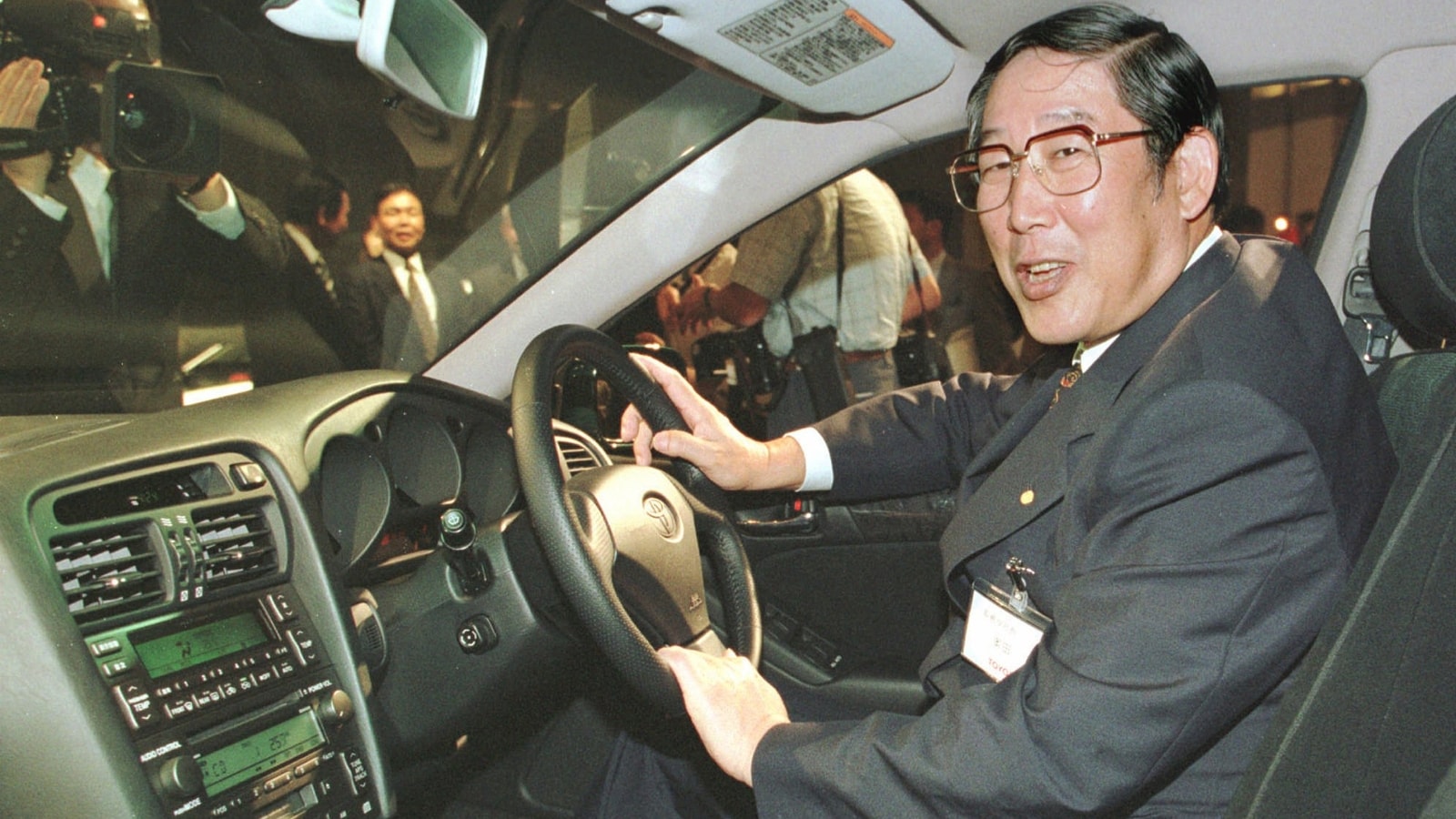
The Operational Legacy of Hiroshi Okuda
The death of Hiroshi Okuda at 93 marks the final transition of an era defined by aggressive internationalization within the global automotive sector. While conventional obituaries frame his tenure through the lens of individual achievement or corporate storytelling, a rigorous strategic post-mortem reveals a more complex reality. Okuda did not merely manage Toyota; he stress-tested the Toyota Production System against the friction of globalization, shifting the company from a localized manufacturing monolith into a decentralized multinational organization.
Understanding his impact requires setting aside hagiography and examining the structural mechanics of his leadership. His interventions altered the company's cost functions, forced structural adaptations in labor relations, and accelerated product development cycles like the Prius project. By evaluating the institutional bottlenecks he broke and the operational debt he introduced, we uncover the true blueprint of his corporate stewardship.
Breaking the Homogeneous Monolith
Before Okuda assumed the presidency in 1995, Toyota operated under an insular, highly centralized management model rooted in traditional Japanese corporate governance. This structure optimized local operational efficiency but created acute strategic inertia when facing foreign market friction, particularly trade retaliation from the United States.
Okuda disrupted this equilibrium through three foundational shifts:
- Executive Localization: He appointed non-Japanese board members and dismantled the old boys' network that prioritized tenure over technical merit or international exposure.
- Geographic Autonomy: Production hubs were granted localized supply chain authorities rather than remaining dependent on components shipped from Aichi prefecture.
- Financial Aggression: He abandoned the conservative cash-hoarding stance of his predecessors, deploying capital rapidly into joint ventures and greenfield manufacturing sites abroad.
These moves eliminated regional silos, though they introduced internal friction between traditional engineers and the newly empowered international divisions. The transition exposed a classic organizational trade-off: trading cultural cohesion for market velocity.
The Economics of the Prius and Alternative Powertrains
The development of the Prius under Okuda's watch is frequently mischaracterized as a purely environmental crusade. From an economic perspective, the project was a high-risk bet on shifting the automotive cost curve before regulatory mandates forced the issue.
Traditional internal combustion engine development followed a predictable, mature cost-reduction trajectory. Introducing a hybrid architecture—combining an internal combustion engine, a high-voltage battery pack, and a dual-motor transmission—shattered this predictability.
The Cost Function Reality
- Initial Unit Economics: Early Prius production units suffered from severe negative margins. The cost of raw materials for battery chemistry and power electronics vastly exceeded the retail price point.
- R&D Amortization: Okuda authorized absorbing billions in sunk R&D costs without immediate ROI expectations, treating the platform as a foundational long-term hedge against petroleum price volatility.
- Supply Chain Compression: Rather than passing inflated costs entirely to the consumer, Toyota leveraged its manufacturing rigor to systematically compress supplier margins over successive generations of the vehicle.
This strategy redefined market expectations. By treating a loss-leading innovation as an operational learning curve rather than a failed financial product, Toyota established a proprietary technological moat that competitors took over a decade to breach.
Labor Relations and the Cost of Expansion
Okuda's tenure was not without operational failures and strategic miscalculations. His push for aggressive global expansion collided directly with Toyota's sacred internal social contract: lifetime employment and industrial harmony.
By forcing rapid overseas scaling, Okuda exposed the organization to localized labor disputes and quality control variances. When manufacturing volume outpaces the institutional capacity to train workers in the nuances of standardized work routines, defect rates rise.
Furthermore, his management style broke sharply with the consensus-driven ringi system. While this autocratic speed was necessary to outmaneuver bureaucratic stagnation, it alienated segments of the middle-management layer. These managers were accustomed to gradual, bottom-up consensus building rather than top-down directives issued from executive suites. The resulting cultural dissonance left an institutional scar, forcing subsequent leadership to deliberately recalibrate the balance between centralized speed and operational consensus.
Deploying Decentralized Scale Without Losing Core Rigor
The ultimate test of Okuda's structural changes is visible in how modern manufacturing entities must now operate under economic uncertainty. Scale without procedural discipline results in bloated overhead, while discipline without international adaptability results in regional irrelevance.
To replicate the structural expansion Okuda engineered without inheriting its cultural friction, modern leadership must enforce strict modularity across supply chains while tying financial incentives directly to localized execution velocity. Decentralization fails when governance is ambiguous; it succeeds only when local operational units possess total ownership of their P&L while remaining anchored to a non-negotiable core standard of quality.