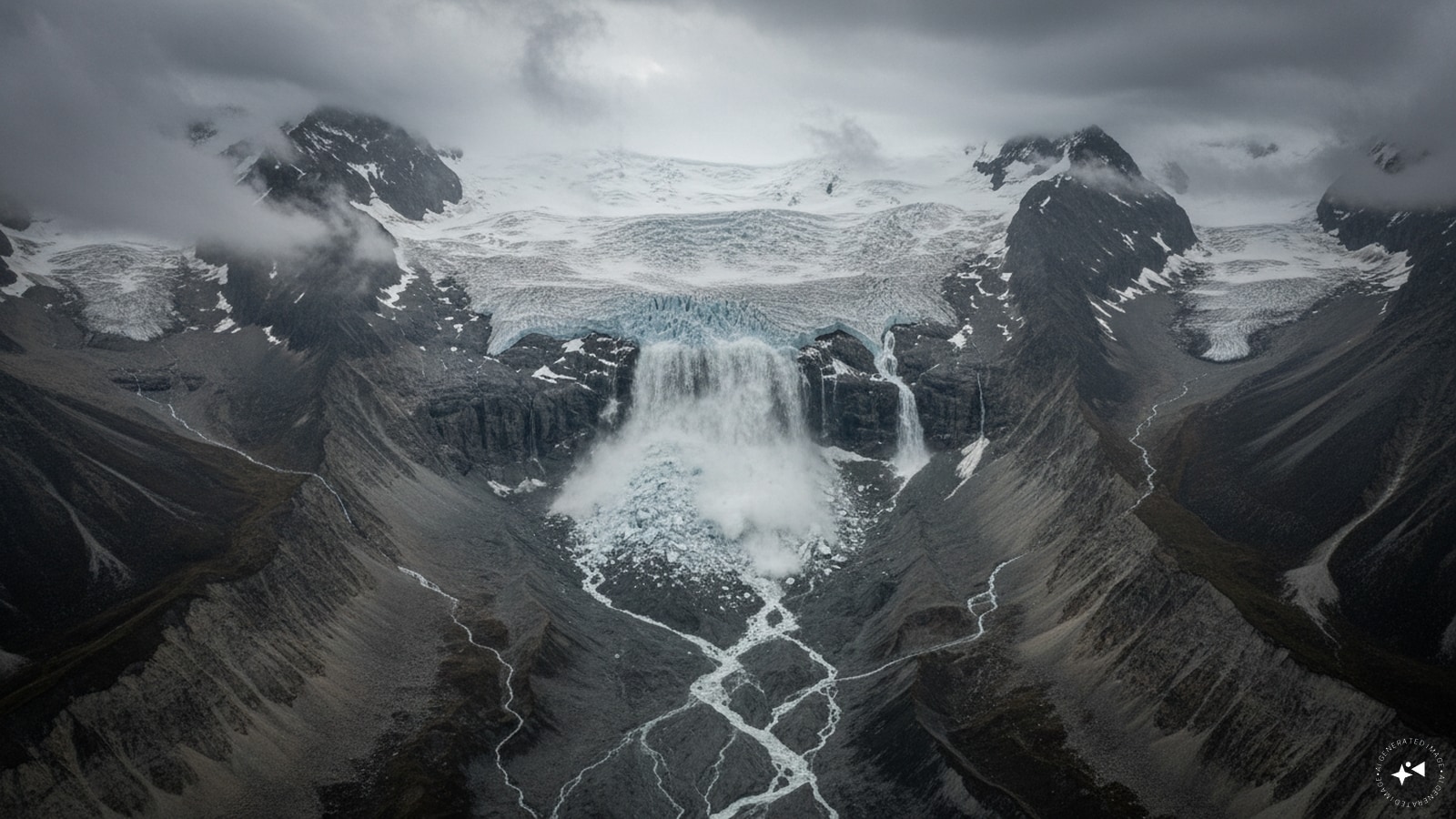
Ice is disappearing from the roof of the world. It isn't happening over centuries. It's happening right now, right in front of our eyes.
When people talk about climate change, they usually picture polar bears on shrinking Arctic floes or bleached coral reefs in the tropics. They rarely talk about the Hindu Kush Himalaya region. That's a massive mistake. This region holds the largest store of ice outside the polar caps. It's often called the Third Pole. Right now, that pole is melting at an alarming rate, and the consequences will touch billions of lives.
You've probably heard that global temperatures are rising. But the mountains play by their own rules. High-altitude warming is running at twice the global average. Scientists call this elevation-dependent warming. Snow and ice absorb less heat when they're clean, but soot, dust, and industrial pollution coat the Himalayan surface. This dark layer absorbs sunlight instead of reflecting it. The ice doesn't just melt from the air getting warmer. It bakes from the top down.
Data from the International Centre for Integrated Mountain Development reveals that glaciers in this range vanished sixty-five percent faster between 2010 and 2019 compared to the previous decade. That isn't a statistical blip. It's a freefall.
The Downstream Nightmare
Water doesn't stay frozen forever. When glaciers melt, they form massive glacial lakes held back by loose piles of rock and debris known as moraines. These natural dams are ticking time bombs.
As water volume swells behind them, the dams weaken. Eventually, they burst. Scientists call this a Glacial Lake Outburst Flood, or GLOF. Imagine millions of cubic meters of water rushing down a steep mountain valley at highway speeds. It wipes out bridges, villages, and hydropower stations in minutes.
People living in mountain hamlets in Nepal, Bhutan, and northern India live with this threat every single day. They wake up to the sound of roaring rivers, wondering if today is the day the lake above them gives way. There's no advanced warning system that can save a village when a mountain lake lets loose fifty feet of mud and water at midnight.
The Water Crisis Nobody Is Ready For
Glaciers are giant water towers. They store snow during the winter and release it slowly during the dry summer months when rain is scarce.
The Indus, Ganges, and Brahmaputra river systems feed nearly two billion people. Let that number sink in. That's a quarter of the global population relying on seasonal meltwater for drinking, sanitation, and agriculture.
When the glaciers shrink past a certain tipping point, the rivers won't flow steadily anymore. You get severe floods during the peak melt years, followed by extreme water scarcity once the ice is gone. Farmers in the Indo-Gangetic plain depend entirely on predictable monsoon rains and glacial runoff to grow rice and wheat. Take away the steady supply of glacier water, and food security collapses. Crop yields drop. Prices spike. Entire regions face unprecedented migration pressures.
You can't engineer your way out of losing a natural water tower. Desalination plants don't work in landlocked high-altitude valleys.
Why Black Carbon Is Making It Worse
It's not just carbon dioxide trapped in the atmosphere driving this disaster. It's black carbon, too.
South Asia has massive air pollution issues. Agricultural burning, brick kilns, diesel exhaust, and coal plants pump billions of tiny soot particles into the sky. Jet streams carry this haze right toward the Himalayas.
When the soot settles on white snow and ice, it changes the albedo. Clean snow reflects up to ninety percent of incoming solar radiation. Sooty snow absorbs it. The ice heats up rapidly, even when ambient air temperatures are below freezing. Local governments try to ban traditional brick-making techniques and curb crop burning, but enforcement is weak. The pollution machine keeps running, dusting the glaciers with a microscopic layer of dark ash.
The Human Cost on the Ground
Walk through a mountain village in Ladakh or Himachal Pradesh, and you'll hear the same story from local elders. Springs that have flowed for generations are running dry. Apple orchards are moving to higher altitudes because lower valleys are getting too warm.
Traditional livelihoods are dying out. Tourism helps some communities, but it brings its own problems. More trekkers mean more trash, more black carbon from cooking fires, and greater strain on scarce local water resources.
Climbers and guides working on major peaks notice the changes firsthand. Routes that used to be packed snow and solid ice are turning into crumbling rock faces. Avalanches are becoming unpredictable. The mountains are literally falling apart because the permafrost holding the rock together is thawing.
What Needs to Happen Now
Stopping the collapse of Himalayan glaciers requires aggressive global action, but local interventions matter too.
Governments must invest in early-warning systems for glacial lakes. Engineering teams can artificially siphon water from dangerous lakes to lower the pressure behind moraine dams. It's a temporary fix, but it buys time.
On a regional scale, countries across South Asia need to cooperate on air quality standards. Cutting black carbon emissions won't save the glaciers overnight, but it will slow down the surface melting significantly.
Global emissions targets aren't just abstract policy goals for conference rooms in Europe. They are a literal lifeline for the Hindu Kush Himalaya. Every fraction of a degree matters. If global warming crosses the two-degree threshold, experts estimate that up to eighty percent of Himalayan ice could disappear by the end of the century.
The ice is gone in places where it used to be fifty feet deep. Pay attention to the mountains, because what happens up there eventually reaches your doorstep.