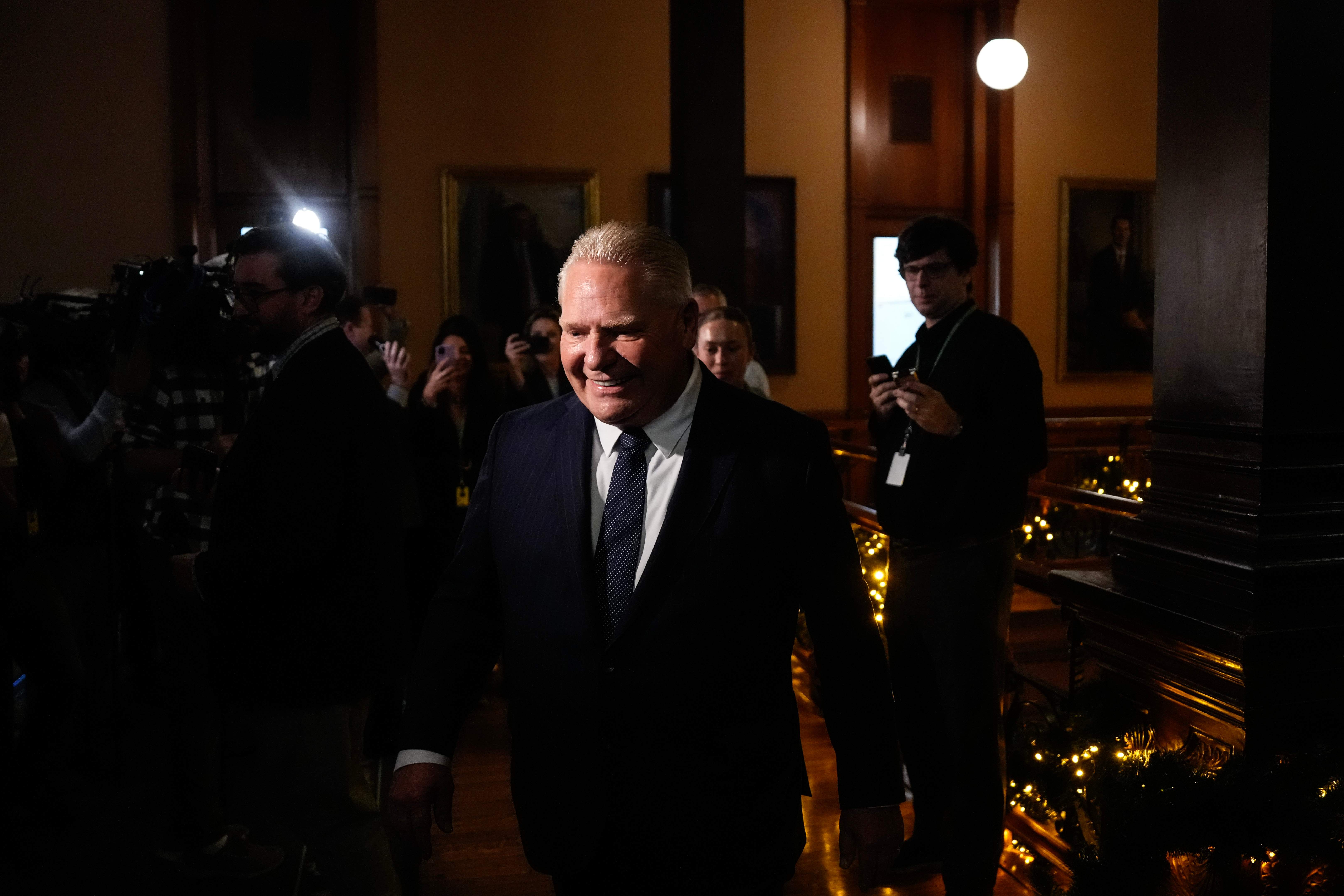
Ontario Premier Doug Ford has placed the responsibility for saving thousands of automotive jobs squarely on the federal government in Ottawa ahead of critical negotiations regarding the Stellantis Brampton assembly plant. As Stellantis pauses retooling efforts and re-evaluates its North American manufacturing footprint, Ford is demanding that federal officials step up with matching financial incentives, tariff protections, and regulatory relief to prevent a permanent loss of assembly capacity in Ontario. The fate of the Brampton facility now hinges on whether federal and provincial leaders can align their industrial policies before corporate executives decide to shift future vehicle production south of the border.
The automotive industry rarely moves with the dramatic flair of a political press conference, yet the current friction between Queen's Park and Parliament Hill reads like a textbook standoff. For decades, Southern Ontario has operated as the beating heart of Canadian manufacturing, tethered directly to the supply chains of Detroit. When an assembly plant stalls, the shockwaves do not stop at the factory gates. They ripple outward through Tier 1 and Tier 2 parts suppliers, tool-and-die shops, logistics providers, and local service economies across the Greater Toronto Area. If you found value in this article, you might want to check out: this related article.
The Anatomy of the Brampton Pause
To understand why the Stellantis Brampton plant has become a political flashpoint, you have to look at the mechanics of modern automotive retooling. A factory does not simply switch from building internal combustion sedans to next-generation electric or multi-energy vehicles overnight. The facility historically produced the Chrysler 300, Dodge Charger, and Dodge Challenger—heavy, rear-wheel-drive muscle cars that defined an era of North American performance. When Stellantis ended production of those legacy models, the Brampton site was slated for a massive overhaul to build the next generation of Jeep Compass crossovers, utilizing the company's flexible STLA Medium architecture.
Retooling requires gutting hundreds of thousands of square feet of assembly lines, installing new stamping presses, recalibrating robotic welding cells, and retraining thousands of workers represented by Unifor. It is a capital-intensive gamble that takes years to execute. When Stellantis halted work on the Brampton retooling project to reassess its product strategy amid shifting consumer demand for electric vehicles and evolving trade policies, the clock started ticking. Every month a plant sits idle, the corporate math changes. Fixed overhead costs accumulate, and executives in Amsterdam and Auburn Hills begin looking at underutilized capacity in other jurisdictions. For another perspective on this event, refer to the recent update from Business Insider.
Ford's decision to publicly pressure Ottawa before the formal talks with Stellantis is a calculated move. Provincial governments have limited fiscal bandwidth compared to federal treasuries. While Ontario can offer electricity rate reductions, land grants, and targeted provincial tax credits, the massive capital subsidies required to compete with the United States Inflation Reduction Act—and the aggressive state-level incentive packages offered across the American Midwest and South—must come from Ottawa. By framing the Brampton negotiations as a federal responsibility early, Ford is insulating himself politically while attempting to force Prime Minister's cabinet into opening the federal checkbook.
The Subsidy Arms Race and Federal Constraints
Canada has already spent tens of billions of dollars in production subsidies and capital grants to secure battery gigafactories from Volkswagen, Stellantis-LG Energy Solution, and Northvolt. Those deals were structured to match the generous per-kilowatt-hour production tax credits embedded in American legislation. Taxpayers were told these massive outlays were necessary to anchor the future of the Canadian auto sector for the next thirty years.
Now comes the bill for the assembly plants themselves.
Ottawa faces a difficult fiscal reality. The federal government cannot endlessly subsidize every link in the automotive value chain without triggering severe budgetary strain or inviting trade retaliation. Yet, building battery cells in Windsor or St. Thomas makes little economic sense if the vehicles those batteries power are assembled in Illinois, Michigan, or Mexico. Battery manufacturing is capital-intensive, but final vehicle assembly is labor-intensive. Final assembly is where the high-paying union jobs live, and it is where the highest multiplier effect occurs for local parts makers.
This dynamic creates an asymmetrical negotiation. Stellantis holds immense card advantage. As a multinational conglomerate formed from the merger of Fiat Chrysler Automobiles and the French PSA Group, Stellantis has no sentimental attachment to any single postal code. Its leadership evaluates plants strictly on cost per unit, regulatory friction, labor stability, and government co-investment. If Ottawa refuses to sweeten the pot with federal dollars, Stellantis can easily argue to its board of directors that consolidating production into existing American facilities—where tariff risks are zero and energy costs are lower—is the only fiscally responsible choice.
Trade Pressures and the Shadow of Tariffs
You cannot separate the Brampton talks from the broader geopolitical anxiety gripping North American trade. The United States-Mexico-Canada Agreement (USMCA) was supposed to provide long-term certainty for cross-border manufacturing. Instead, escalating rhetoric around blanket tariffs, protectionist procurement rules, and bilateral trade reviews has injected deep uncertainty into corporate boardrooms.
Automakers hate uncertainty more than they hate high taxes. A tariff of even ten or twenty-five percent on vehicles crossing the Ambassador Bridge or the Blue Water Bridge destroys the razor-thin profit margins of mass-market crossovers like the Jeep Compass. If Stellantis invests over a billion dollars into Brampton only to see its exports to the United States hit with punitive border duties, the business case collapses instantly.
Ford knows this. When he puts the onus on Ottawa, he is not just asking for corporate welfare; he is demanding that the federal government deploy its diplomatic and trade apparatus to guarantee tariff-free market access for Canadian-built vehicles. Provincial premiers do not negotiate international trade treaties. Only Ottawa can sit across from Washington to secure exemptions, harmonize regulatory standards, and defend the integrated North American auto pact that has governed production since 1965.
The Regulatory Squeeze on Automakers
Beyond subsidies and tariffs, federal emissions mandates are adding another layer of friction to the Brampton negotiations. Ottawa's Zero-Emission Vehicle (ZEV) sales mandate requires automakers to meet strict, escalating targets for electric vehicle sales in Canada, culminating in a complete phase-out of new internal combustion passenger vehicles by 2035.
Legacy automakers have repeatedly warned that consumer adoption of battery-electric vehicles has cooled faster than regulators anticipated. High interest rates, charging infrastructure gaps, and sticker shock have pushed buyers back toward hybrids and traditional gas-powered crossovers. Stellantis designed the STLA Medium platform specifically to handle both electric and hybrid powertrains, giving it flexibility. However, if Canadian federal regulations penalize automakers for failing to meet rigid EV sales quotas while simultaneously failing to subsidize the consumer transition, companies will naturally prioritize manufacturing in markets with more forgiving regulatory timelines.
Ford has consistently criticized federal carbon pricing and rigid EV mandates as job killers for Ontario's manufacturing base. Entering the Brampton talks, the Premier is positioning Ontario as pro-business and pragmatic, casting Ottawa's environmental policies as an anchor dragging down domestic competitiveness.
The Union Factor and Labor Realities
Caught directly in the crossfire are the roughly 3,000 Unifor members whose livelihoods depend on the Brampton facility. During the most recent round of pattern bargaining, Unifor secured significant wage increases, pension improvements, and explicit product commitments for Brampton. Unions do not negotiate with governments; they negotiate with employers. Yet in the modern auto industry, collective agreements are frequently underwritten by state intervention.
When Stellantis paused the Brampton retooling, Unifor leadership immediately sounded the alarm, demanding transparency from the automaker and intervention from both levels of government. Labor leaders understand the brutal math of plant closures. Once an assembly plant goes dark for more than eighteen to twenty-four months, the probability of it ever reopening drops dramatically. Skilled tradespeople drift away to other industries. Local suppliers lose contracts and close their doors. The institutional knowledge required to launch a complex vehicle program evaporates.
Consider a hypothetical example of how this attrition works on the ground. Suppose a toolmaker with twenty years of experience at Brampton takes a buyout or moves to an aerospace firm in Mississauga during a prolonged shutdown. When the automaker finally decides to restart the line two years later, it faces severe skill shortages, slower ramp-up speeds, and higher defect rates. Those operational headaches increase the cost per vehicle, making the plant look even less attractive on corporate spreadsheets during the next product allocation cycle.
Unifor's role in the upcoming talks will be to keep both Ford and Ottawa honest. The union will not allow the Premier and the Prime Minister to score political points off one another while workers sit on extended layoffs. If either government attempts to use the Brampton workers as pawns in a jurisdictional dispute, Unifor has the political muscle and media reach to make both sides pay at the ballot box.
Why Regional Politics Dictate the Timing
Look at the electoral map of Ontario, and Ford's aggressive posture makes complete sense. Brampton sits in the heart of Peel Region, a massive suburban battleground that decides provincial and federal elections alike. No party can form a majority government in Queen's Park or Ottawa without winning a substantial share of seats in the 905 belt surrounding Toronto.
Automotive manufacturing jobs are the bedrock of the middle class in cities like Brampton, Oakville, Oshawa, and Windsor. They represent unionized wages, health benefits, and defined-benefit pensions that allow families to afford mortgages in one of the most expensive real estate markets in North America. Losing the Brampton plant would trigger a localized economic crisis in Peel Region that no politician could survive unscathed.
By speaking out forcefully before the talks even begin, Ford is seizing the narrative. If the negotiations succeed and Stellantis commits to a firm timeline for reopening the plant, Ford can claim credit for forcing Ottawa to the table. If the talks stall or fail, Ford has already laid the groundwork to blame federal inaction, high taxes, and regulatory overreach. It is a classic political hedge, executed with the instincts of a seasoned campaigner who understands that perception often matters more than policy mechanics.
The Corporate Calculus Inside Stellantis
While Canadian politicians trade barbs, executives at Stellantis are dealing with their own internal pressures. The automaker has endured a turbulent stretch marked by bloated dealership inventories in North America, declining market share, leadership shakeups, and intense margin compression. Under immense pressure from institutional investors to cut costs and restore profitability, Stellantis has been ruthlessly scrutinizing every capital expenditure across its global footprint.
In that environment, spending over a billion dollars to retool a single plant in Ontario is no longer an automatic rubber-stamp decision. Corporate finance teams are running stress tests on every facility. They are comparing Brampton against plants in Belvidere, Illinois—where Stellantis also faced intense political and union pressure to reopen an idled facility—as well as lower-cost operations in Toluca, Mexico.
Mexico offers dramatic labor cost advantages and established supply chains for compact and mid-size crossovers. The United States offers massive domestic market scale, insulation from American tariffs, and aggressive state-level tax abatements. Canada, by contrast, has higher corporate taxes, stricter environmental compliance costs, a smaller domestic consumer market, and a heavy reliance on exports to the U.S. To overcome those structural disadvantages, Canada must offer either superior workforce productivity or substantial public co-investment.
History shows that automakers will walk away from historic facilities when the numbers stop working. General Motors famously shuttered its Oshawa assembly plant in 2019 before eventually bringing back limited pickup truck production after intense union pressure and government support. Ford Motor Company delayed its own multi-billion-dollar electric vehicle retooling at the Oakville Assembly Complex, pivoting instead to heavy-duty Super Duty trucks to preserve profitability. Brampton is simply the latest flashpoint in a continuous, unforgiving restructuring of the North American auto sector.
What Actually Needs to Happen at the Table
If the upcoming talks between Stellantis, Ottawa, and Queen's Park are going to yield anything beyond empty press releases, all three parties must move past posturing and address the concrete structural barriers holding the Brampton project back.
First, Stellantis must provide an unambiguous, binding timeline for the installation of tooling and the start of production for the next-generation Jeep Compass or an equivalent high-volume vehicle. Ambiguity is lethal to the supply base. Parts manufacturers cannot secure bank financing to tool up for new contracts based on vague corporate assurances.
Second, Ottawa and Ontario need to present a unified, co-funded incentive package tied directly to verifiable employment and capital expenditure milestones. Taxpayers have grown weary of writing blank checks to multinational corporations without clawback provisions. Any public money committed to Brampton must include strict legal guarantees that the funds will be repaid in full if Stellantis fails to maintain minimum headcount and production volumes over a ten-year horizon.
Third, the federal government must align its regulatory framework with market reality. Forcing automakers to meet arbitrary EV sales targets while the charging grid remains underdeveloped and consumers balk at prices only drives manufacturing investment out of the country. Allowing hybrid and multi-energy vehicles greater credit under federal emissions rules would immediately bolster the business case for the flexible platform planned for Brampton.
The automotive industry does not reward hesitation. Capital flows to the jurisdictions that offer the lowest friction, the clearest rules, and the strongest financial backing. Ford has made his opening gambit by throwing the spotlight onto Ottawa, ensuring that federal officials cannot hide behind bureaucratic processes while thousands of Ontario families wait in limbo. Whether the federal government matches that urgency with concrete financial and trade commitments will determine if Brampton remains a pillar of Canadian manufacturing or becomes another cautionary tale of industrial decline.