The red dot glows.
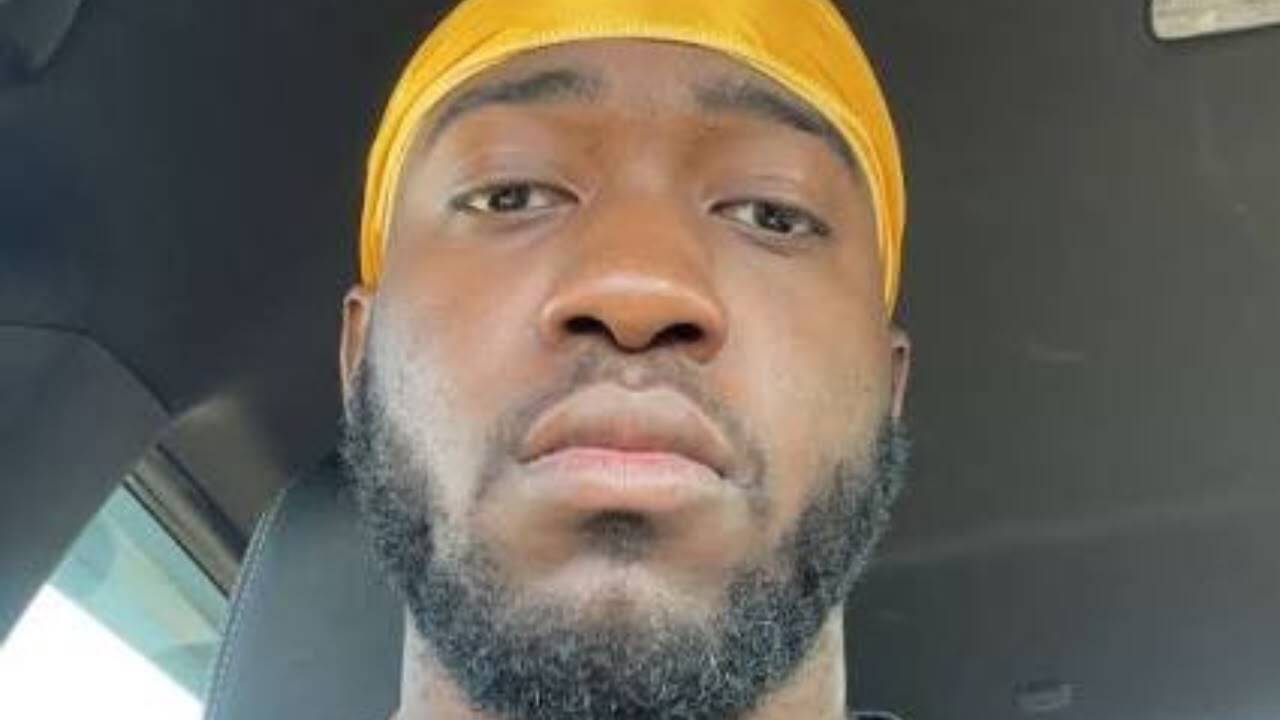
To millions of people staring at their phones, that tiny, crimson circle in the corner of a screen is just a notification. For Jidon Armani Adams—known to the internet as JiDion—it was a heavy, invisible anchor. It meant the camera was rolling. It meant thousands of strangers were watching, demanding, and judging in real time.
For years, that digital glare propelled a former Uber Eats driver into the stratosphere of internet fame. But on a humid night in late June, outside a brightly lit McDonald’s in Woodhaven, Michigan, the red dot led him straight into handcuffs.
What followed was a fast-paced legal drama that ended in a Michigan courtroom. It was a moment of reckoning that forced one of the internet’s most recognizable pranksters to face a quiet, uncomfortable truth about the monster he had helped create.
The Trap of the Instant Audience
To understand why a twenty-something millionaire ended up face-down in a fast-food parking lot, you have to understand the mechanics of the modern livestream.
Traditional video creation is a patient process. You shoot, you edit, you reflect, and then you publish. There is a buffer. Livestreaming destroys that buffer entirely. It is a raw, unedited conversation between a creator and a live, scrolling chat of thousands of anonymous usernames.
When the chat demands more, the creator gives more. It is a psychological feedback loop.
Consider how easy it is to lose your footing when thousands of voices are screaming for escalation. If you hesitate, the viewer count drops. If you back down, the chat calls you a coward. The pressure mounts. The blood pumps.
On June 22, the loop tightened.
JiDion had traveled to Woodhaven to help a friend and fellow creator, Skeeter Jean. The mission felt righteous, if highly chaotic. Skeeter’s uncle was allegedly squatting in his grandmother's home. In an attempt to force the man out, the creators decided to move JiDion into the house.
When the uncle retreated to a nearby McDonald’s, the cameras followed. The crowd followed. The live chat, hungry for conflict, watched as the situation spiraled.
McDonald’s management, watching a massive crowd gather and tensions rise outside their doors, called the police. Officers arrived and ordered the crowd to disperse. But the red dot was still glowing. The stream was still live.
JiDion stayed.
Within minutes, the screen tilted wildly. Voices raised. Metal clicked. Four people, including JiDion and three minors, were taken into custody.
The screen went black.
The Cold Reality of the Holding Cell
Inside a concrete cell, the digital noise evaporates. There are no emojis. There is no scrolling chat. There are only the fluorescent lights and the weight of misdemeanor charges: disturbing the peace and stalking.
JiDion was released on a $10,000 bond, but the true cost of that night was far higher.
Behind the scenes, the financial toll began to mount immediately. Legal representation for himself and the young fans swept up in the arrest cost hundreds of thousands of dollars. He spent a massive sum to ensure the minors arrested alongside him had their legal fees covered.
But the financial bleeding was nothing compared to the internal shift.
While waiting for his July court date, JiDion sat in front of a camera again. This time, there was no live chat. There was no stunt. In a somber video, he looked visibly tired, stripped of the boisterous persona that had defined his career.
"Streaming makes me the worst me," he admitted.
It was an extraordinarily vulnerable admission for a creator at the peak of his influence. He confessed that the constant, immediate feedback of the live audience had a way of warping his judgment. It pushed him to be louder, more obnoxious, and more confrontational than he ever wanted to be in his normal life. He was spiraling, losing the plot of his own life just to feed the algorithm.
He announced he was walking away from the live format forever. No more nuisance streams. No more public pranks.
The Woodhaven arrest, intended to be another piece of viral content, had instead broken the spell of the live feed.
A Clean Slate and a Quiet Future
Yesterday, on July 13, the legal saga came to an abrupt, unexpected end.
JiDion walked into a Michigan courtroom preparing for a fight. He walked out fully cleared.
The judge dismissed all charges against him with prejudice, meaning the state cannot bring the same charges against him ever again. He was fully acquitted. Even better for the young supporters who had been caught in the crossfire, their records were entirely expunged.
It was a total legal victory.
Yet, there was no triumphant livestream celebration. There was no celebratory prank. Instead, JiDion quietly shared the news on social media, expressing profound relief that the nightmare was over and that the young people involved could move on with clean records.
He didn't use the victory to validate his past behavior. He acknowledged that while he believed he didn't commit a crime, he was being incredibly annoying and took full responsibility for the chaos he created. He even asked his millions of followers to leave the Woodhaven Police Department alone, hoping to eventually build a positive relationship with the city.
The era of the chaotic prankster is over.
JiDion is shifting his focus entirely to recorded, edited content—specifically, his operations targeting online predators. It is a space where the stakes are real, but the process is deliberate, calculated, and free from the toxic, split-second pressure of the live chat.
The red dot of the livestream has finally been turned off. For the first time in years, Jidon Adams is stepping out of the digital coliseum, leaving behind the roaring crowd to find out who he is when nobody is watching.