The humidity in the bedroom was thick enough to chew. Sarah stood before an open closet, the floor littered with discarded linen blends and "must-have" fast-fashion hauls from three summers ago. She had a flight to catch in four hours—a wedding in Tuscany, the kind of trip people spend a decade dreaming about—and yet, she was paralyzed. She owned forty-two hangers of summer clothing. None of them worked together.
She felt the familiar, low-grade panic of the modern consumer. We are told that choice is freedom. In reality, an overstuffed closet is a prison of decision fatigue. Every mismatched floral print and itchy, synthetic sundress represents a micro-failure of judgment. Sarah wasn’t just looking for an outfit; she was looking for a version of herself that felt effortless, cool, and composed. Instead, she was sweating through her base layer before the suitcase was even zipped.
This is the hidden tax of the seasonal wardrobe. We buy for the fantasy of summer—the yacht we aren’t on, the gala we aren't attending—rather than the reality of heat, movement, and repetitive wear.
The Architecture of the Minimalist Heatwave
To understand why Sarah was failing, we have to look at the physics of summer. Heat is an aggressor. It demands breathability. Most people approach their summer wardrobe as a collection of "looks," when they should be approaching it as a survival kit for the elegant.
The secret isn't more clothes. It is fewer, better things that speak the same language.
Consider the oversized white button-down. In the hands of a novice, it’s a work shirt. In the hands of an expert, it is a beach cover-up, a light jacket for breezy evenings, and a polished top when tucked into high-waisted trousers. It is the Swiss Army knife of textiles. If Sarah had possessed one high-quality organic cotton shirt instead of six "trendy" polyester blouses, she would have been halfway to Florence by now.
The math of a capsule wardrobe is simple: $X$ pieces must create $3X$ outfits. If an item cannot be worn in three distinct scenarios, it is a squatter. It is taking up emotional real estate without paying rent.
The Linen Manifest
There is a specific, tactile joy in linen that remains unmatched by any laboratory-grown fiber. It is the fabric of history. It wrinkles, yes, but those wrinkles are a badge of authenticity—a sign that you are living, moving, and breathing rather than being preserved in plastic.
A pair of wide-leg linen trousers in a neutral tone—oatmeal, slate, or midnight navy—acts as the anchor for the entire season. They provide the silhouette of a gown with the comfort of pajamas. When paired with a simple silk camisole, the transition from a sweltering afternoon at a museum to a candlelit dinner is instantaneous.
Sarah’s mistake was thinking she needed a different dress for every day. She didn't. She needed a base layer of integrity.
A well-curated summer capsule consists of exactly twelve items:
- Two pairs of trousers (one linen, one light denim).
- One slip skirt (bias-cut for movement).
- Two basic tees (heavyweight cotton).
- One crisp button-down.
- One high-quality swimwear set.
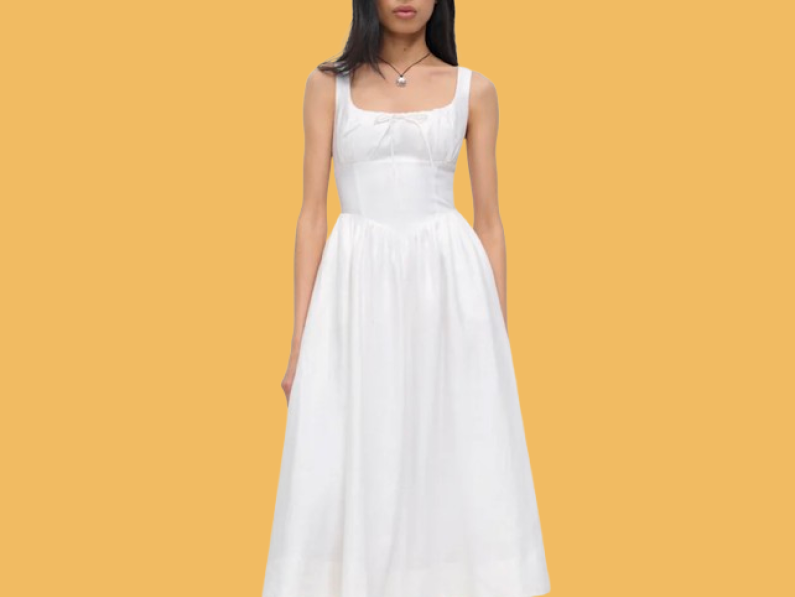
- A versatile midi dress.
- A lightweight knit (for the aggressive air conditioning of modern life).
- One pair of leather sandals.
- One pair of clean, white sneakers.
- A structured tote.
That is it. Twelve.
The Psychological Weight of "Just in Case"
Why do we struggle to narrow it down?
Psychologists often point to "loss aversion." We fear that if we don't pack the neon sarong, we might miss out on the specific, neon-sarong-worthy moment. We pack for our "ideal selves"—the woman who suddenly loves hiking or the man who might spontaneously take up sailing.
But the "ideal self" is a phantom. The "real self" gets blisters, gets hot, and wants to feel comfortable while eating gelato.
The black slip dress is the antidote to this anxiety. It is the most hardworking garment in human history. Worn with sneakers and a denim jacket, it is a morning coffee run. Worn with gold hoops and sandals, it is a wedding guest ensemble. It solves the "what if" by being "everything."
When we strip away the noise, we find that style isn't about what we add. It's about what we have the courage to leave behind.
The Sustainability of the Soul
Beyond the aesthetic, there is a moral weight to the way we dress. The fashion industry is responsible for a staggering amount of global carbon emissions. The "haul" culture—the act of buying ten cheap items for the price of one good one—is a cycle of temporary dopamine followed by permanent waste.
A capsule wardrobe is a quiet act of rebellion. It says that you are finished with the frantic hunt. You are choosing a timeless trench over a seasonal fad. You are investing in a tailored blazer that will look just as sharp in five years as it does today.
Sarah finally stopped. She cleared the bed. She picked out the linen pants, the white shirt, the slip dress, and the leather sandals. She put the rest back in the closet and shut the door.
The weight in her chest lifted.
She realized that the fear of being under-dressed was actually a fear of being seen as unprepared. But true preparation isn't a suitcase full of options; it’s the confidence that comes from knowing that whatever you pull out, it works.
The sun was beginning to dip, casting long, golden shadows across the room. Sarah zipped her small carry-on with a satisfying click. She didn't look like a woman who was missing something. She looked like a woman who had finally found the space to breathe.
The most beautiful thing you can wear this summer isn't a brand name or a specific trend. It is the calm that comes from having nothing left to prove, and only a few perfect things to wear while you prove it.