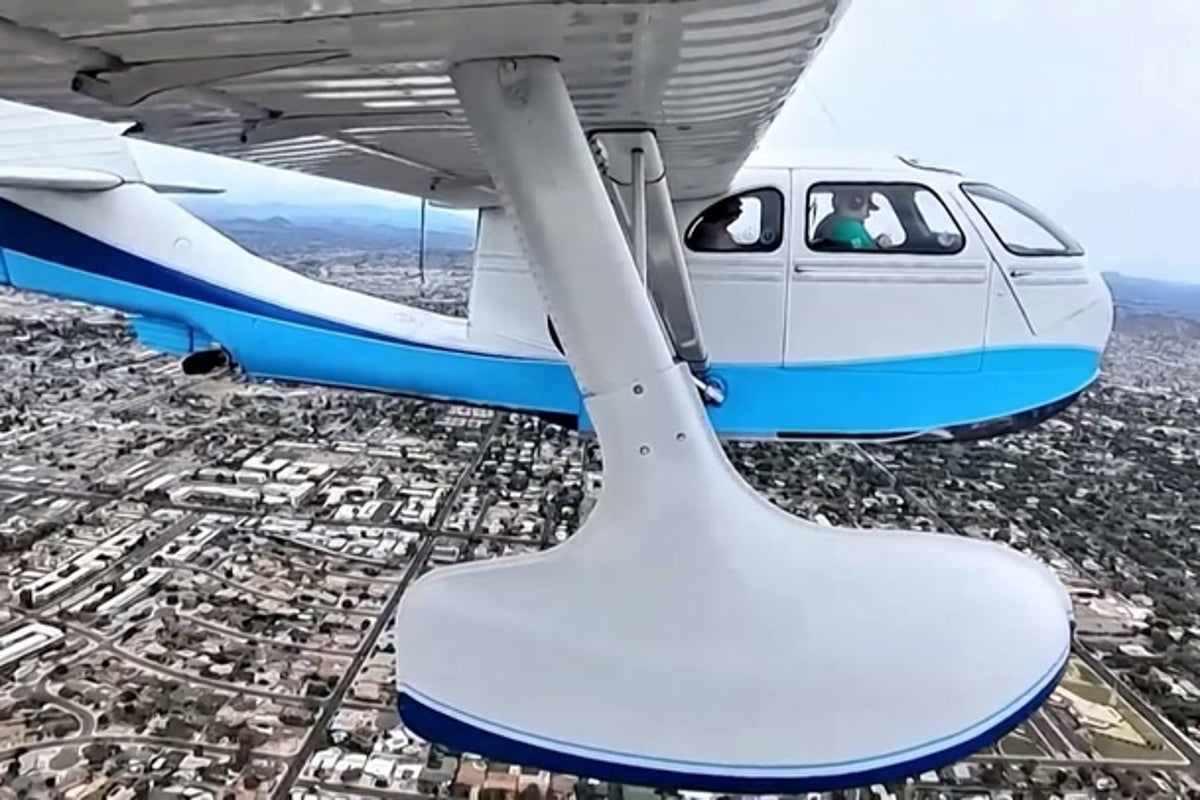
When a Second World War-era seaplane made an emergency landing on a busy city street last week, local news outlets treated it as a miraculous spectacle of pilot skill and retro charm. They missed the real story. The successful touchdown of a vintage Consolidated PBY Catalina on asphalt, forcing morning commuters to swerve around a 60-foot wing, is not just a triumph of seat-of-the-pants flying. It is a stark warning about the rapidly collapsing infrastructure required to keep eighty-year-old warbirds in the sky. As the generation of mechanics who understand these radial engines retires, and as specialized parts vanish from the global market, the risk profiles of historical flyovers are shifting from calculated exhibition to structural gambling.
The incident highlights a critical vulnerability in the vintage aviation ecosystem. Maintaining an aircraft built in 1943 requires a supply chain that no longer exists in a commercial capacity. Every flight hour demands hours of specialized, highly manual labor, and the margins for error are shrinking as the airframes age past their original design limits.
The Mechanical Extinction Facing Historical Aircraft
Modern aviation relies on digital telemetry, predictive maintenance software, and modular component replacement. Vintage warbirds rely on none of these. When an oil pump fails on an engine manufactured by Pratt & Whitney during the Roosevelt administration, you cannot order a replacement on an online portal.
The mechanics who service these machines must either scavenge parts from a dwindling pool of static museum displays or fabricate new components from original blueprint drawings. This process is incredibly expensive. It also requires an intimate knowledge of metallurgy and machining that is disappearing from the modern workforce.
The crisis is fundamentally human. The aviation industry faces an acute shortage of certified airframe and powerplant mechanics who hold the specific ratings needed for large radial engines. The technical schools that train the next generation of technicians focus almost exclusively on high-bypass turbofans and composite materials. They do not teach the nuances of timing a dual-magneto system or adjusting the valve clearances on a twin-row radial engine. The institutional knowledge is held by a graying demographic of enthusiasts, many of whom are well into their seventies and eighties. When they stop working, the planes stop flying safely.
Financial Strain and the Safety Compromise
Operating a vintage heavy bomber or maritime patrol plane is an economic black hole. Fuel consumption alone is staggering, with large radial engines burning dozens of gallons of high-octane aviation gasoline every hour, not to mention the gallons of oil they naturally consume and leak. Insurance premiums for these aircraft have skyrocketed over the past decade, driven by high-profile accidents and the escalating cost of hull replacement.
To survive, the non-profit foundations and private collectors who own these aircraft must keep them working. They fly them to regional airshows, sell rides to history buffs, and book appearances at local festivals. This creates a dangerous feedback loop.
- The aircraft must fly frequently to generate the revenue needed to fund their own maintenance.
- Increased flight hours accelerate the wear and tear on irreplaceable components.
- The pressure to meet schedule deadlines can subtly influence operational decisions, sometimes pushing pilots and mechanics to accept minor defects that would otherwise ground the aircraft.
This economic reality forces a difficult question upon the aviation community. At what point does the educational value of flying a piece of living history fail to justify the risk posed to the crew and the public on the ground?
The Illusion of Modern Airworthiness Standards
There is a common misconception that because an aircraft possesses a valid Federal Aviation Administration airworthiness certificate, it is as safe as a modern commuter plane. This is a false equivalence. Warbirds typically operate under experimental or restricted category certificates. These designations allow for significant deviations from modern safety standards.
+------------------------------------+------------------------------------+
| Modern Commercial Transport        | Vintage Warbird (Experimental)     |
+------------------------------------+------------------------------------+
| Redundant digital avionics         | Single-point mechanical systems    |
| Rigorous fatigue life monitoring   | Visual inspection of aged metal    |
| Flight data recorder tracking      | Minimal telemetry or data logging  |
| Modern crash-survivable cabins     | Bare-metal historic structure      |
+====================================+====================================+
These older airframes lack modern redundant systems. If a primary hydraulic line fractures on a vintage transport plane, there is often no backup system to lower the landing gear or operate the flaps. Pilots must rely on emergency hand pumps or gravity-drop mechanisms that may not have been tested under actual flight loads in years. Furthermore, the metal itself is tired. Intergranular corrosion can hide deep within the wing spars of an aircraft that has spent decades parked outside or flying in humid environments, invisible to anything short of expensive radiographic or ultrasonic testing.
Redefining Preservation in a Risk-Averse Era
The solution to this brewing crisis requires an uncomfortable shift in how we view historical preservation. The instinct to keep these magnificent machines flying is understandable. The sound of a large radial engine or the silhouette of a vintage fighter against the sky provides a visceral connection to history that a static museum display cannot replicate. But the physical reality of metal fatigue and vanishing expertise cannot be ignored indefinitely.
Some European nations have already moved toward a stricter regulatory framework, severely limiting the conditions under which historic heavy aircraft can fly over populated areas. The United States aviation community has largely resisted these restrictions, pointing to the self-policing nature of the warbird community and the exceptional skill of the pilots involved.
Yet skill cannot overcome structural failure. The emergency landing on a city street was a virtuoso performance by the flight crew, but it was also a statistical anomaly. The next time a structural component fails or an engine seizes over a dense metropolitan area, the outcome may not involve an empty stretch of asphalt and an intact airframe.
Museums must begin investing heavily in high-fidelity digital simulators and immersive exhibitions that capture the experience of flight without risking the physical artifact itself. Preserving an aircraft by flying it until it suffers a catastrophic failure is not preservation at all; it is consumption. The true stewards of aviation history must recognize that the safest place for an eighty-year-old aluminum artifact is bolted securely to a concrete hangar floor, where it can inspire generations without threatening them.