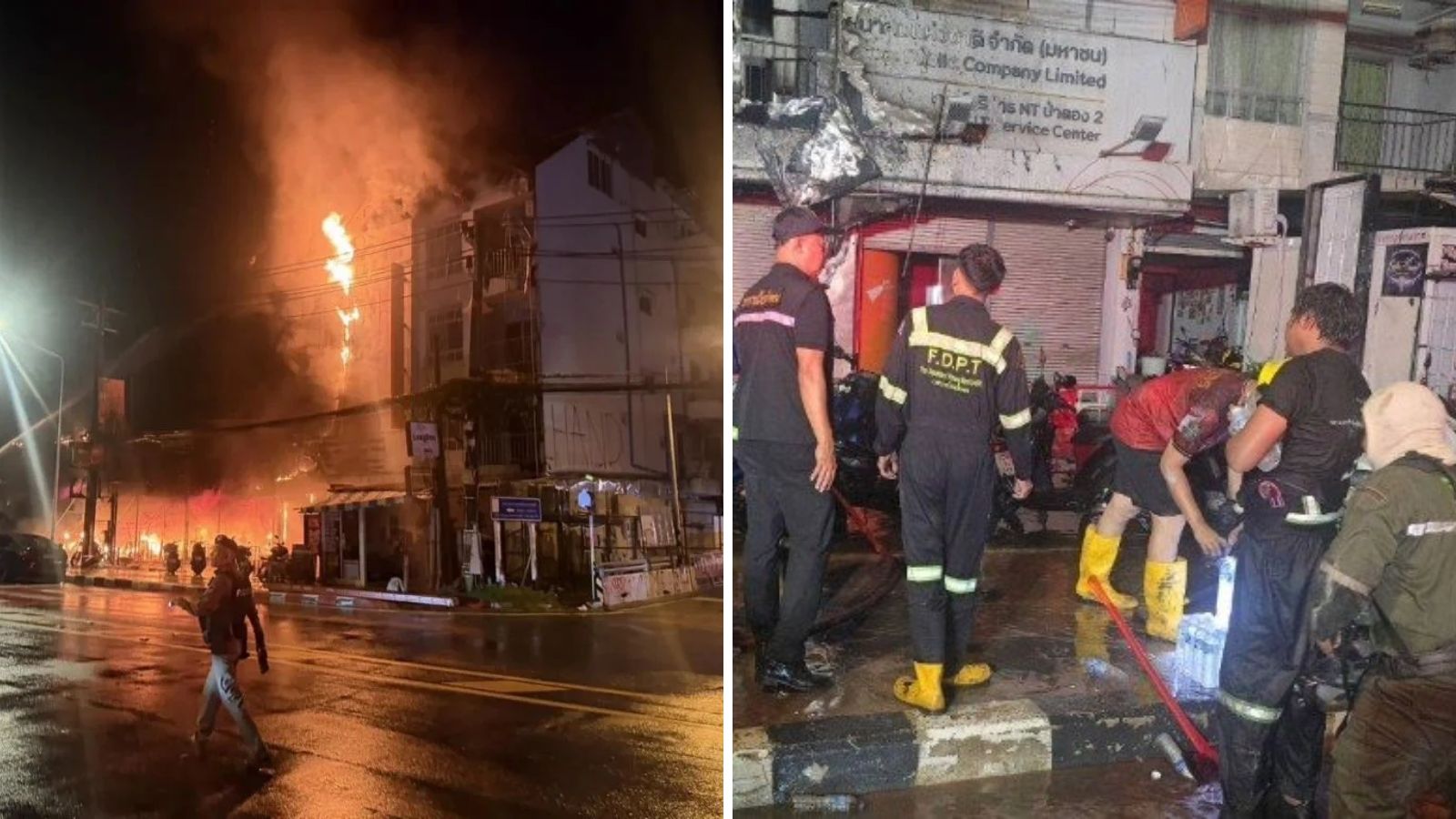
Smoke smells different when it comes off cheap plastic and damp tropical timber. It does not smell like a campfire. It smells like burning hair, melted wire, and panic.
In Phuket, the air usually carries salt, diesel exhaust from idling tour vans, and the sweet, heavy rot of overripe mangoes in the sun. For millions of visitors, that scent is shorthand for escape. It means leaving behind spreadsheets, winter coats, and the rigid safety inspections of home. Yet when a massive blaze tore through a Phuket building and killed 11 people—a tragedy captured in shaky, viral smartphone videos showing orange flames licking into the night sky—that intoxicating illusion of consequence-free paradise shattered in minutes.
Eleven lives. On a wire service ticker, that number occupies less space than a weather forecast. Authorities confirm the death toll, firefighters battle the inferno, investigators comb through blackened concrete, and the global news cycle moves on before the ash cools.
Stop. Look closer at the rubble.
Behind every dry dispatch about a Thailand building fire lies a collision between rapid tourism economics, overlooked infrastructure, and the quiet vulnerability of people who simply went to sleep trusting the walls around them. To understand what happened when those flames erupted in Phuket, you have to step past the police tape and trace the invisible architecture of risk that underpins so many booming resort towns across Southeast Asia.
The Anatomy of a Trap
Imagine a hypothetical night in a mid-rise building just a few streets back from the neon glare of Phuket’s main tourist arteries. Let us call one resident Somchai, a composite drawn from the thousands of hospitality workers who keep the island running, and another Elena, a hypothetical traveler who booked a budget room online because the photos showed a clean balcony and a view of the palms. Neither of them checked the stairwell doors when they arrived. Nobody ever does.
At 2:00 AM, the island finally exhales. The bass from the beach clubs fades into a low thud. Inside the building, air conditioners hum at full tilt against the humid Andaman heat, drawing heavy loads through aging electrical panels hidden behind plasterboard.
A spark does not announce itself. It begins inside a wall cavity or a cluttered storage room on the ground floor—a frayed cable, an overloaded surge protector, a discarded cigarette butt landing on cardboard stacked near cooking gas canisters. For ten minutes, the fire feeds quietly in the dark.
Think of a multi-story building with an unsealed central stairwell as a brick chimney waiting for a match. Physics does not care about holiday brochures. Heat rises, pulling fresh oxygen through broken louvers and propped-open fire doors at the base, turning the only exit path into a vertical blast furnace long before the first siren wails down the street.
By the time the smell of acrid smoke wakes Elena on the fourth floor, the hallway outside her door is no longer a corridor. It is a river of superheated carbon monoxide. Two breaths of that black air will drop an adult to their knees; three will stop the heart. On the ground floor, Somchai—who sleeps in a cramped staff room near the rear service exit—discovers that the back door has been padlocked from the outside to prevent theft.
Those viral videos circulating after the Phuket blaze showed towering flames engulfing the structure while onlookers shouted in disbelief from the street below. What the camera lenses could not capture was the suffocating darkness inside, the confusion of guests who did not know the layout of the hallways, and the agonizing seconds wasted trying to force windows fitted with decorative security bars.
Why Paradise Builds Fast and Inspects Later
I have spent years reporting from coastal boomtowns, and there is a pattern so consistent you can set your watch by it. Whenever a destination experiences explosive tourism growth, concrete goes up faster than oversight.
Phuket is Thailand’s crown jewel of international travel, an island whose economy lives and breathes by visitor arrivals. After global travel freezes nearly bankrupted local businesses, the pressure to rebuild, renovate, and reopen at breakneck speed became immense. Old shophouses were converted into hostels overnight. Budget hotels added extra partitions to squeeze four rooms where two used to stand. Wiring designed for a quiet family home suddenly powered twenty air-conditioning units, water heaters, and commercial refrigerators simultaneously.
On paper, Thailand has strict building control laws. The Building Control Act mandates fire alarms, sprinkler systems for larger structures, illuminated exit signs, and unobstructed escape routes. In practice, enforcement across rapidly developing districts often lags behind reality. A building permitted as a small residential block quietly morphs into dense commercial lodging without ever undergoing a fresh structural fire audit.
Consider what happens next when an emergency hits.
Phuket’s narrow sois—the winding side streets lined with parked motorbikes, tangled overhead utility cables, and street-food carts—become obstacle courses for heavy fire trucks. Minutes bleed away while drivers navigate tight corners and low-hanging wires. Every sixty seconds in an enclosed structure fire doubles the size of the blaze. By the time hoses are pressurized and ladders extended, the upper floors have often reached flashover, the terrifying threshold where every combustible surface in a room ignites at once.
People always ask the same questions in the wake of a headline like Thailand: Fire in Phuket building kills 11. Were the victims tourists or local workers? Did the alarms go off? Why couldn't they just run down the stairs?
The uncomfortable truth is that fire does not discriminate between a backpacker holding a foreign passport and a kitchen worker sending wages home to Isaan, yet both are trapped by the exact same systemic blind spots. Smoke alarms fail when batteries are removed to stop false chirps from humidity or cooking steam. Escape routes fail when hallways double as storage for spare mattresses and cleaning supplies.
The Myth of the Invincible Traveler
There is a strange psychological spell that settles over us the moment we step off an airplane into warm air. At home, we notice when a restaurant exit is blocked. We grumble when a smoke detector beeps. Abroad, we treat hazards as local color.
We laugh at the Medusa tangles of black electrical wires drooping over Thai sidewalks, snapping photos of them as quirky travel curiosities without pausing to ask what those overloaded circuits look like behind the drywall of our guesthouse. We book accommodations based on star ratings, pool aesthetics, and proximity to the beach, rarely scrolling down to check whether a single reviewer mentioned fire exits or safety equipment.
I remember staying in a converted four-story walk-up near a busy Asian night market years ago. The room was charming, cheap, and spotless. On my second night, the power flickered three times, accompanied by a faint, sharp tang of hot insulation coming from the breaker box near the entrance. I almost ignored it. I was tired, the bed was comfortable, and the street outside was loud. When I finally walked down the stairwell to check the exit, I found the ground-floor fire door wedged shut with heavy crates of soda bottles. I packed my bag and left at midnight, feeling slightly foolish as the night clerk stared at me in confusion.
That feeling—the fear of looking paranoid or overreacting—keeps people silent in dangerous spaces every single night.
What the Rubble Demands of Us
When 11 people die in a single fire, calling it a freak accident is a form of collective amnesia. Accidents are unpredictable bolts from the blue; preventable tragedies are the predictable math of neglected maintenance, blocked exits, and regulatory complacency.
For local officials in Phuket and across Thailand’s hospitality hubs, the aftermath of a deadly blaze always brings promises of sweeping inspections and crackdowns on non-compliant buildings. Those inspections matter, yet real change requires stripping away the financial incentives that reward cutting corners. Insurance underwriters, booking platforms, and municipal authorities hold the real levers. When major travel booking sites verify safety compliance with the same rigor they apply to payment processing, property owners suddenly find the budget for hardwired smoke detectors and unlocked push-bar exit doors.
For anyone packing a suitcase for a coastal getaway, survival does not require paranoia. It requires sixty seconds of deliberate habit before you ever unzip your bag.
Walk the corridor from your room to the nearest emergency stairwell the moment you check in, counting the doors between yours and the exit so you could find it blindfolded in thick smoke. Push open the stairwell door to confirm it is unlocked and clear of stored furniture. Check whether your windows actually open or if they are sealed behind fixed iron grilles. Keep your room key, phone, and shoes on the nightstand beside your bed rather than buried inside a backpack across the room.
If a fire breaks out and smoke fills the hall, stay low where the cooler, cleaner air clings to the floor. Feel doors with the back of your hand before opening them; if the metal handle burns your skin, fire waits on the other side. Retreat, seal the gap under the door with wet towels, and signal from a window rather than stepping into a lethal wall of fumes.
These are small, unglamorous actions. They do not belong in glossy travel magazines, and they never trend on social media.
Days after the viral videos of the Phuket fire faded from feeds, workers began hauling twisted rebar and charred concrete away from the site. Down the road, neon signs flickered back on at dusk, music spilled onto the pavement, and fresh arrivals dragged rolling suitcases past the darkened shell of the building, eyes fixed ahead on the glow of the beach.


