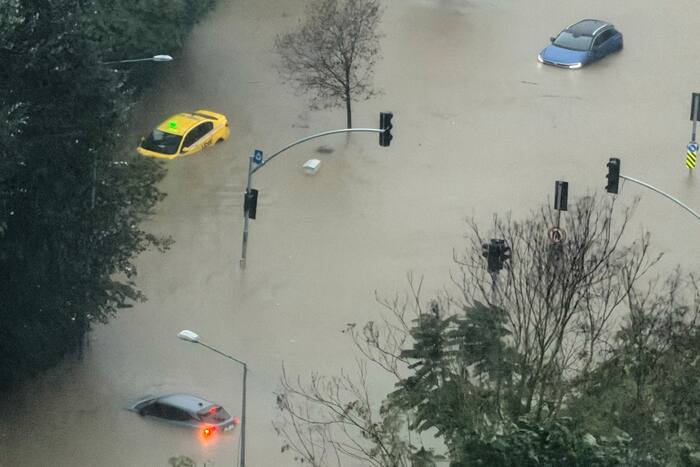
Torrential downpours and flash flooding across Istanbul have repeatedly forced the governor's office to shut schools, place public employees on administrative leave, and urge residents to stay off the roads, most notably during the severe October 2026 deluges. A school closure in a megacity of roughly sixteen million people is rarely just a weather footnote. It is a symptom of steep hills, paved-over stream beds, overwhelmed drainage channels, and a commuter network that cannot safely move children or adults when water turns highways into canals.
When headlines simply report that heavy rain in Istanbul closed classrooms, they treat the event like a freak accident that arrived out of nowhere. After decades covering urban infrastructure and disaster policy, I have learned that the sky rarely deserves all the blame. Weather sets the load; urban engineering and land policy decide whether the city breaks.
How a Two-Day Deluge Overwhelms a Megacity
Annual rainfall averages sound deceptively mild on paper. Istanbul normally sees roughly 659 millimeters of precipitation over an entire year, yet in mid-October 2026 certain districts logged well over 200 millimeters in a short window—including around 274.4 millimeters in Beykoz, 222.2 millimeters in Arnavutköy, 208.3 millimeters in Sarıyer, and 203.3 millimeters in Eyüpsultan. That meant dumping more than two months of typical rain onto saturated ground and concrete in just two days.
Rainwater moves fast on steep terrain. Istanbul is carved by ridges, valleys, and seasonal streams that funnel runoff toward the Bosphorus, the Golden Horn, the Marmara Sea, and the Black Sea coast. When rain falls harder than soil and storm drains can swallow, surface sheet flow builds speed down hillsides and concentrates inside narrow basins.
Heavy rain is a natural seasonal hazard in Istanbul, but a school closure or flooded expressway happens when fast-moving runoff meets constricted channels and dense pavement.
Flooding in this city rarely looks like a slow-rising river behind a levee. It hits as sudden ponding on arterial roads, mud and debris washing across intersections, and basement apartments filling before residents can pack a bag. Even when the heaviest band of clouds moves offshore, water trapped in low pockets takes hours to clear.
Why Closing Schools Is Often the Safest First Move
Parents sometimes view a school shutdown as an overreaction, especially if their own street looks damp rather than submerged at seven in the morning. Officials face a different calculus. A school day requires moving hundreds of thousands of students across a sprawling metropolitan area via school shuttles, public buses, rail lines, and private cars.
Rain hits unevenly across Istanbul's neighborhoods. A dry morning in one district can coincide with knee-deep water on a highway ramp ten miles away. If buses pick up children at dawn and a flash flood traps vehicles on an underpass or coastal road during morning rush hour, evacuating dozens of scared kids in rising water becomes a high-risk rescue operation.
| Operational Factor | Why Officials Order Closures | Hidden Strain on Families |
|---|---|---|
| Morning Commute Timing | Flash floods develop faster than morning school bus routes can adapt. | Working parents scramble for last-minute childcare on short notice. |
| Uneven Local Rainfall | One district may see light rain while another records extreme totals. | Families in dry zones question why classrooms shut citywide. |
| Basement and Ground-Floor Risk | Low-lying homes and school basements face rapid water intrusion. | Families living in flooded basements must find temporary shelter. |
| Post-Storm Building Checks | Teams need time to inspect wet electrical systems, access roads, and grounds. | Multi-day closures disrupt lesson pacing and testing schedules. |
Keeping children home removes non-essential traffic from flooded corridors. Fewer cars on the road also gives emergency crews, municipal pumps, and tow trucks clearer access to stalled vehicles and flooded homes. When governors also grant administrative leave to certain public workers and urge residents to stay put, they are trying to shrink the moving target before conditions worsen.
Pavement Over Stream Beds and the Urban Memory Problem
To understand why heavy rain in Istanbul triggers such disruptive flooding, look at how the city grew over the last several decades. Rapid migration and aggressive urban expansion turned hills, forests, and narrow stream valleys into dense residential blocks, commercial strips, and transport corridors.
When Concrete Replaces Natural Sponges
Forests, meadows, and unpaved soil act like giant sponges. Trees intercept raindrops, roots hold soil together, and porous earth lets water soak in slowly rather than racing downhill all at once.
Replace those surfaces with asphalt roofs, parking lots, and concrete roads, and the math flips. Almost every drop becomes immediate surface runoff. A storm that a vegetated watershed might have buffered for half a day hits storm drains in minutes, pushing culverts past capacity.
Building Along Dry Channels That Remember Water
Many waterways in fast-growing cities look harmless for months at a time. A stream bed might sit dry or carry a modest trickle in late summer, tempting builders and planners to narrow the channel, culvert it underground, or erect structures right up to the bank.
Water has a long physical memory. During a severe autumn downpour, runoff from an entire catchment area heads straight for the lowest line in the topography. If a culvert is undersized, clogged with construction debris or trash, or buried beneath heavy development, the water simply reclaims its old path across roads and ground floors.
Consider a hypothetical example to see how small bottlenecks compound. Imagine a neighborhood built over a shallow valley where a small stream once ran. Upstream, new apartments and paved roads double the runoff reaching the valley floor during a two-hour cloudburst. Downhill, the old drainage pipe passes beneath a busy avenue and a row of ground-floor shops. Once the pipe fills to the brim, water backs up onto the avenue, floods the shops, and turns the street into a fast-moving channel until the storm eases. That chain reaction happens in real neighborhoods across Istanbul whenever extreme rain meets tight drainage geometry.
The Overlooked Costs Beyond Waterlogged Streets
Standard coverage usually stops at stalled cars, closed schools, and wet shoes. Digging deeper reveals costs that linger long after the puddles dry.
One overlooked factor is structural and economic drag on low-income households. Flooding hits basement dwellings and ground-floor workshops hardest, often in areas where families have thinner financial cushions and fewer options for temporary lodging. When a storm damages household appliances, furniture, or small inventory, recovery stretches across months rather than days.
Another factor is insurance friction and municipal repair backlogs. Following severe Istanbul flood events, insurers receive thousands of claims and total losses climb into the tens of millions of dollars. Yet uninsured property owners, informal structures, and municipal infrastructure face steep repair bills that compete with routine maintenance across a massive city.
There is also a subtle educational and civic toll. Frequent weather closures—especially when a one-day suspension stretches into a second day while crews inspect facilities—chip away at instructional continuity and test preparation. Over time, repeated disruptions train residents to view extreme weather as an unsolvable routine rather than a solvable engineering and planning challenge.
What Real Flood Resilience Requires
There is no single silver bullet that makes a hilly coastal megacity immune to extreme rain. Upgrading drainage tunnels across dozens of basins costs billions of dollars, takes years of underground construction, and disrupts daily life while work is underway. Even the best pipe network has limits when an extraordinary cloudburst drops months of rain in a single stretch.
Still, cities that reduce flood harm do not rely on concrete pipes alone. They combine physical upgrades with strict land discipline and clearer early warning:
- Protect and restore natural flood paths: Keep building out of active stream corridors and floodplains, preserve green space and permeable surfaces upslope, and give water room to spread safely where it cannot harm homes or major roads.
- Maintain drainage relentlessly: Clear grates, catch basins, and channels before peak storm seasons so debris does not choke capacity at the exact moment rain peaks.
- Upgrade hyper-local warnings and transit rules: Pair neighborhood-level rainfall radar with clear guidance on basement living, road closures, and school schedules well before morning commutes begin.
- Design schools and public buildings as safe hubs: Ensure school buildings themselves sit on sound drainage grades, keep backup power and dry shelters ready, and communicate closure decisions early enough for families to plan.
Heavy rain in Istanbul will keep testing the city every autumn and winter. Closing schools when flash floods threaten commuters is a sensible short-term shield, not a long-term substitute for respecting the water channels beneath the pavement.