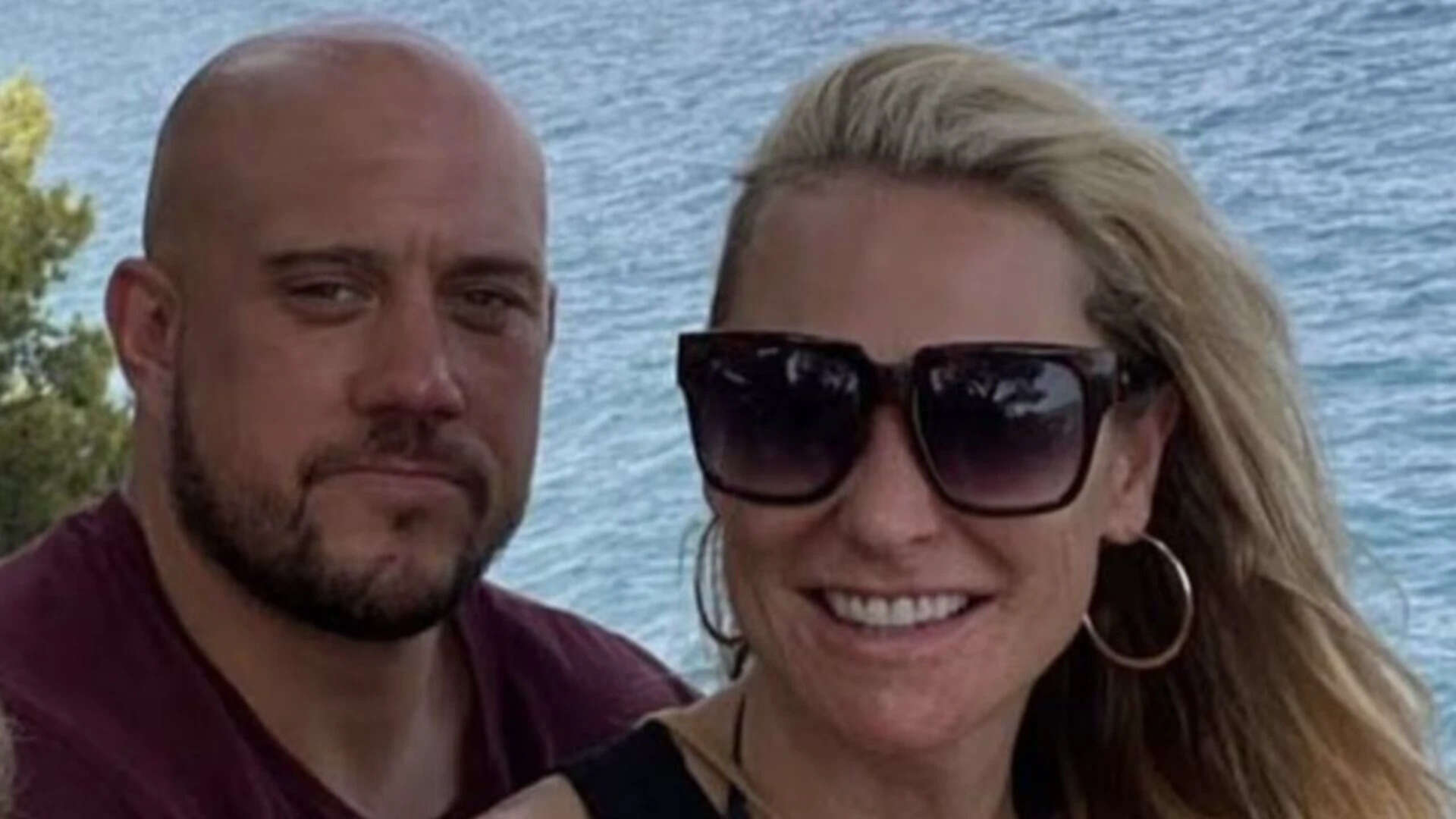
The Weight of the Morning
The Hotel Continentale sits just off the Arno River, a stone’s throw from the medieval stone of the Ponte Vecchio. It is a place designed for quiet luxury, where wealthy travelers come to watch the Tuscan sun set over terracotta roofs.
But on a Saturday morning in July, the silence inside room 412 did not signal rest. It signaled an ending.
When the hotel staff finally opened the door, they found a scene that looked less like a luxury holiday and more like a battlefield. Glass was shattered across the floor. Furniture was overturned. Blood stained the high-end upholstery. In the center of the chaos lay Ricky Bibey, a thirty-nine-year-old former professional rugby league star from England. He was dead.
Beside him was his thirty-four-year-old girlfriend, bleeding heavily from profound physical trauma. She was rushed to Florence’s Careggi Hospital, her body broken, her mind shattered by a night that had spiraled completely out of control.
The standard news cycle processed the event with its usual detached efficiency. Ex-British rugby star found dead in Italy hotel after drug-fuelled fight with girlfriend. It is a headline designed for a quick click, a brief shudder, and a swift scroll downward. But headlines are flat. They flatten the terrifying, jagged reality of human destruction into a neat sequence of words. They miss the invisible physics of how a life built on strength can collapse under its own weight.
To understand how a towering athlete ends up motionless on a hotel floor in Florence, you have to look past the police tape. You have to look at what happens when the stadium lights go dark for the last time, and the noise that replaced them becomes too loud to bear.
The Geometry of a Collision
Rugby league is not a game of evasion. It is a game of attrition.
Imagine standing on a motorway and volunteering to stop a family sedan with your ribcage. That is the daily reality for a professional prop forward. Ricky Bibey made a living out of collisions. At six feet three inches tall and weighing well over seventeen stone, his entire career was predicated on his ability to absorb force and inflict it on others. He played at the highest levels in the United Kingdom—Wigan Warriors, Leigh Centurions, St Helens, Wakefield Trinity. He won Challenge Cups. He was lauded for his toughness.
In that world, pain is not an indicator of injury; it is merely information. You learn to silence it. You compartmentalize the micro-concussions, the torn cartilage, the deep, aching fatigue that settles into the marrow of your bones.
But a human body can only act as a battering ram for so long. By 2012, the physical toll became too great. At just thirty years old, Bibey was forced to retire due to an Achilles tendon injury.
Consider what happens to an elite athlete when the structure of their life vanishes overnight. Since boyhood, your day has been scheduled down to the minute. Your worth is measured in meters gained, tackles made, and trophies hoisted. Your community is a locker room full of brothers. Then, suddenly, the phone stops ringing. The routine evaporates. The adrenaline that used to be flushed out through eighty minutes of violence has nowhere to go. It pools inside the mind, turning stagnant and toxic.
Metaphorically speaking, retirement for a modern gladiator isn't a transition; it is an amputation. You are left to walk through the normal world with a ghost limb, constantly reaching for a sense of purpose that is no longer there.
The Architecture of a Crisis
When the physical outlet disappears, the vacuum is often filled by something else. In the years following his retirement, Bibey ran a development business. He tried to build a normal life. But those close to him knew that the transition was fraught with invisible struggles.
The autopsy reports and police findings from Florence painted a grim picture of the hours leading up to his death. The couple had arrived in Italy just days prior. What was supposed to be a romantic getaway quickly devolved into something unrecognizable. Investigators found evidence of heavy consumption of alcohol and cocaine inside the room.
Toxicology reports would later confirm that the combination of these substances had triggered a severe medical crisis within Bibey’s massive frame.
Cocaine and alcohol do not simply intoxicate; they alter the chemical architecture of the brain. When mixed, they form a third compound in the liver called cocaethylene. This substance is exceptionally toxic, dramatically increasing the heart rate while spiking blood pressure. It amplifies paranoia. It distorts reality. For a man accustomed to physical dominance, a drug-induced panic state can transform the surrounding environment into a hall of mirrors, where every shadow is a threat and every movement requires a defensive strike.
The Italian authorities reconstructed the night as a violent frenzy. Neighbors reported hearing shouts, crashes, and the unmistakable sounds of a struggle echoing through the hotel's thick walls. It was not a premeditated act of malice; it was a psychological system failure. Bibey’s heart, strained by years of elite athletic output and suddenly pushed to its absolute limit by a toxic chemical cocktail, simply gave out. He suffered a massive cardiac arrest in the midst of the delirium.
But the physical tragedy did not end with him. His partner was left to bear the literal and figurative scars of that madness, surviving an ordeal that few can fathom, trapped in a foreign hospital room while the international press parsed the details of her private nightmare.
The Silence Left Behind
There is a temptation to judge these stories from a safe distance. We look at the luxury hotel, the wealth, the athletic pedigree, and we wonder how anyone could throw it all away. We treat addiction and mental collapse as moral failures rather than complex, systemic breakdowns.
But the truth is much more fragile.
The tragedy in Florence wasn't born in room 412. It was nurtured over years of silence, in the quiet spaces between fame and obscurity, where a man who spent his life being strong forgot how to ask for help. It is the story of a culture that celebrates the physical destruction of men for entertainment but offers very few tools to rebuild them once the game is done.
The morning after the incident, the sun rose over the Arno just as it always does. The tourists gathered on the Ponte Vecchio, taking photos, laughing, drinking espresso. A few yards away, a white van pulled up to the back of the Hotel Continentale to carry away what remained of a man who had once been cheered by thousands.
The contrast was absolute. The world keeps moving, indifferent to the private apocalypses occurring just behind closed curtains. All that remains is the heavy silence of a Sunday morning, and the profound, agonizing reminder that beneath the armor of our heroes lies the same vulnerable, breaking human clay as the rest of us.


