Pop the champagne. Cue the standing ovations from executives who spent decades whispering warnings over lunch at the Grill Room while quietly clearing the path for the next greenlight.
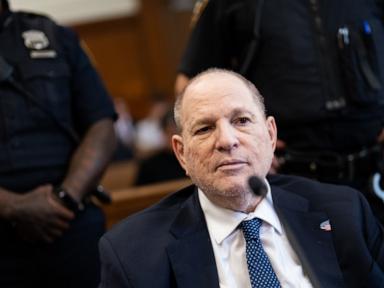
The legal odyssey is supposedly over. The headlines scream about justice, closure, and a hard stop to a dark era in modern cinema. Mainstream media outlets treat the final sentencing of Harvey Weinstein as a masterclass in civic hygiene. The monster is caged. The industry is clean.
It is a comforting fairy tale written by the very people who built the machine.
Here is the contrarian truth nobody in trade publications wants to print: Harvey Weinstein was never an anomaly. He was the purest distillation of how commercial filmmaking actually operates. By framing his predatory career as the aberration of a single rogue degenerate, Hollywood successfully executed the greatest PR sleight of hand in entertainment history. They sacrificed a gross, bloated dinosaur so the ecosystem that birthed, fed, and profited from him could survive intact.
Let us drop the polite fiction that anyone of consequence was fooled.
The Co-Conspirator Boardroom
For years, cultural commentary has painted Weinstein as a lone wolf operating in the shadows. This is a deliberate fabrication. I have spent years watching how capital moves through independent and studio systems, and I can tell you precisely how the machinery worked. Nobody stumbled into Miramax or The Weinstein Company expecting a monastery.
When Disney bought Miramax in 1993, Michael Eisner and Jeffrey Katzenberg knew exactly what kind of operator they were buying. They did not care about the predatory behavior behind closed doors because Weinstein was delivering Oscars and box office gold on razor-thin budgets. The boardrooms did not ignore the rumors out of naive innocence; they ignored them because ignoring them paid dividends.
Financial complicity is not passive. It is an active business strategy. When top-tier talent agencies routed young actors to private hotel rooms under the guise of career-changing auditions, those agents were not victims of deception. They were portfolio managers mitigating risk to protect commission streams. When high-priced corporate attorneys drafted ironclad nondisclosure agreements with multi-million-dollar penalty clauses, they were not practicing standard law. They were running a hush-money cartel.
To pretend this was a secret known only to a tight circle is to insult basic intelligence. Everyone with a badge or a desk in Los Angeles or New York knew the baseline reality. They chose compliance because the alternative meant blowing up their own cash flow.
The NDA Industrial Complex Remains Open For Business
Watch what happens when the dust settles on these high-profile court cases. Does the industry abolish the legal tools that allowed abuse to fester for decades?
Of course not.
Nondisclosure agreements, mandatory arbitration clauses, and corporate settlement structures remain the lifeblood of major entertainment conglomerates. When a modern producer crosses a line today, the grievance does not trigger a public reckoning or a criminal investigation. It triggers an HR triage meeting, an immediate settlement payout, and an airtight confidentiality clause that legally binds the victim to absolute silence under threat of financial ruin.
The legal architecture that protected Weinstein has not been dismantled. It has been upgraded. Corporate legal teams learned precisely one lesson from the fallout: make the payouts larger, make the paper trails cleaner, and hire better crisis management firms to sanitize the press releases.
The system didn't break. It adapted.
The Scapegoat Economics
Why did the industry turn on Weinstein when they did?
Not because of a sudden wave of moral awakening. Markets shift when liabilities outweigh assets. By 2017, the economic calculation changed. The cost of shielding one toxic producer finally surpassed the cost of cutting him loose.
This is how corporate self-preservation works. An institution will sacrifice its most grotesque liabilities the moment public relations damage threatens share prices or investor confidence. They throw the carcass to the wolves, sponsor a gala dinner for survivor advocacy groups, wear black pins to award shows, and expect applause for their sudden conversion to righteousness.
Meanwhile, the power structures remain completely untouched. The same financiers who backed Miramax's golden era are funding the next generation of prestige streaming content. The same executive pipelines that rewarded aggressive, abusive behavior under the guise of "driven producer hustle" are churning out new management trainees.
Calling Weinstein's prison sentence a victory for justice is like praising a hospital for curing cancer by amputating a single infected finger while leaving the malignant tumor untouched.
Stop Waiting For Hollywood To Save Itself
The fundamental error the public makes is expecting an industry driven entirely by capital extraction to police its own ethics.
Art and commerce have always engaged in a brutal wrestling match, but Hollywood long ago surrendered the crown to the balance sheet. When you treat talent as raw input material—disposable units of production meant to maximize quarterly returns—abuse is not a bug in the code. It is an inherent feature.
If we want actual accountability, we have to stop treating institutional complicity as an unfortunate side effect and start treating it as a systemic design choice. That means dismantling the corporate confidentiality clauses that weaponize poverty and career destruction against whistleblowers. It means piercing the corporate veils of production companies that shield bad actors behind shell corporations. It means demanding that investors perform actual ethical due diligence instead of looking the other way while box office receipts roll in.
Until then, celebrating a single prison sentence is just letting the co-conspirators off the hook.
They didn't defeat the monster. They rented a billboard to announce they got rid of him, and then went right back to business as usual.