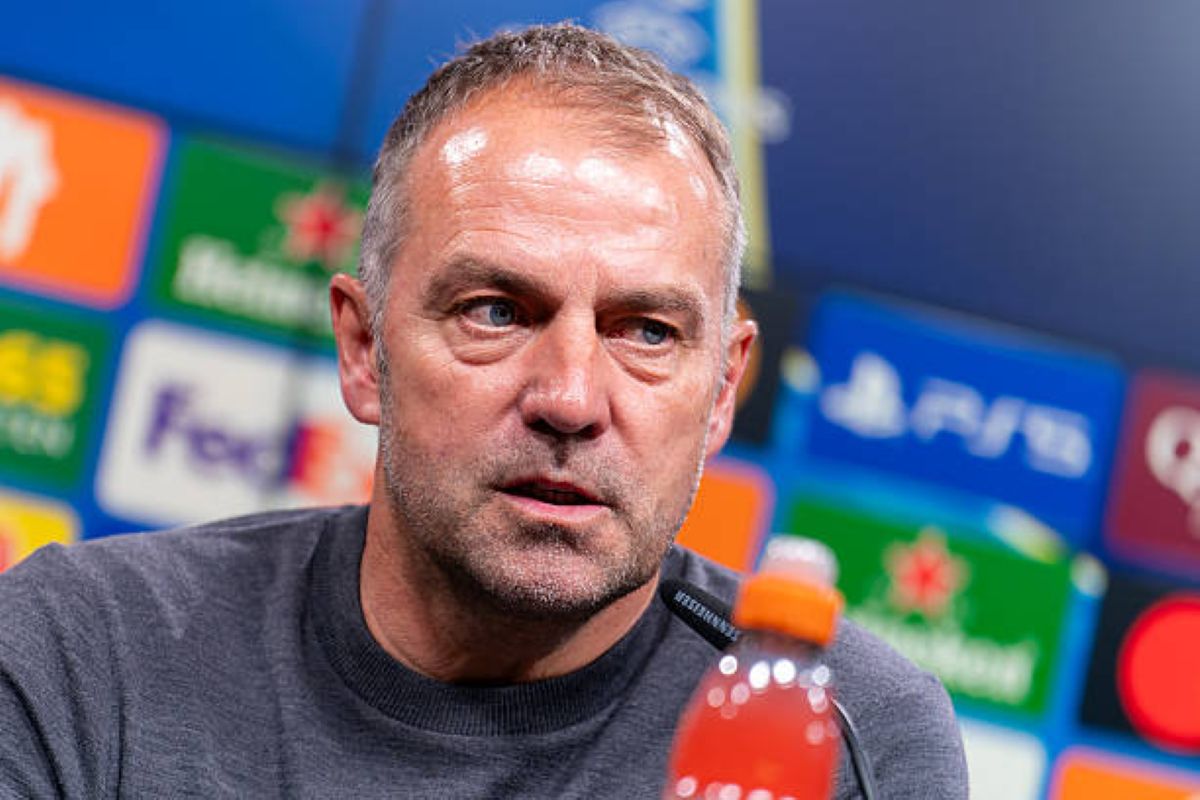
Hansi Flick and FC Barcelona have reached a verbal agreement to extend the German’s stay in Catalonia until June 2028, a move that secures the dugout just as the club's financial ceiling begins to lift. While his current deal was set to expire in 2027, President Joan Laporta has moved with uncharacteristic speed to tack on an additional year. This isn't just a reward for current results; it is a defensive maneuver designed to protect a sporting project that is finally outperforming the club’s balance sheet.
For a club that has spent the better part of five years in a state of perpetual emergency, this extension serves as a rare signal of continuity. Laporta confirmed the news following a visit from Flick’s representative, Pini Zahavi, signaling that the hierarchy views the "German model" not as a temporary fix, but as the permanent blueprint for the post-Xavi era.
The Revenue of Stability
Football contracts are rarely about the years on the paper and almost always about the leverage they provide. By extending Flick now, Barcelona is attempting to kill the "lame duck" narrative before it can even breathe. The timing is deliberate. La Liga recently adjusted the club’s salary limit upward to €432 million, a significant jump from the €351 million mark they were strangled by last summer.
This financial breathing room is largely a byproduct of the return to a partially renovated Camp Nou. Matchday revenue is the lifeblood that Laporta is using to justify this commitment. However, the hard truth remains that Barcelona’s actual wage bill still hovers above the €500 million mark. They are still operating in "excess" of their limit, meaning they are still tethered to restrictive reinvestment rules.
Locking in Flick provides a fixed point in a volatile environment. If the club wants to convince top-tier talent to sign while they are still technically "over budget," they need to sell a vision of long-term stability. You cannot recruit the next generation of superstars if the manager’s future is a question mark every six months.
Tactical Violence over Possession Dogma
The "why" behind this extension is visible on the pitch every weekend. Flick has systematically dismantled the obsession with the "rondo-based" philosophy that often saw Barcelona pass themselves into a cul-de-sac. He has replaced it with a brand of verticality that borders on tactical violence.
Under Flick, the team has recorded 26 wins in 31 league matches this season. They aren't just winning; they are overwhelming opponents. The stats tell the story of a team that has abandoned sterile possession in favor of high-intensity transitions.
- 84 goals in 31 games: An average of 2.71 per match.
- Defensive High Line: Despite the risks, the team has maintained a goal difference of +54.
- Physical Conditioning: The "German intensity" that Flick brought from Munich has transformed players like Lamine Yamal and Pedri into high-pressing engines rather than just creative outlets.
This shift in identity is the primary reason Laporta is willing to overlook consecutive early exits from the Champions League. In the eyes of the board, the domestic dominance and the sheer entertainment value of Flick’s "heavy metal" football are sufficient proof of concept. They believe the European success will follow once the squad depth catches up to the tactical demands.
The Zahavi Factor
One cannot analyze a Barcelona contract without looking at the power brokers in the background. Pini Zahavi, Flick’s agent, holds a position of immense influence within the club’s inner circle. His relationship with Laporta is well-documented, and this extension further solidifies that alliance.
The speed of this negotiation suggests a quid pro quo that extends beyond the manager's salary. By securing Flick’s future, Laporta also secures the loyalty of one of the most powerful agents in the game ahead of a summer window where the club needs to make "creative" signings. It is a symbiotic relationship where the manager’s contract serves as the foundation for broader transfer market maneuvers.
The Last Stand of a Veteran
Flick has been vocal about his intentions, recently stating that Barcelona will likely be his "last job" in football. This admission adds a layer of weight to the 2028 extension. He isn't looking for a stepping stone to a Premier League gig or a return to the German national team. He is looking to build a legacy.
This sense of finality gives Flick a level of autonomy that previous managers lacked. He isn't coaching for his next contract; he is coaching for his place in history. He has already integrated youth products like Pau Cubarsí and Marc Casadó into the spine of the team, proving that he can balance the demand for immediate results with the necessity of La Masia integration.
The Inevitable Risk
The extension is not without peril. Barcelona is betting that Flick’s high-energy system won't burn out a relatively thin squad over the next three years. We have seen this movie before with Flick at Bayern Munich—a period of intense, trophy-laden brilliance followed by a rapid decline in physical output and internal friction.
By extending him to 2028, Barcelona is all-in on the "Flick Phase." If the wheels come off, the payout for a three-year contract in the middle of a financial recovery would be catastrophic. But for a club that has spent years looking for a way out of the darkness, Flick represents the brightest light they’ve seen. They aren't just extending a coach; they are doubling down on the only thing that has worked since Messi left the building.
The verbal agreement is expected to be formalized before the season concludes. It remains the most significant move Laporta has made to date to ensure that the "new" Barcelona doesn't look exactly like the old, struggling one. Flick has brought the results; now the club has given him the keys to the future.
Ensure the medical staff is ready. The pace Flick demands doesn't just exhaust the opposition; it eventually tests the structural integrity of the club itself.