The lazy consensus floating across international media is neat, tidy, and fundamentally wrong. When the United States Treasury dropped its hammer on Iran’s entire civil aviation sector under Operation Economic Outcast, the headline writers reached straight for the predictable script: ordinary Iranians are now cut off, isolated, and walled into a geographical prison.
It sounds noble. It makes for clean copy. But it completely misunderstands how authoritarian survival machinery actually functions.
I have watched sanctions programs get drawn up in air-conditioned Washington committee rooms for over a decade, and I have seen the exact same delusion repeat itself. Western policymakers convince themselves that clipping the wings of a nation's commercial aviation fleet will somehow spark a popular uprising against the ruling class.
Here is the contrarian truth nobody in the mainstream wants to admit: isolating a population geographically does not hurt the regime. It suffocates the civil society smart enough, rich enough, or desperate enough to challenge it. You are not starving the ruling elite of options; you are trapping their opposition.
The Geography of Authoritarian Resilience
Let us define terms precisely. When the Office of Foreign Assets Control targets twenty-seven Iranian airlines and threatens secondary penalties on any foreign ground service provider refueling an Iranian jet, Washington claims it is isolating the regime. Treasury Secretary Scott Bessent crowed that the leadership can no longer fly to London or Geneva to manage their offshore assets.
Let us examine this fantasy. Imagine a scenario where a high-ranking Islamic Revolutionary Guard Corps commander or a state-backed bonyad crony loses access to a direct Mahan Air ticket to Dubai. Do you genuinely believe their illicit capital flows stop? Do you think cargo networks moving through land borders, maritime grey-markets, and proxy financial conduits in Central Asia or the Persian Gulf suddenly evaporate because a Boeing 747 is parked permanently at Mehrabad International?
Of course not. State-level smuggling networks are liquid; they adapt to physical blockages within hours because they command sovereign guns, ports, and borders.
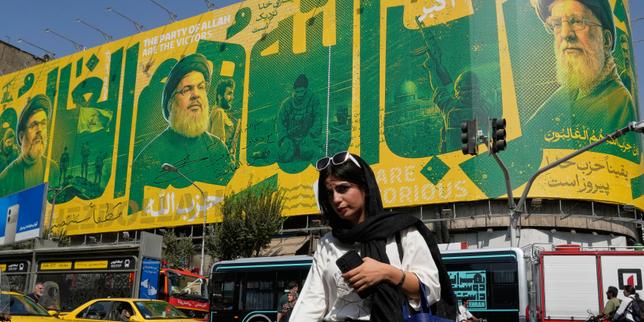
The people who actually lose mobility are the ones the West claims to want to help. The independent journalist trying to reach a conference, the medical researcher needing urgent time-sensitive biological reagents dependent on passenger air cargo, the student with a fellowship, and the middle-class family trying to maintain human ties across borders. By slamming shut the civil aviation door, you accomplish the exact opposite of democratization. You build a hermetic seal around a captive domestic audience, leaving the state with an absolute monopoly on who gets to leave, who gets to speak, and who gets to know what is happening outside.
The Fallacy of the Collapsing Middle
For decades, the core axiom of maximum pressure campaigns has been simple: squeeze the economy until the middle class turns into a revolutionary mob.
It is a comforting theory for bureaucrats who have never lived under a police state. In practice, hyper-inflation, currency collapse, and total travel isolation do not produce storming-the-palace routines. They produce survivalism. When an entire population spends ninety percent of its cognitive bandwidth just trying to source basic foodstuffs, medicine, and stable currency units, political dissent becomes an unaffordable luxury.
A mobile middle class is dangerous to a dictatorship. A trapped, impoverished, survival-focused populace is remarkably easy to police.
When international flight options vanish and ticket prices for the remaining regional carriers spike beyond reach, civic atomization sets in. Iranians aren't mobilizing against the Basij; they are standing in longer lines, paying exorbitant fees for black-market essentials, and watching their world shrink. The state apparatus relies precisely on this inward collapse. A population with open windows to the world is a threat. A population forced to stare only at internal state media and local misery is manageable.
What Real Strategic Pressure Looks Like
If your goal is to weaken a predatory regime, you do the opposite of what current sanctions policy achieves. You punch holes in the walls, you do not build new ones. You flood the country with connectivity, open digital corridors, and make it easier—not harder—for ideas, people, and capital to circulate outside state channels.
Instead, the current architecture achieves a perverse synergy with the hardliners in Tehran who have always wanted a completely closed economy modelled on ideological purity. Every time a Western sanction cuts an aviation link or isolates a financial node, it hands local hardliners the exact domestic excuse they need to clamp down further on internal dissent in the name of national security.
Stop pretending that grounding passenger jets is a blow for human rights. It is an act of geographic quarantine that punishes the governed while leaving the governors safely entrenched in their bunkers, laughing at the crude instruments of Western policymakers who still think isolation equals liberation.


