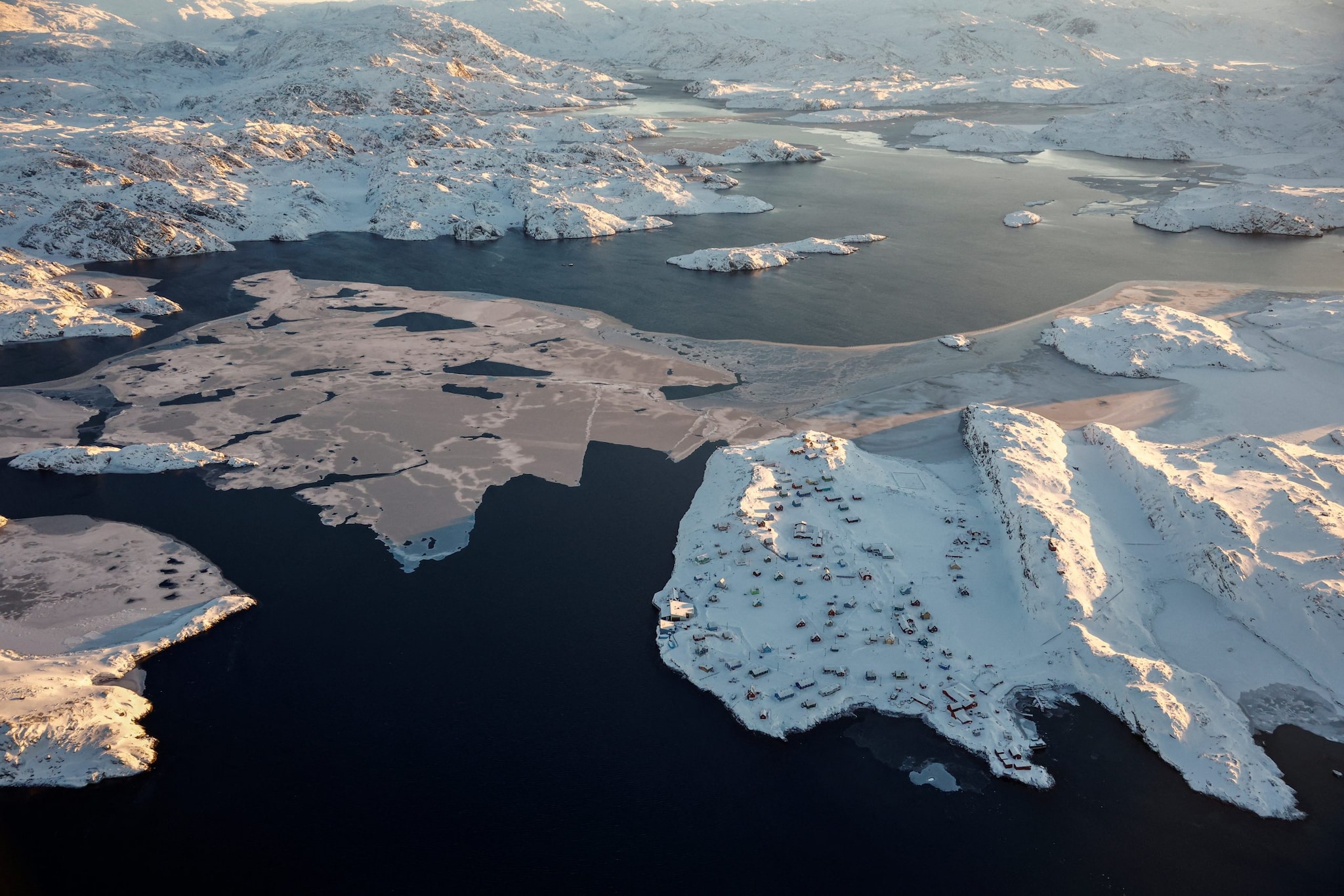
The media remains trapped in a 2019 time warp, endlessly recycling the narrative that Washington is trying to colonize Greenland. Every time a diplomat meets a minister in Nuuk, the headlines follow a predictable, lazy script: United States talks make progress, but the island is not for sale.
It is a comfortable, nationalistic bedtime story. It positions Greenland as the fierce, independent underdog resisting the checkbook of an aggressive superpower.
It is also completely backward.
The United States is not buying Greenland. Greenland is effectively leveraging its geographic monopoly to extract massive, permanent subsidies, infrastructure, and security guarantees from the American taxpayer—all without ceding an inch of sovereignty. Nuuk is running a masterclass in asymmetrical geopolitical arbitrage. The real question is not whether Greenland is for sale, but how long Washington will keep paying premium subscription fees for an asset it can never own.
The Sovereignty Illusion: Who is Really Holding the Checkbook?
Mainstream geopolitical analysis assumes that money equals power. The logic follows that because the US GDP is thousands of times larger than Greenland’s, Washington holds all the cards.
This ignores the fundamental rule of real estate: location trumps liquidity.
Greenland sits directly beneath the shortest flight paths between North America and Europe. It commands the GIUK (Greenland-Iceland-United Kingdom) gap, the absolute chokepoint for naval movements out of the Arctic. In a world where northern trade routes are opening and Arctic militarization is accelerating, Greenland does not need to build an empire. It just needs to sit there and charge rent.
Imagine a scenario where a small homeowner owns a single, crumbling shack directly in the middle of a runway planned by a multi-billion-dollar airport developer. The developer does not hold the power; the homeowner does. The developer can throw millions at the homeowner, fund renovations, build roads to the house, and offer free security just to keep the peace. The homeowner accepts the perks, retains the deed, and tells the press, "My house is not for sale."
That is the exact dynamic playing out between Nuuk, Copenhagen, and Washington.
By reopening its consulate in Nuuk and pouring millions into regional development, airport funding, and resource exploration partnerships, the US is trying to buy goodwill. Greenland accepts the capital, uses it to diversify its economy away from Denmark's block grant, and maintains total legislative control. Washington is funding Greenland's eventual independence path, and getting a massive bill in return.
Dismantling the PAA Fallacies: What the Critics Get Wrong
The public discourse surrounding Greenland's strategic position is filled with flawed premises. Let's look at the questions people actually ask, and why the standard answers are dead wrong.
Can the US buy Greenland from Denmark?
The premise of this question belongs in the 19th century. Denmark does not own Greenland in a way that allows for a commercial real estate transaction. Under the 2009 Act on Greenland Self-Government, the right to self-determination is explicitly recognized. If Greenland decides to leave Denmark, it can. Denmark cannot sell what it does not legally possess as property. The entire "purchase" debate is a legal and constitutional impossibility.
Why does the US want Greenland so badly?
The lazy answer is "rare earth minerals and oil." While Greenland possesses vast deposits of neomagnet materials, praseodymium, and dysprosium, mining them is an environmental and logistical nightmare. The true value is purely denial-based. The US wants Greenland because it cannot allow China or Russia to build dual-use deepwater ports or satellite tracking stations there.
Greenland knows this. They understand that American fear is far more lucrative than American ambition.
Is Greenland economically viable without Denmark or the US?
The consensus is "no, because of the annual Danish block grant." Denmark sends roughly $600 million annually to Nuuk, making up a huge chunk of the local budget. But this view lacks imagination. By pitting American security anxieties against Chinese infrastructure bids (like the 2018 airport construction saga), Greenland can easily replace that block grant with strategic rents. They are transforming their economy from a fishing-dependent territory into a sovereign geopolitical toll booth.
The Arctic Arbitrage Masterclass
I have watched corporate boardrooms and state departments make the same mistake for two decades: confusing access with control.
During the Cold War, the US Thule Air Base (now Pituffik Space Base) operated under a rigid bilateral framework negotiated largely over the heads of the locals. Those days are gone. Nuuk now demands a seat at the table for every single discussion regarding military footprint, environmental remediation, and local employment procurement.
Look at the mechanics of the recent "progress" in talks. Washington is investing heavily in dual-use infrastructure. That means civilian airports capable of handling international tourism and trade, which also happen to have runways long enough for military transport planes.
+------------------------------------------------------------+
|               THE ARTIC ARBITRAGE MECHANISM                |
+------------------------------------------------------------+
|                                                            |
|  [US Strategic Fear] ---> Pours Capital Into ---> Greenland |
|         ^                                            |     |
|         |                                            v     |
|  Demands Access <--- Retains 100% Ownership <--- [Nuuk]    |
|                                                            |
+------------------------------------------------------------+
Who wins that deal?
- The US spends billions, bears the political weight of militarizing the Arctic, and receives zero territorial rights.
- Greenland gets modernized infrastructure, diversified international backing, and a reinforced sovereign barrier against foreign overreach.
This is not a superpower bullying a small island. This is a highly sophisticated strategy of playing global rivals against each other to fund a nation-building project. If China offers to build an airport, the US panics and counters with a better financing offer and security aid. Greenland wins either way.
The Dark Side of the Sovereign Toll Booth
There is a significant downside to this contrarian reality, and it is one that Nuuk must eventually confront. Relying on geopolitical rent-seeking is a volatile economic model.
If global tensions decrease—or if US strategic priorities shift entirely toward the South China Sea—the strategic premium placed on the Arctic could plummet. When you base your economy on being a vital buffer zone, you require a state of perpetual tension to keep the cash flowing. Peace is bad for the toll booth business.
Furthermore, importing massive amounts of foreign capital to build infrastructure can trigger a localized version of Dutch Disease. The influx of strategic funds distorts the local labor market, inflates prices in Nuuk, and draws human capital away from sustainable domestic industries like sustainable fisheries, tourism, and local tech development.
Stop Looking for a Bill of Sale
The media will continue to cover every bilateral meeting as a corporate acquisition negotiation. They will look for signs of a price tag, a treaty modification, or a shift in territorial status. They will keep asking the wrong questions because the alternative requires admitting that the traditional power dynamics of empire are broken.
Washington is trapped in a sunk-cost loop in the north. It cannot leave, it cannot buy its way to absolute ownership, and it cannot stop writing checks.
Greenland has pulled off the ultimate geopolitical pivot: it has turned its frozen geography into an appreciating, income-generating asset that the world's largest military power is forced to maintain, protect, and fund for free.
Stop waiting for the island to be sold. It has already cornered the market.