Scroll long enough through the digital flea market of our modern age, past the gently used sectional couches and the dusty ellipticals that once harbored fierce intentions, and you will find the chlorophyll underground.
It looks mundane at first. A pixelated photograph taken under the harsh amber glow of a basement fluorescent bulb. A clay pot, slightly salt-crusted at the rim. A fleshy, ribbed stalk bristling with innocent-looking spines. To the average algorithmic eye scrolling past on a Tuesday afternoon between a video of a talented retriever and a sponsored ad for artisanal coffee subscriptions, it is simply a plant. A houseplant for the eccentric urban botanist. A conversation piece for a sterile living room.
Except it isn't.
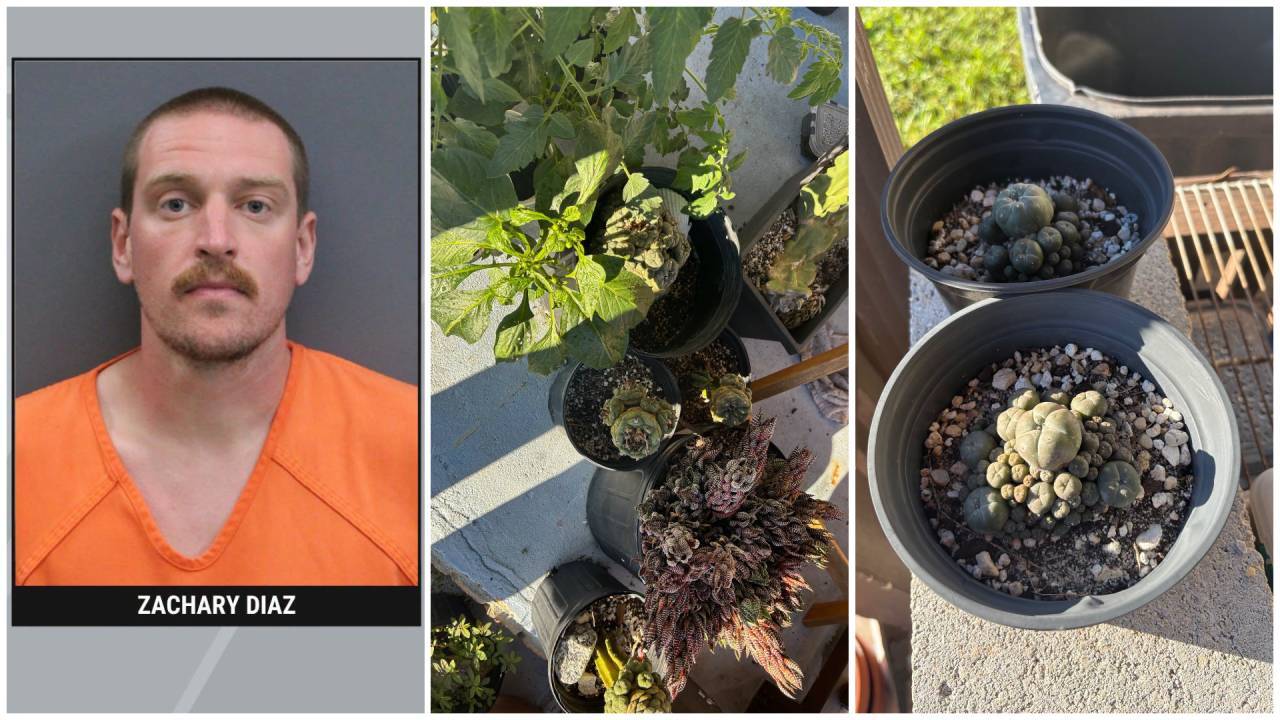
Behind that compressed JPEG file sits a quiet friction point where ancient chemistry meets the friction-free convenience of e-commerce. A Florida man—let us call him what the police reports and the local dispatches eventually labeled him, though the title strips away the bizarre banality of the routine—decided that the local classifieds section was an open market for transcendence. Or, more accurately, for cash.
One hundred and thirty-one plants. Cacti that carry molecular keys to ancient visions. Mushrooms tucked away in sterile plastic bins, whispering promises of ego dissolution through the screen of a smartphone.
We have engineered a society where you can summon a hot meal, a heavy-duty drill, or a modified state of consciousness with the exact same thumb movement. That convenience is a marvel. It is also an accelerant.
Consider what happens when the illicit economy sheds its dark alleys and leather jackets, trading them in for clean user interfaces, frictionless payment gateways, and delivery tracking. For decades, the trade in entheogenic flora—species like Lophophora williamsii or various psilocybin-producing fungi—belonged to a specific subcultural ecosystem. It required knowing someone who knew someone. It involved hushed tones in dimly lit rooms, a certain rite of passage, or a pilgrimage to the edges of civilization.
Now? It sits right next to the gently used baby strollers.
When law enforcement eventually moved in, armed with search warrants rather than curiosity, the numbers rolled out like a dry corporate audit. The seizure included dozens of hallucinogenic cacti and a stash of mushrooms cultivated with surprising domestic diligence. But the real story is not about the contraband itself. The real story is about how easily the wild, unruly edges of human desire are flattened into a standard shipping confirmation.
The digital marketplace is built on trust. Or, at least, the aesthetic of it. We look at five-star ratings, polite phrasing, and prompt response times, and our evolutionary wiring tells us we are dealing with a neighbor. A fellow suburbanite clearing out the garage. When someone lists a peculiar succulent with a cryptic description hinting at its "special properties," the transactional anonymity shields both buyer and seller from the gravity of what is actually changing hands.
It feels weightless. It feels like buying a sweater.
Until the sirens start.
Let us step inside that hypothetical garage for a moment. Imagine the hum of the grow lights, the damp, rich smell of organic soil mixed with the faint, metallic tang of electrical ballasts running hot through the night. To the man tending those pots, it probably felt like entrepreneurship. In an era where the cost of living presses down like a hydraulic press, where the traditional ladders of upward mobility feel increasingly splintered underfoot, the informal economy is a sprawling safety net. People monetize whatever they know how to grow. Some grow microgreens. Some grow heirloom tomatoes. And some cater to the persistent, ancient human hunger to alter consciousness, to crack open the doors of perception, if only for an afternoon.
The botanical world is indifferent to our legal codes. It has been synthesizing alkaloids and complex molecules for millions of years—long before humans drew lines on maps or invented social media algorithms to monetize human attention. Mescaline, psilocybin; these are evolutionary defenses or biochemical communications, chemicals that happen to intersect with human neurology in profound, disruptive ways.
When those ancient molecules meet the modern logistics network, strange things happen.
The buyer sitting three counties away, clicking "Buy Now" on a smartphone with a cracked screen, isn't thinking about federal drug schedules or the complex history of indigenous ritual use. They are thinking about a quiet weekend. They are looking for an escape hatch from the relentless, grinding anxiety of the contemporary news cycle. They want wonder. They want a shortcut to meaning.
And the market provides. Until it doesn't.
The seizure of those 131 plants is a drop in a very large ocean. It will not stem the tide of underground cultivation, nor will it cure our collective appetite for alternative states of mind. If anything, it highlights the absurdity of trying to police a digital landscape that shifts faster than regulatory ink can dry. You close down a profile, and three more pop up under different names, utilizing encrypted messaging apps and discreet drop-off points, transforming everyday suburban neighborhoods into decentralized distribution hubs.
Yet, there is a melancholy in the way we treat these encounters. We treat spiritual and psychological yearnings as law enforcement problems. We wrap up ancient sacraments in evidence bags, cataloging them like stolen electronics or counterfeit handbags.
The man with the cacti is facing charges now. His digital storefront is gone, replaced by a cold, official press release from the sheriff's office detailing the haul. The comments sections on the local news reports are a predictable theater of moral outrage and dark humor, people joking about green thumbs and high-stakes gardening.
Nobody talks about the quiet desperation that built the greenhouse in the first place. Nobody asks why a person sitting in the Florida sun felt the need to cultivate a piece of the infinite inside a plastic pot just to sell it to strangers on the internet.
The screen goes dark. The notification bell stops ringing. But the soil remains, waiting for whatever seed we decide to plant next.