Salt spray tastes like iron when a gale hits the northern edge of Shetland in November. You feel it on your lips before you see the whitecaps rise, cold and relentless, rolling straight out of the sub-Arctic toward a rock-strewn coast that has watched ships come and go for centuries.
I have stood on headlands like that in late autumn, boots sinking into wet peat, listening to wind howl through guy wires and diesel generators hum behind stone walls. It is a place where theory dies fast. Out here, energy is not an abstract line item on a Whitehall spreadsheet or a slogan on a campaign banner. It is heat in a radiator at six in the morning when the boiler splutters. It is a shift on a supply vessel that pays a mortgage in Aberdeen. It is a carbon budget ticking down while a warming sea eats away at the cliffs below your feet.
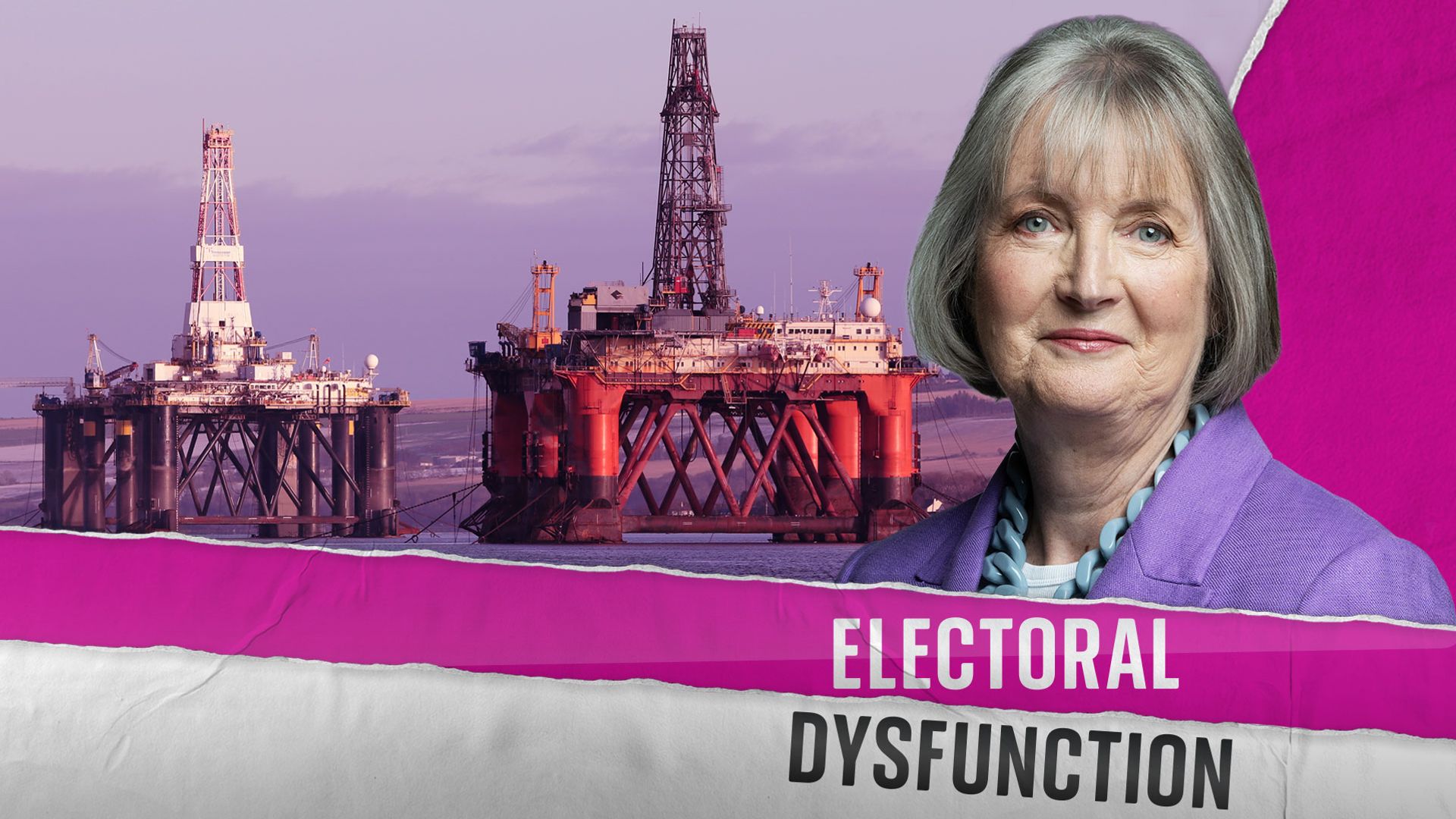
Few patches of ocean carry that weight quite like the Rosebank oil field. Sitting roughly eighty miles northwest of Shetland in deep, unforgiving waters, Rosebank is the largest undeveloped oil and gas field in the UK North Sea. For years, it has stood at the center of a bitter collision between climate science, energy security, industrial jobs, and political survival. When the Labour government took office in Westminster, it inherited a tangle of promises: a pledge to stop issuing new oil and gas licenses, a vow to build Great British Energy, a commitment to clean power by 2030, and a court ruling that forced a fresh look at how downstream emissions from North Sea projects are judged.
Now a sharper, trickier question hangs over the argument for approving Rosebank. Could ministers try to frame an approval not as a surrender to fossil fuels, but as a strange, pragmatic kind of green case?
Wait. Read that sentence again. It sounds like a contradiction, a sleight of hand dressed up in eco-friendly clothing. Yet politics thrives on paradoxes, especially when bills are high, tankers are rerouting around geopolitical choke points, and governments are desperate to show they can keep the lights on without blowing past legal climate limits.
To see how a green argument for Rosebank might be built—and where it could snap under scrutiny—we have to follow the money, the chemistry, and the people caught in the middle.
The Strange Alchemy of a "Greener" Barrel
On paper, burning more oil is bad for the climate. That is basic physics, not a matter of spin. Every barrel of crude extracted from beneath the seabed eventually releases carbon dioxide when refined and burned—scope 3 emissions, the ones that happen after the fuel leaves the wellhead. Climate campaigners rightly point out that Rosebank could produce hundreds of millions of barrels of oil over its lifetime, generating total emissions far larger than many low-income nations emit in a year.
So how could anyone argue that approving a massive oil field fits a green agenda?
Think of it like swapping a smoky, inefficient wood stove in a cramped cabin for a cleaner-burning model while you wait for the grid connection to arrive. (That cabin-and-stove comparison is a metaphor, meant to show transition mechanics rather than equate domestic heating with offshore extraction.) A government making a "green" case for Rosebank would likely lean on three pillars: displacement, carbon intensity, and domestic control.
First comes displacement. Britain still uses oil and gas every single day—for transport, petrochemicals, aviation, and heating. Even under ambitious net-zero pathways, demand does not fall to zero overnight. Proponents of North Sea production argue that if the UK does not pull crude from its own waters, it will import oil and liquefied natural gas from elsewhere, often shipped thousands of miles across oceans in tankers that burn heavy fuel oil along the way.
Second comes production emissions. Oil and gas extracted from different reservoirs carry wildly different carbon footprints depending on geology, extraction methods, and power sources. If a field can be electrified from offshore wind rather than powered by onboard gas turbines, its upstream emissions per barrel drop compared with older, dirtier fields or long-haul imports. Supporters point to plans to electrify Rosebank infrastructure or link it with surrounding developments to cut operational emissions.
Third comes sovereignty and fiscal leverage. When energy comes from abroad, Britain has little say over how it is produced or taxed, and global price shocks hit British households directly. A domestic project taxed through the Energy Profits Levy—the windfall tax on North Sea oil and gas—generates public revenue that ministers can claim is funding clean energy infrastructure, grid upgrades, and household support.
It is an argument built on relative harm rather than purity. In politics, "less bad than the alternative" often masquerades as virtue.
Two Lives on Opposite Sides of the Tide
Abstract arguments only make sense when you put real human faces on them. Let me introduce two hypothetical characters—Callie and Tomas—created to illustrate the lived tensions around a project like Rosebank, not to represent any single real person.
Callie is thirty-four and lives outside Montrose on Scotland's east coast. For nine years she worked as an electrical technician supporting offshore installations in the North Sea. She knows what a winter storm does to a helideck, and she knows the quiet pride of keeping critical systems running when temperatures plunge. Two years ago, her contract ended early as operators delayed capital spending amid shifting tax rules and policy uncertainty. She wants clean energy to succeed—she has spent months retraining on high-voltage grid equipment—but watching skilled friends pack bags for Norway or the Middle East makes the transition feel less like a smooth handoff and more like a cliff edge.
Tomas is twenty-six, a marine ecologist who has spent summers surveying seabird colonies and cold-water habitats north of Scotland. When he looks at Rosebank, he does not see a bridge to clean power; he sees a lock-in. Every multi-billion-pound offshore field takes years to build and decades to wind down. If infrastructure stays profitable into the 2040s and 2050s, Tomas worries the pressure to keep pumping will outlast the window we have to cut emissions sharply. To him, calling a giant oil field "green" feels like calling a sugar binge a diet because you chose diet soda on the side.
Neither Callie nor Tomas is a cartoon villain. Callie is trying to pay her bills and stay useful in a changing industry. Tomas is trying to defend a fragile ocean and a livable climate before tipping points lock in.
If you have ever felt torn between protecting your livelihood today and protecting your future tomorrow, you already understand why this debate refuses to settle down. It is not a simple duel between saints and sinners. It is a clash between urgent, competing realities.
The Courtroom Shift That Changed the Math
For a long time, North Sea approvals leaned heavily on a narrow accounting trick: looking mostly at the emissions produced while extracting the oil and gas—the drilling, pumping, and platform operations—while treating what happens when consumers burn the fuel as someone else's problem.
Then the UK Supreme Court delivered a landmark ruling in the Finch case concerning onshore oil extraction at Horse Hill in Surrey, finding that environmental impact assessments must take account of downstream combustion emissions when they are an inevitable consequence of the project.
That decision sent shockwaves through Whitehall and the offshore sector. Suddenly, approving a major field like Rosebank was not just a matter of checking whether the rig itself would run cleanly. Regulators and ministers had to confront the full climate weight of the oil and gas that would eventually be burned.
For Labour, which campaigned on climate leadership and promised to respect environmental limits, that ruling tightened the noose. Simply waving a field through on old assumptions looked legally vulnerable and politically reckless. Yet slamming the door shut carried its own risks: accusations of destroying British jobs while handing market share to foreign producers, alienating union voters, and deepening anxieties over energy security.
A "green" framing—if ministers ever attempt one—would be an effort to thread that needle. Instead of saying "climate doesn't matter here," the pitch would sound more like: "We are transitioning off fossil fuels, which is why the remaining supply we rely on during the transition should be cleaner, domestically regulated, and used to bankroll the green shift."
Sounds neat in a press release. Harder to prove in the real world.
Where the Green Argument Can Break
Let's be honest about the traps here. There is no shame in admitting that energy policy is messy, confusing, and full of trade-offs that make even seasoned analysts squint at the numbers. Anyone who claims the math on Rosebank is effortless is selling something.
Still, three cracks show up quickly whenever someone tries to wrap a massive oil field in green ribbons.
First, substitution is never guaranteed. Oil is a global commodity traded on international markets. Even if North Sea crude replaces a tanker load from elsewhere in one model, global demand still drives prices and consumption. Critics argue that approving new fields expands overall fossil fuel supply rather than cleanly swapping one barrel for another, especially if demand falls faster than expected as electric vehicles and heat pumps spread.
Second, carbon budgets are strict, not polite. The atmosphere does not care whether emissions come from a well eighty miles off Shetland or a pipeline across another continent. Every tonne of carbon added makes hitting near-term climate targets harder, shifting the burden onto future technologies like carbon capture and direct air removal that remain expensive or unproven at massive scale.
Third, trust is fragile. Voters have heard plenty of political promises dressed up as green breakthroughs. If a government promises climate leadership while approving one of the largest untapped oil fields in its waters, many people—especially younger voters and climate advocates—will see hypocrisy rather than pragmatism. A green argument that feels like spin can backfire fast, hurting credibility on genuine clean-energy wins like offshore wind expansion and grid reform.
Look back at Callie and Tomas. For Callie, a credible transition means real, well-paid work right now—not vague promises of green jobs five years down the road while her bank account shrinks today. For Tomas, credibility means binding guardrails: clear limits on field life, strict rules on emissions, and proof that fossil infrastructure will not delay clean alternatives.
What Comes Next in the North Sea
Policy rarely moves in straight lines. It lurches, pauses, revises assessments, and reacts to court filings, global markets, and voter mood.
For the Labour government, the stakes around Rosebank go far beyond a single offshore development. They test whether ministers can govern with candor rather than slogans. If Rosebank moves forward under revised assessments, the honest argument is not that oil is green. The honest argument—if it exists at all—is that Britain faces hard transition trade-offs, wants tighter oversight and tax revenue from whatever fossil fuels are still used, and intends to accelerate clean power at the same time.
And if the government decides the climate cost is too high, the honest argument is just as clear: you cannot claim to lead on climate while greenlighting massive new fossil extraction, so the priority must be rapid, backed-up investment in clean industry and workers like Callie who need a real bridge, not a mirage.
Out on the northern coast, the wind keeps blowing whether Westminster finds its words or not. Waves slam against basalt and granite, spray catches the pale winter sun, and a turbine blade cuts a slow, steady arc against the gray sky.
The sea does not care about party manifestos. It only keeps score.