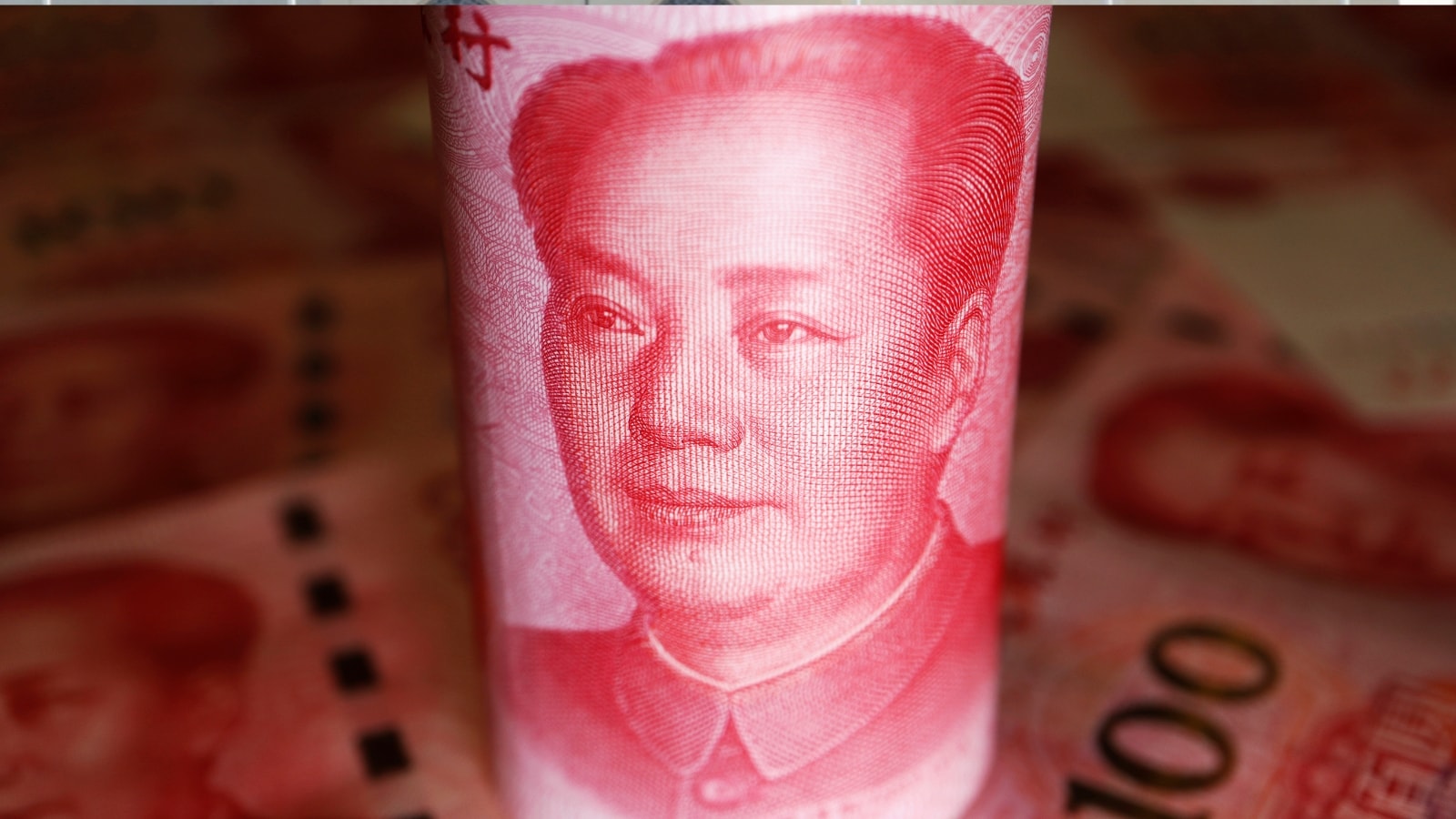
The Signature That Never Happened
Somewhere in a sleek, glass-and-steel boardroom in Shenzhen, a fountain pen remained uncapped. It was supposed to press into high-grade bond paper, sealing a deal that had taken eighteen months of grueling, timezone-defying negotiation to piece together. Millions of dollars had already been spent on forensic accounting, cross-border legal counsel, and transatlantic flights. The target was Manus, a nimble artificial intelligence startup with proprietary neural architecture that could map supply chain disruptions before they even materialized. The buyer was Meta, a corporate titan looking to anchor its footprint in the next generation of predictive enterprise software.
Everything was ready. The champagne was chilling. Then, the phone rang. Don't forget to check out our earlier article on this related article.
The call didn't come from the regulators in Washington or Brussels, the usual suspects in blocked corporate marriages. It came from Beijing. With a single, unceremonious bureaucratic decree, the Chinese government pulled the plug. The Meta-Manus acquisition was dead in the water.
For the executive team waiting in that room, the sudden collapse felt like an isolated lightning strike. It wasn't. It was the first thunderclap of a massive regulatory storm that is currently reshaping how money moves across borders. Within weeks of halting the Meta-Manus deal, Beijing quietly but radically overhauled its entire framework for outbound direct investment. If you want more about the context here, Reuters Business provides an in-depth breakdown.
To the casual observer scrolling through financial headlines, this looks like dry policy maintenance. A tweak to the rulebook. A bureaucratic adjustment. But if you look closer at the machinery being built behind the scenes, you realize this isn't just about paperwork. It is an ideological shift. China is fundamentally redefining what capital is allowed to do when it leaves home, and the consequences will ripple from Silicon Valley to the industrial heartlands of Europe.
The Ghost in the Boardroom
To understand why a government would step in to block a private software deal, you have to understand how the definition of national security has mutated over the last decade.
Consider a hypothetical executive named Chen. For twenty years, Chen has run a successful venture fund based out of Shanghai. In the early 2010s, his job was straightforward: find promising overseas technologies, buy a significant stake, and bring those capabilities back to the domestic market. It was a win-win. Western founders got massive injections of capital, and Chinese industry modernized at breakneck speed. Chen was a builder of bridges.
Today, Chen is terrified.
Under the newly tightened regulations, every single dollar Chen wants to send across the border must pass through an increasingly narrow ideological filter. The new rules demand exhaustive look-through reviews of ultimate beneficial ownership. They require companies to prove that an overseas acquisition will not inadvertently expose sensitive domestic data pools to foreign intelligence agencies. Most dauntingly, they introduce retroactive liability for decision-makers if an overseas investment later sours or runs afoul of shifting geopolitical priorities.
Imagine trying to steer a ship when the lighthouse keepers keep moving the shoreline. That is the reality for cross-border investors right now.
"We used to look at balance sheets," a veteran cross-border M&A lawyer recently told me over an encrypted messaging app, speaking on the condition of anonymity. "Now we spend sixty percent of our time reading geopolitical tea leaves. You can have the most profitable target company in the world, but if its core technology touches a sensitive supply chain, the deal is toxic before it even starts."
This isn't just paranoia. It is a calculated response to a changing global architecture. For years, the flow of capital was treated like water—it naturally found the path of least resistance to the highest yield. Beijing’s new stance treats capital more like a state-backed expeditionary force. Every deployment must serve a broader sovereign strategy. If it doesn't, the tap gets turned off.
The Illusion of Free Flowing Capital
We live with a comforting myth. We like to believe that the global economy is an interconnected, frictionless web where a good idea in Austin, Texas, can seamlessly secure funding from an investor in Hangzhou. We look at our smartphones, our cloud infrastructure, and our international logistics networks and assume the financial plumbing underneath is just as unified.
It is a beautiful illusion. The reality is that the plumbing is fracturing.
When China blocked the Meta-Manus deal, it signaled a profound discomfort with the destination of Chinese intellectual property and capital. It wasn't necessarily about Meta as an individual entity. It was about the realization that once an advanced asset integrates into a foreign ecosystem, control is lost forever. The data clears through foreign servers. The talent gets absorbed into foreign research hubs. The strategic advantage evaporates.
To prevent this, the updated regulatory framework builds a sophisticated filter directly into the outbound capital pipeline. It categorizes investments into three distinct buckets: encouraged, restricted, and prohibited.
- Encouraged: Investments that directly secure raw materials, advanced manufacturing capabilities, or strategic infrastructure aligned with long-term national development goals.
- Restricted: Real estate, entertainment, and sports clubs—the kind of legacy vanity purchases that defined the mid-2010s boom but offer little in the way of hard sovereign utility.
- Prohibited: Anything that inadvertently compromises national security, leaks core data, or places Chinese entities under the jurisdiction of hostile foreign regulatory regimes.
The Meta-Manus deal fell squarely into the high-stakes gray zone between restricted and prohibited. By killing it publicly, the state drew a line in the sand for every other domestic corporation looking outward.
But the real problem lies elsewhere. The chilling effect of these rules extends far beyond giant technology acquisitions.
The Collateral of Caution
Think about the mid-sized component manufacturer in Germany or the medical device startup in Boston. These companies don't make headlines. They don't have teams of lobbyists in Washington or Beijing. What they do have are cash-flow requirements and scaling ambitions that require deep-pocketed, patient backers.
For years, Chinese private equity filled that niche perfectly. It was patient capital, willing to wait out the long R&D cycles required to bring complex hardware to market.
Now, that capital is freezing up.
Consider what happens next when a domestic investor faces the prospect of personal liability for an overseas venture. They hesitate. They request more documentation. They drag out due diligence for months, waiting for implicit nods of approval from local offices of the National Development and Reform Commission.
By the time the approval comes—if it comes at all—the market window has closed. The target company has either found alternative, less favorable funding, or it has burned through its runway and collapsed.
This friction changes the entire rhythm of international commerce. It forces Western founders to look at Chinese investment not as a golden opportunity, but as a high-risk regulatory gamble. The cost of a failed deal isn't just lost time; it is the reputational stain of being audited and ultimately rejected by a foreign state power.
It is confusing, scary, and deeply unsettling for those of us who grew up believing that global integration was an unstoppable force of nature. We are watching the unweaving of a fabric that took forty years to knit together.
The New Geography of Wealth
So, where does the money go when the old channels are blocked?
It doesn't simply vanish. Capital, like energy, cannot be destroyed; it can only be redirected. Denied easy access to Western tech hubs and traditional real estate safe havens, Chinese corporate wealth is turning inward and southward.
We are seeing a massive reallocation of resources toward domestic self-reliance initiatives. Money that once would have bought a stake in a European robotics firm is now being funneled into state-directed semiconductor funds in Shanghai and Wuhan. The goal is clear: build an insular, unassailable industrial ecosystem that doesn't rely on Western supply chains or Western approval.
Simultaneously, the outward flows that are permitted are migrating toward regions aligned with the Belt and Road Initiative. Wealth is flowing into lithium mines in South America, infrastructure projects in Southeast Asia, and digital logistics hubs in the Middle East. These are environments where the regulatory risks are manageable, and where the investments buy tangible, geopolitical leverage rather than minority shares in volatile Western tech companies.
The global financial map is being redrawn in real-time. The old system was bipolar, anchored by Wall Street and Silicon Valley on one side, and the manufacturing might of Asia on the other. The new system is fragmented, defined by regional fortresses, capital controls, and deep mutual suspicion.
The Loneliness of the Unsigned Page
Back in that boardroom, the clean-up has begun. The binders of financial projections are being boxed up and moved to the archives. The lawyers are adjusting their billable hours, and the executives are drafting polite, sanitized press releases about "mutual strategic pivots" and "unforeseen market headwinds."
Everyone knows the truth.
The collapse of the Meta-Manus deal wasn't a failure of business strategy or a disagreement over valuation. It was a demonstration of absolute sovereign priority over private enterprise. It proved that in the modern era, the state holds the ultimate veto over the balance sheet.
As the ink finally dries on China’s new overseas investment regulations, the message to the global market is unmistakable. The era of the borderless investor is over. From now on, every dollar that crosses the frontier carries the invisible weight of the state upon its back, and those who ignore that weight will find themselves holding nothing but an unsigned page.