The rain in Dover smells of salt and exhaust. For decades, the trucks rolled off the ferries here with the steady rhythm of a beating heart, blurring the line between an island and a continent. Today, the rhythm is broken. It is a stutter.
Ten years ago, a political earthquake fractured this coastline. The United Kingdom chose to leave the European Union. At the time, the air was thick with promises of reclaimed sovereignty, newfound freedom, and a glorious isolation that would somehow make the nation richer.
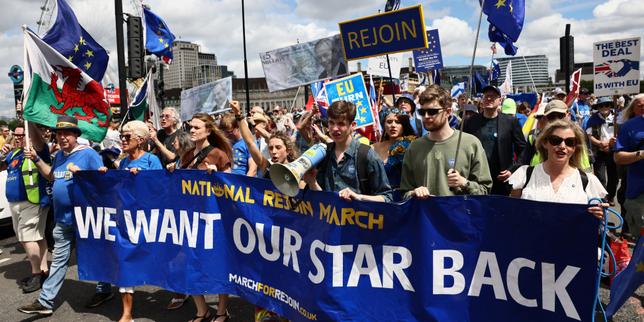
Walk into any coastal café today, and the conversation has changed. The fiery rhetoric of 2016 has evaporated, replaced by a quiet, exhausting reality. The British public is looking across the English Channel not with defiance, but with a profound, collective weariness. They want a way back in—if not to the Union itself, then at least to the warmth of its room.
The Cost of an Invisible Wall
Consider a hypothetical baker named Arthur. For thirty years, Arthur’s small bakery in Yorkshire relied on a delicate choreography of European ingredients. The flour came from France, the butter from Denmark, the specialized packaging from a small family firm in Germany.
When Brexit moved from a political slogan to a bureaucratic reality, Arthur didn't face a sudden catastrophic fire. He faced paperwork. Hundreds of pages of it. Every shipment became a gamble. The Danish butter sat in refrigerated containers at the port, caught in a tangle of customs declarations, while the price of electricity soared back home. Arthur’s story isn't unique; it is the micro-history of a macroeconomic disaster.
The dry statistics published by economic think tanks tell us that the UK economy is significantly smaller than it would have been inside the single market. But statistics don't capture the true damage. The real loss is measured in the quiet closures of multi-generational family businesses, the empty shelves that suddenly appear in neighborhood supermarkets, and the creeping realization that life has simply become harder to manage.
The invisible wall built around Britain didn't just keep people out. It trapped the British people in a cage of their own making.
The Generation Caught in Limbo
Step away from the ports and look at the universities.
A decade ago, a student from Manchester could decide on a whim to spend a semester in Barcelona, funded by the EU’s Erasmus programme. They would learn a language, fall in love, navigate a foreign bureaucracy, and return home as a deeply rooted European citizen.
That bridge has been demolished. In its place sits a pale, bureaucratic imitation that most students find impossible to navigate. The loss is intangible but devastating. We have raised a generation of young Britons whose horizons have been artificially shrunk. They look at their European peers traveling, working, and living across twenty-seven countries without a second thought, while they themselves must beg for visas just to spend a summer interning in Berlin.
This is where the emotional core of the current shift lies. It is not just about the gross domestic product or trade deficits. It is about a sense of stolen opportunity. Parents who voted for Brexit in a flush of nostalgic patriotism are now watching their grandchildren struggle to secure the freedoms they themselves took for granted.
The Turning Tide
Public opinion does not turn on a dime. It erodes, like a cliff face under a relentless tide.
Recent polling data reveals a stark reality: a clear, consistent majority of the British public now views Brexit as a mistake. The shift is not driven by a sudden adoration for European bureaucrats in Brussels. It is driven by pragmatism. The promises of the "Leave" campaign—the billions of pounds promised to the National Health Service, the instant trade deals with distant superpowers—have vanished like smoke.
Instead, the British public has watched their public services crumble under the weight of labor shortages. Hospitals are missing European doctors and nurses. Farms are watching fruit rot in the fields because the seasonal workforce from Eastern Europe can no longer cross the border without a mountain of red tape.
The current government, hyper-aware of this shifting mood, is walking a tightrope. No politician wants to utter the word "Rejoin." The trauma of the referendum years remains too fresh, the political scars too deep. Yet, beneath the cautious public statements, a massive diplomatic effort is underway. British officials are quietly flying to European capitals, desperately trying to negotiate veterinary agreements, security pacts, and research partnerships.
They are trying to rebuild the bridge, brick by brick, while pretending they are just admiring the view.
The View from the Other Side
But a relationship requires two parties.
While Britain soul-searches, the European Union has moved on. The initial anger and shock felt in Paris and Berlin has hardened into indifference. The EU has faced its own existential crises over the past decade, from geopolitical shifts to energy wars. To many European leaders, Britain is now just another third-country neighbor—a slightly difficult one with a history of buyers' remorse.
The tragedy of the current British position is the loss of leverage. Ten years ago, the UK was a rule-maker inside the world's largest trading bloc. Today, it is a rule-taker, forced to align with European standards anyway if it wants to sell its goods, but with absolutely no say in how those laws are written.
It is a humbling lesson in modern geopolitics. Isolation did not bring strength; it brought a profound, systemic vulnerability.
The rain continues to fall on the tarmac at Dover. The trucks still line up, their drivers waiting for green lights on customs screens that represent a border that didn't use to exist. Britain is discovering that it is remarkably easy to smash a mirror, but incredibly painful to try and piece the shards back together with bleeding fingers. The path forward will not be found in a grand, dramatic return, but in the slow, humbling work of admitting that we need our neighbors far more than they need us.