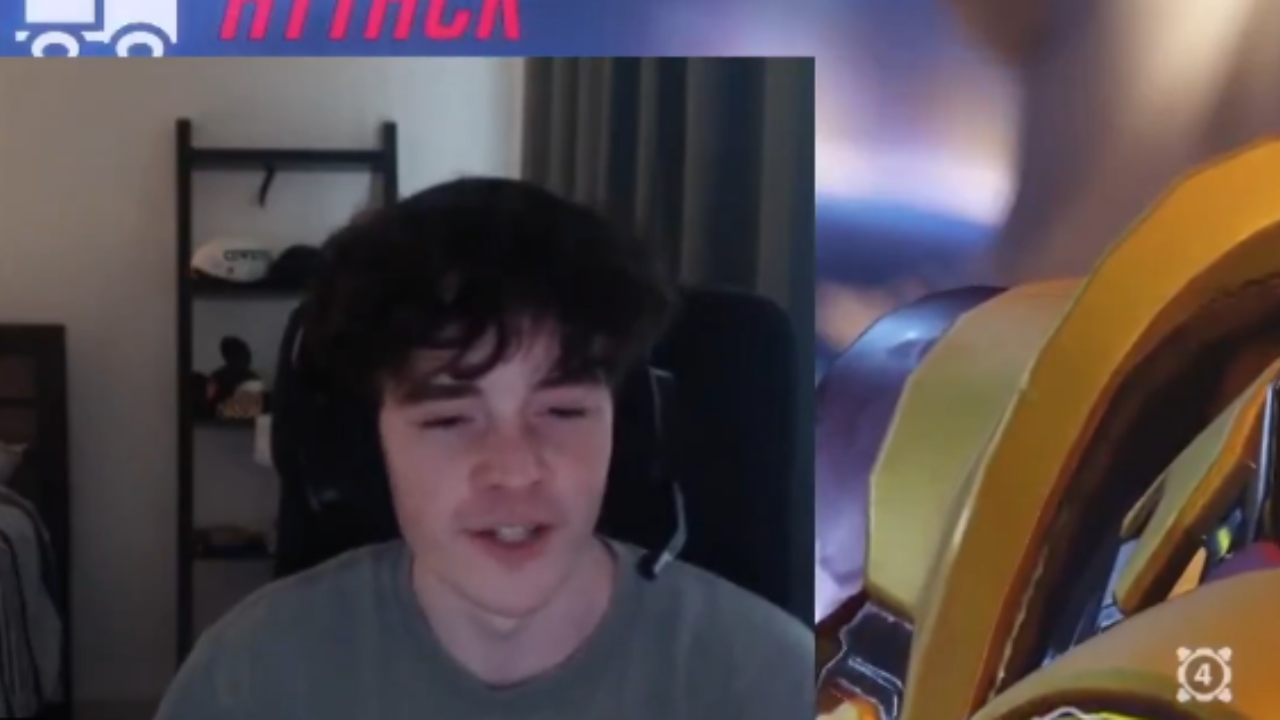
The air in a live stream at 2:00 AM feels different than it does at noon. It is heavy with a specific kind of digital exhaustion, a flickering neon fatigue where the only thing keeping thousands of people awake is the shared anticipation of something—anything—defying the crushing weight of probability. On a Tuesday night, the Twitch streamer known as Durpee82 sat in that glow. He wasn’t just playing a game; he was presiding over a community built on the strange, modern ritual of the "subathon."
Most people see a spinning wheel on a screen and see a gimmick. They see a colorful graphic designed to keep viewers clicking, a digital carrot on a stick. But for the person on the other side of the glass, that wheel represents a contract. It is a promise that, however briefly, the cold logic of the world might bend.
The wheel in question held a sliver of space so small it was almost invisible to the naked eye. It was a 0.31% chance. To put that in perspective, you are more likely to be dealt a straight flush in a game of poker than you were to hit that specific slice of pixels. The prize attached to it wasn't a piece of digital gear or a shout-out. It was something tangible. Something expensive.
Durpee82 had promised that if the pointer landed there, he would fly a viewer to BlizzCon.
The Physics of the Long Shot
BlizzCon is the Mecca of the Warcraft and Overwatch world. It is a sprawling, loud, expensive pilgrimage to Anaheim, California. For many, it remains a "someday" dream, locked behind the high costs of cross-country flights, overpriced hotels, and the elusive ticket itself. It is a luxury.
When the wheel started to spin, the chat was a blur of emotes and cynicism. We have been conditioned by a decade of loot boxes and "gacha" mechanics to expect the miss. We expect the wheel to tick-tick-tick just past the gold and settle into the gray. That is how the math is supposed to work. The house, or in this case the algorithm, usually wins.
But then the clicking slowed.
The pointer dragged across the broad, easy-to-hit sections of the wheel. It groaned past the "10 Gift Subs" and the "Dance for 30 Seconds." It approached the sliver. The 0.31%.
It stopped.
Silence is a rare commodity on Twitch. Usually, there is music, the clack of mechanical keyboards, or the constant stream of synthesized voices reading out donations. For a heartbeat, Durpee82 just stared. The chat, usually a chaotic river of nonsense, froze. Then, the dam broke.
Beyond the Pixels
It is easy to dismiss this as a moment of luck. It is harder to look at the human being on the other end of that luck. The winner wasn't a faceless username in that moment; they became a person whose year was about to be fundamentally altered.
Consider the logistics of a sudden trip across the country. For a streamer, this isn't just "content." It is a massive financial hit. We are talking thousands of dollars for the flight, the lodging, and the entry. Most people in Durpee82’s position would have had a "safety" built in—a fine-print clause or a way to pivot. Instead, he leaned into the microphone, his face a mask of genuine, terrified shock, and confirmed it. He was doing it.
This is where the "gaming" aspect of the story ends and the "human" aspect begins. We live in an era where the divide between the creator and the consumer is supposed to be a one-way mirror. The creator performs; the consumer pays. Money flows up, and entertainment flows down.
When Durpee82 hit that 0.31%, the mirror shattered.
He wasn't just a guy in a headset anymore. He was a benefactor. He was someone who had accidentally invited the universe to test his integrity, and he didn't flinch. He began the process of booking a dream for a stranger.
The Invisible Stakes of Digital Luck
Why does this matter? Why do thousands of people watch a man spin a wheel for hours?
It’s because our lives are increasingly governed by systems we don't understand and odds we can't beat. We deal with mounting bills, stagnant wages, and the general feeling that the "big wins" are reserved for someone else. When we see a 0.31% hit, it feels like a personal victory against the universe. It is a glitch in the simulation of bad luck.
I remember watching a similar moment years ago. I was struggling with three part-time jobs and a car that sounded like a blender full of marbles. I watched a creator give away a computer to a kid who had been watching from a library. I didn't get the computer. I didn't even know the kid. But for twenty minutes, the world felt less like a grind and more like a place where magic was permitted to exist.
Durpee82 provided that same oxygen to his audience.
The skepticism that usually follows these events—the "is it rigged?" or "is he actually going to pay?"—was drowned out by the sheer transparency of the moment. You could see the mental math happening on his face. You could see him realizing that his profit for the month had just vanished into a plane ticket for a person he had never met.
The Aftermath of the Spin
The "hit" is the headline. The follow-through is the story.
In the days following the stream, the community didn't just move on to the next game. They stayed. They talked about the winner. They talked about BlizzCon. The event transformed from a solitary viewing experience into a collective journey. They weren't just watching a streamer; they were watching a guy try to make good on a miracle.
This is the hidden power of the gaming community. Beneath the reputation for toxicity and noise, there is a deep, primal desire for connection. A trip to a convention is more than a vacation; it is an entry into a tribe. For the viewer who won, they aren't just going to see a keynote speech. They are being told, "You belong here, and the cost of entry is covered."
The wheel is a metaphor for the volatility of our digital lives. We put our time and our attention into these spaces, hoping for a return on that emotional investment. Most of the time, the wheel lands on the "Thanks for watching" slice.
But sometimes, the pointer catches on the edge of the impossible.
Durpee82 could have been another "dry facts" story about a streamer hitting a rare statistic. He could have been a footnote in a weekly gaming wrap-up. Instead, he became a reminder that even in a world of algorithms and cold, hard percentages, the human element still has the power to override the math.
He didn't just pay for a flight. He paid for the belief that, once in a while, the 99.69% of the world that says "no" can be ignored.
The winner will eventually board a plane. They will walk through the doors of the Anaheim Convention Center. They will hear the roar of the crowd and see the cinematic trailers on the big screens. And every time they look at their badge, they will remember a Tuesday night, a spinning wheel, and a man who decided that a promise was worth more than the odds.
The pixels eventually fade, and the stream ends. But the memory of a 0.31% miracle stays. It lingers in the back of the mind of every person who was in that chat, a small, stubborn ember of hope that the next spin might just be theirs.
In the end, we aren't chasing the prize. We are chasing the proof that the impossible is still on the table.
The screen goes black, the "Live" sign turns off, and Durpee82 finally goes to sleep, his bank account lighter and his legacy forever tied to a sliver of gold on a digital wheel.


