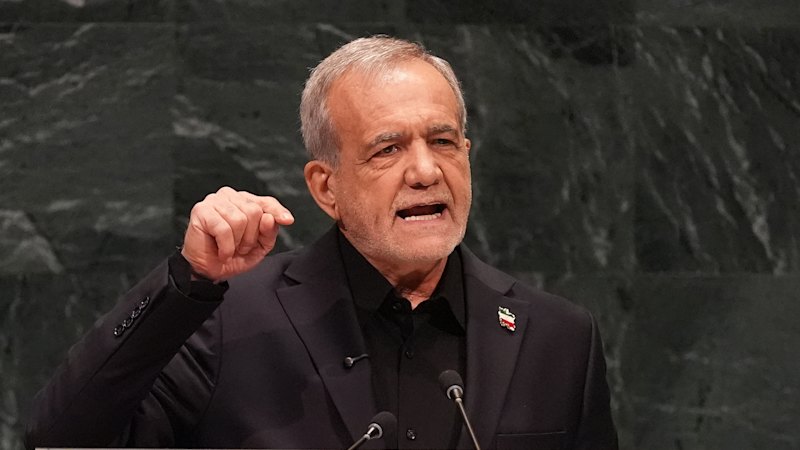
President Ahmed al-Sharaa took to the podium at the United Nations with a singular objective: reclaiming the Golan Heights. Syrian President Ahmed al-Sharaa declared that the strategic plateau will remain Syrian, framing the contested territory not as a bargaining chip for international recognition, but as an existential issue of national sovereignty. This rhetorical line in the sand comes at a volatile juncture, as Damascus attempts to stabilize its fractured internal governance while simultaneously testing the boundaries of regional deterrence.
For decades, the Golan Heights has functioned as an immutable military reality. Israel seized the plateau during the Six-Day War in 1967, later annexing the territory in 1981 in a move that received formal United States recognition in 2019. International consensus outside Washington largely views the territory as occupied land, yet the physical facts on the ground have long favored Israeli security control. Al-Sharaa’s recent pronouncements signal a calculated shift in tone. Rather than treating the recovery of the territory as a distant ideological goal, the new leadership in Damascus is attempting to re-inject the issue into the diplomatic bloodstream. If you enjoyed this post, you should read: this related article.
Understanding why this diplomatic offensive is happening right now requires a cold assessment of the Syrian domestic landscape. Al-Sharaa leads a transitional government desperate for legitimacy. Years of grinding civil war shattered the country's economic and administrative foundation. By raising the banner of territorial integrity over the Golan Heights, Damascus is deploying a classic political strategy. External enemies provide internal cohesion. When bread is scarce and infrastructure is non-existent, nationalist fervor directed at a historic adversary remains a potent tool for consolidating authority.
Yet, this posturing carries profound risks. The military balance of power between Israel and Syria remains lopsided. Israel maintains absolute air superiority, advanced electronic warfare capabilities, and a fortified defensive posture along the Purple Line. Any attempt by Damascus to translate rhetoric into kinetic action would invite a devastating counter-offensive that the fragile Syrian state cannot absorb. Al-Sharaa is well aware of this asymmetry. His strategy is almost certainly diplomatic and psychological, designed to rally regional allies and pressure international bodies rather than launch military operations. For another look on this story, see the latest coverage from USA Today.
The geopolitical chessboard surrounding the Golan Heights has grown increasingly crowded. Iran and its proxy networks have historically used Syrian territory as a staging ground for asymmetric pressure against Israel. As al-Sharaa attempts to distance his administration from past dependencies while securing the country's borders, managing these external militias becomes an urgent diplomatic tightrope walk. If Damascus signals a hardline stance on the Golan, it risks drawing renewed Israeli strikes against military infrastructure inside Syria proper. Conversely, appearing soft on the issue would erode the government's nationalist credentials at home.
International reactions to the speech at the United Nations were predictably divided. Western capitals viewed the declaration through the lens of regional stability, urging restraint and adherence to existing ceasefire agreements dating back to 1974. Neighboring Arab states, many of whom are currently navigating their own complex normalization tracks with both Damascus and Jerusalem, offered muted responses. They recognize that stoking territorial disputes over the Golan complicates broader regional economic integration projects and security pacts.
Beneath the diplomatic theater lies the grim reality of the local population residing on the plateau. Over twenty thousand Druze residents live in villages such as Majdal Shams, holding varying legal statuses and complex national identities. Their daily lives are inextricably bound to the administrative realities of Israeli municipal services coupled with deep-seated familial ties across the border in Syria. When leaders in Damascus or Jerusalem trade rhetorical blows over the sovereignty of the plateau, the human cost is borne by communities caught in a permanent state of geopolitical limbo.
Al-Sharaa’s gamble rests on the assumption that the international community suffers from strategic fatigue and might be willing to pressure Israel for concessions to maintain regional quiet. This calculation misreads the current security calculus in Tel Aviv. Israeli defense planners view control over the high ground of the Golan as an absolute red line, non-negotiable under any foreseeable political scenario given the instability radiating from the interior of the Middle East.
As the echoes of the United Nations address fade, the situation on the ground remains tense. Damascus has successfully placed the issue back on the diplomatic radar, but it has done so at the cost of raising regional anxieties. The gap between political rhetoric and military reality is vast, and bridging that gap through bluster alone only brings the region closer to miscalculation.
History suggests that territorial disputes frozen by decades of conflict rarely thaw through speeches alone. They require shifts in the global balance of power, economic transformations, or profound changes in domestic political survival calculations. President al-Sharaa has made his opening move, staking his administration's prestige on a piece of land that Damascus lost over half a century ago. How he manages the immense gap between his stated ambitions and the unforgiving reality of military power will define not just his presidency, but the immediate future of the Syrian state.