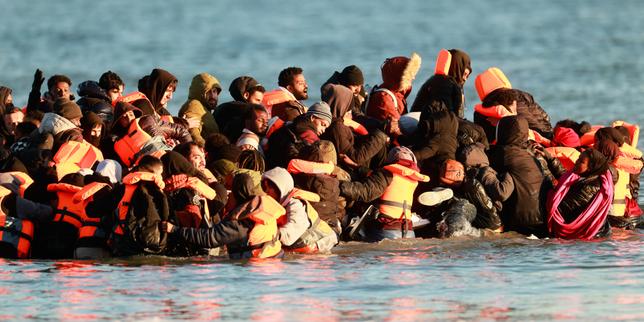
The documented loss of 7,900 lives on global migration routes in 2025 represents a systemic failure of border management strategies that prioritize kinetic deterrence over risk-adjusted processing. This figure is not an anomaly; it is the predictable output of a geopolitical system that has increased the friction of legal movement while leaving the underlying demand for labor and physical security unaddressed. To analyze this data, one must look beyond the raw numbers and examine the structural mechanisms—geopolitical bottlenecks, the professionalization of smuggling cartels, and the diminishing marginal utility of physical barriers—that drive these mortality rates.
The Triad of Migration Risk Drivers
The lethality of a migration route is determined by three interacting variables: geographic hostility, enforcement density, and the technical capacity of the facilitation network. In 2025, the interaction of these variables shifted in ways that increased the probability of fatal outcomes even in regions where total volume remained stagnant. For a deeper dive into this area, we recommend: this related article.
- Enforcement-Driven Displacement: When a primary route is closed via maritime patrols or physical walls, the migration flow does not cease; it displaces to "virgin" routes. These secondary paths are invariably longer and traverse more hostile terrain, such as the Darien Gap or the deep Atlantic. The increase in deaths is a direct function of the increased transit time in environments where human physiological limits are tested.
- Asymmetric Information and Smuggling Monopolies: As legal pathways tighten, the market for "illegal" transit becomes more concentrated. Professional smuggling syndicates now operate with high-margin, low-volume models in some sectors, and high-volume, disposable models in others (e.g., the Mediterranean). The lack of competitive pressure in these black markets means that the safety of the "client" is a secondary concern to the evasion of detection hardware.
- Technological Blind Spots: Governments have invested heavily in detection technology—thermal imaging, drone surveillance, and seismic sensors—to prevent entry. However, there is a distinct lack of investment in "search and rescue" (SAR) integration. The same technology used to track a vessel for interception is rarely synchronized with medical or rescue response units, creating a lag time between detection and intervention that frequently proves fatal.
The Mediterranean Bottleneck and Resource Misallocation
The Mediterranean remains the most lethal maritime border in the world, not because of its geography, but because of a deliberate policy of strategic ambiguity regarding SAR responsibilities. The 2025 data indicates that deaths in the Central Mediterranean are increasingly tied to the "pushback" mechanism, where intercepted vessels are returned to jurisdictions with no capacity for processing or protection.
This creates a vicious cycle of re-entry. A migrant intercepted and returned to a Libyan detention center will, statistically, attempt the crossing again within six months. Each subsequent attempt increases the cumulative risk of a fatal incident. From a strategic standpoint, current Mediterranean policy optimizes for "interdiction count" rather than "migration management," which is an inefficient use of naval assets that fails to reduce the total number of people attempting the crossing. For broader information on the matter, in-depth reporting is available at The Washington Post.
The Darien Gap: A Study in Terrain Hostility
In the Western Hemisphere, the Darien Gap has transitioned from a fringe route to a mass-transit corridor. The fatality rate here is underreported due to the difficulty of body recovery in dense jungle environments. The "death toll" cited in official reports likely represents a floor, not a ceiling, of the actual mortality.
The risk in the Darien is not just environmental; it is a breakdown in the Rule of Law vs. Cartel Sovereignty. When states cede control of difficult terrain to non-state actors, they essentially outsource border policy to criminal organizations. These organizations use mortality as a tool for social control and extraction, charging "protection" fees while offering zero guarantees of physical safety. The 2025 data suggests that the professionalization of these routes has not made them safer; it has merely made them more profitable for the facilitators.
Economic Rationality vs. Policy Ideology
Migration is fundamentally an economic transaction driven by a massive disparity in the "Value of Labor" between the Global South and the Global North. Until the cost of illegal transit—measured in both financial capital and the probability of death—exceeds the lifetime expected earnings in the destination country, the flows will continue.
Current policies focus on increasing the "Physical Cost" (risk of death or injury). However, economic history shows that high-risk environments simply attract more ruthless facilitators and increase the price of the service, which in turn finances more sophisticated evasion techniques. A more rational approach would focus on:
- Regional Processing Hubs: Moving the "border" conceptually and physically to the point of origin or transit. By adjudicating claims closer to the source, the incentive to embark on high-risk maritime or jungle journeys is neutralized.
- Labor Market Integration: Aligning visa quotas with actual labor demand in sectors like agriculture, construction, and elder care. When there is no legal avenue for a job that the market clearly demands, the informal market fills the gap, inevitably leading to the use of dangerous routes.
The Data Gap: Why We Underestimate the Crisis
The figure of 7,900 is a conservative estimate based on recovered remains and verified witness testimony. The true number is likely significantly higher due to "Invisible Shipwrecks"—vessels that disappear without a distress signal or a survivor.
The lack of a unified global database for missing migrants reflects a lack of political will to quantify the human cost of current border strategies. To move toward an evidence-based policy, we must implement:
- Standardized DNA and Biometric Tracking: Establishing protocols for identifying remains at border zones to provide closure and accurate data.
- Satellite-Driven SAR: Utilizing existing commercial satellite constellations to monitor high-risk maritime corridors in real-time, specifically for the purpose of identifying vessels in distress before they enter a terminal state.
- Algorithmic Risk Modeling: Using weather patterns, enforcement shifts, and historical fatality data to predict "danger spikes" on specific routes, allowing for the proactive deployment of humanitarian assets.
The mortality rate on migration routes is a lagging indicator of geopolitical instability and failed economic integration. Treating these deaths as a "tragedy" ignores their status as a predictable outcome of a specific policy design. If the objective is to reduce mortality while maintaining border integrity, the focus must shift from kinetic barriers to the structural management of human mobility.
States must move toward a Risk-Based Border Architecture. This involves high-intensity screening for security threats combined with low-friction pathways for documented labor. By siphoning the "low-risk" economic migrants out of the illegal channels, authorities can concentrate their surveillance and enforcement assets on high-risk criminal or security threats. The current model, which treats all unauthorized movement as a uniform security threat, results in a dilution of resources and a guaranteed increase in the death toll as migrants are forced into the most dangerous margins of the globe.
The strategic play is the de-monopolization of the migration market. By providing a legal, regulated alternative to the smuggling cartels, states can collapse the financial incentive for the dangerous routes that claimed 7,900 lives in 2025. This is not a humanitarian concession; it is a pragmatic realignment of state resources toward a more controllable and less lethal border reality.

/cloudfront-us-east-2.images.arcpublishing.com/reuters/GLUNC6HGHRPYBEZSRUKP6O4AEQ.jpg)