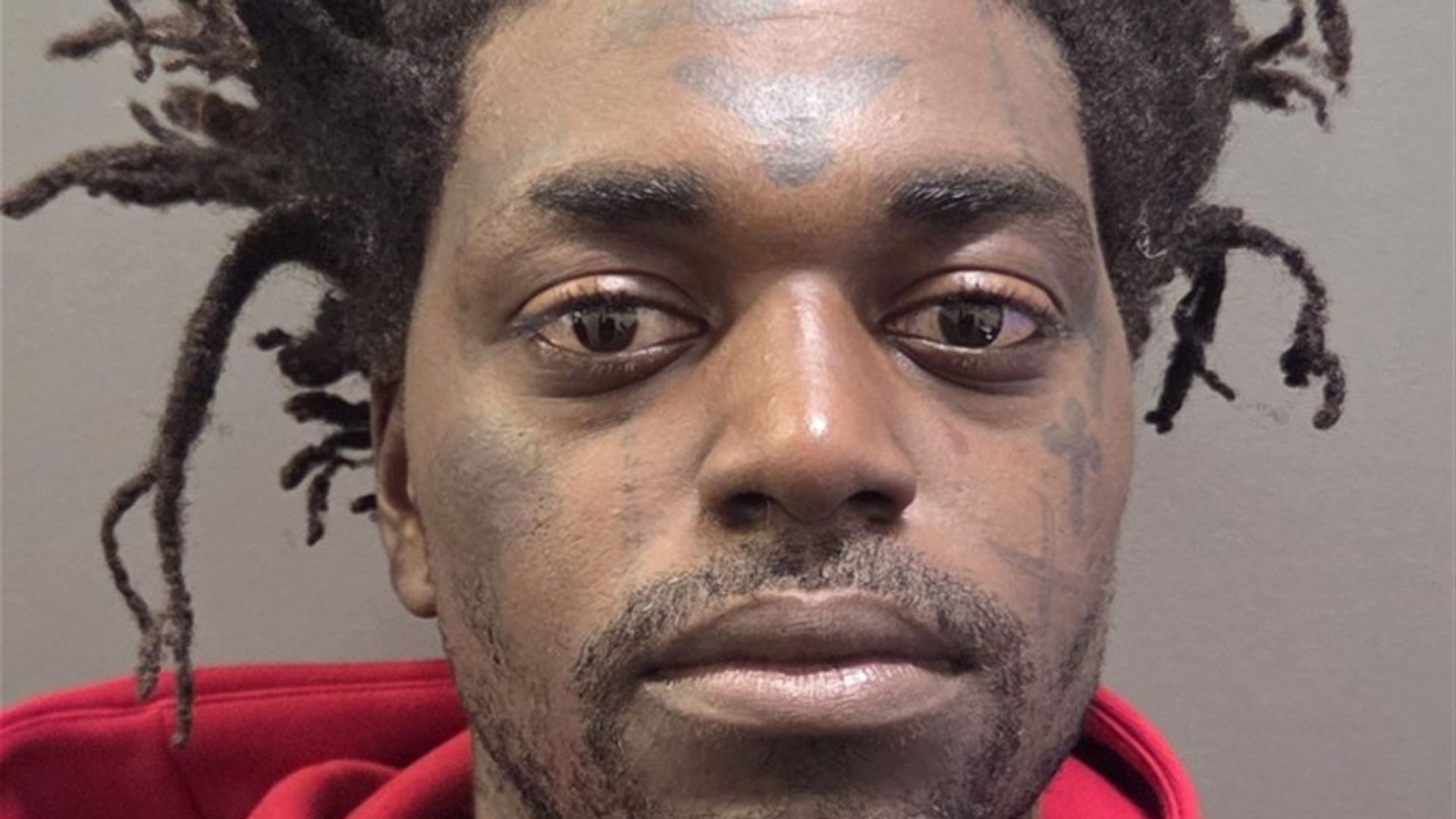
The humidity in Plantation, Florida, has a way of sticking to everything. It clings to the windshields of luxury SUVs and settles into the fibers of expensive designer shirts. On a Tuesday in July, that heavy air felt like a premonition. Bill Kapri, the man the world knows as Kodak Black, was about to watch his reality fracture once again. It wasn't the first time. In the orbit of a superstar, the line between a victory lap and a high-speed chase is often thinner than a rolling paper.
Police officers approached the purple Dodge Durango. The smell of burnt marijuana hung in the air—a scent so common in the industry it barely registers as a warning sign anymore. But this wasn't about a casual smoke. When the door opened, the narrative shifted from a routine traffic stop to a high-stakes legal drama. Officers found 31 oxycodone pills. Small. Blue. Lethal. To the law, they were evidence of trafficking. To a man who has spent more time in the headlines for his mugshots than his melodies lately, they were something far more personal.
The Weight of the Name
Imagine the pressure of being a lifeline. At 25, Kodak Black wasn't just a rapper; he was an economy. He carried the hopes of Pompano Beach on his back. Every time he stepped out, he was the provider, the protector, and the target. Success in the rap game is often described as "making it out," but rarely do we talk about what happens when you take the trauma of the "in" with you to the "out."
The legal system sees a defendant with a rap sheet that stretches back to his teenage years. They see the 2019 weapons charge that led to a federal prison sentence, famously commuted by a departing president. They see a man who was granted a second chance and, in their eyes, spat on it. But if you look closer, through the lens of a human being rather than a case file, you see a cycle that is nearly impossible to break.
Oxycodone isn't a party drug. It’s a numbing agent. When the world is screaming your name and the ghosts of your past are trying to collect a debt, the desire to feel nothing is a powerful gravity. The "trafficking" label in Florida is a matter of weight and volume, not necessarily intent to sell. Under state law, possessing more than seven grams of oxycodone automatically triggers a trafficking charge. It is a mathematical trap. Thirty-one pills might look like a weekend's supply to a person struggling with a deep-seated dependency, but to a prosecutor, it’s a mandatory minimum sentence.
The Invisible Stakes of the Purple Durango
Consider a hypothetical young artist. Let's call him Marcus. Marcus grows up seeing Kodak as a god. He sees the diamonds, the cars, and the defiant middle finger to authority. He doesn't see the legal fees that drain bank accounts. He doesn't see the sleepless nights in a cell where the only thing louder than the silence is the ringing in your ears.
When Kodak was pulled over that afternoon, the stakes weren't just his freedom. The stakes were the validity of the "redemption" narrative. We love a comeback story. We cheered when he walked out of prison in 2021, draped in expensive fabrics and promising a new chapter. We wanted to believe that the system could work, that a person could be "corrected" and return to society as a polished version of themselves.
The July arrest shattered that glass house. It forced us to confront a cold truth: fame is not a shield against the self. You can move into a mansion in a gated community, but if you bring the same coping mechanisms that helped you survive the project hallways, the gates won't keep the police out. They only ensure the neighbors have a better view of the flashing lights.
The Geography of a Downward Spiral
Florida’s legal landscape is unforgiving. It is a state that built its reputation on "tough on crime" stances, particularly regarding the opioid crisis that has ravaged its suburbs and cities alike. By facing a trafficking charge, Kodak wasn't just another celebrity in trouble. He became a symbol of a larger war.
The arrest record stated his license was expired and his tags were out of date. It’s a recurring theme in the lives of those who live at 100 miles per hour. The small details—the paperwork, the fine print of being a law-abiding citizen—get lost in the roar of the engine. But those small details are exactly how the trap is sprung. A dusty license plate leads to a window being rolled down. A window being rolled down leads to a search. A search leads to a life-altering felony.
The irony is thick enough to choke on. Here is a man who has donated thousands to charities, who has paid for the funerals of strangers and the tuitions of children in his old neighborhood. He is capable of immense light. Yet, he finds himself repeatedly pulled back into the shadows. Is it a lack of discipline? Or is it the inevitable result of a person being treated as a product rather than a person?
The Sound of the Gavel
When the news broke, the internet did what it does best. It partitioned itself into camps. One side shouted about wasted potential and the stupidity of "throwing it all away." The other side pointed to the systemic targeting of Black men in luxury vehicles. Both sides missed the heartbeat of the story.
The story is about the terrifyingly short distance between the top of the world and the back of a patrol car. It’s about the fact that all the money in the world cannot buy a new nervous system. If your brain is wired for survival, you will continue to act like you are being hunted even when you are the hunter.
The legal proceedings that followed the Durango incident were a blur of bond hearings and lawyerly maneuvers. His attorney, Bradford Cohen, argued that the pills were legally prescribed for pain management following a shooting earlier that year. It was a bridge to a different perspective: a man in physical and emotional pain, trying to function in a world that demands high-octane performance every single day.
But the law is rarely interested in the "why." It is obsessed with the "what."
What was in the car?
What was the weight?
What is the prior record?
The Echo in the Booth
There is a specific kind of silence that follows a celebrity arrest. It’s the sound of sponsors quietly pulling back. It’s the sound of a tour schedule being erased. For Kodak Black, that silence has been broken by the occasional snippet of a new song or a social media post, but the shadow remains.
The drug trafficking charge wasn't just a headline; it was a ghost that will haunt his discography forever. Every lyric about struggle now feels less like a memory and more like a current event. The music changes when you know the artist is writing it while looking over their shoulder.
We watch these figures as if they are characters in a movie, forgetting that when the camera cuts to black, they still have to live in their own skin. The pills found in that car weren't just chemicals. They were a symptom of a man trying to outrun a version of himself that the world refuses to let him forget.
The humidity in Florida eventually breaks into a storm. The rain washes the streets, but it doesn't clean them. It just moves the dirt around. As the legal battle over those thirty-one pills continues to churn through the courts, the image of that purple Durango remains burned into the public consciousness. It stands as a monument to the fragility of success.
One day you are the king of the airwaves. The next, you are sitting in a room with white fluorescent lights, wearing a standard-issue jumpsuit, wondering how a three-minute drive ended in a life sentence. The pills are small. The consequences are tectonic. The man in the middle is just trying to breathe.