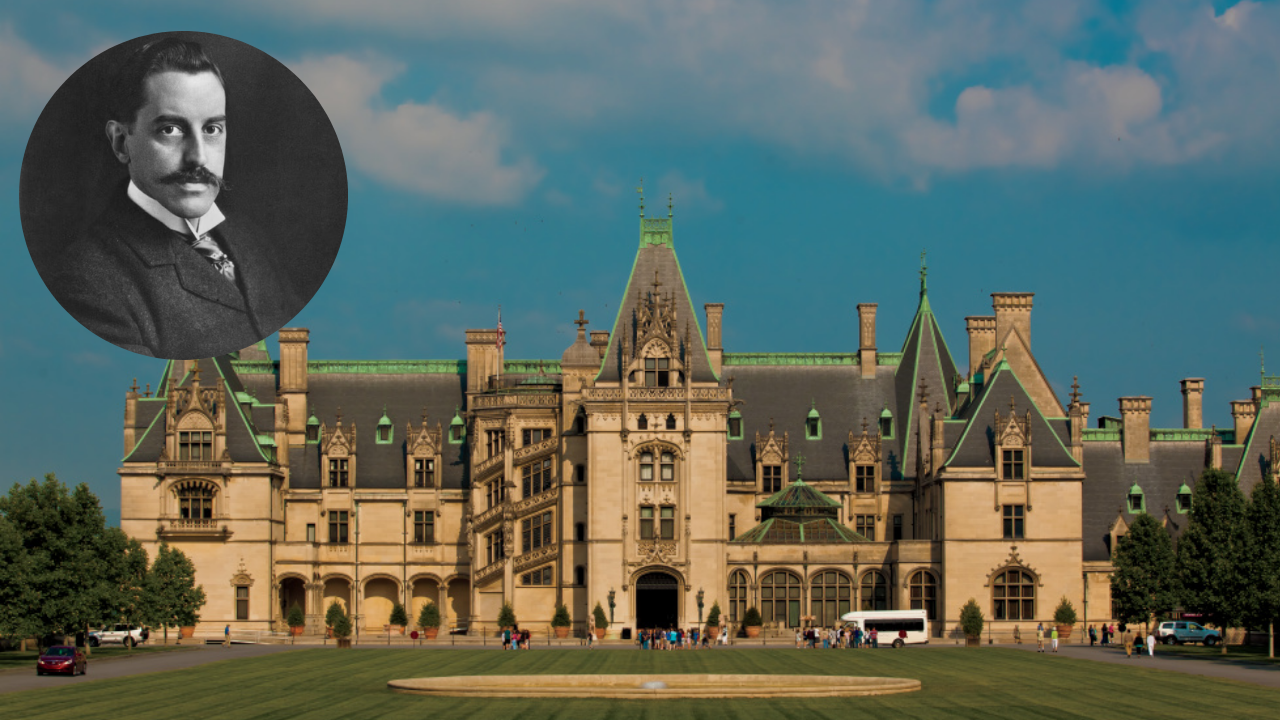
In 1888, a quiet, bookish scion of America's most ruthless railroad dynasty stepped off a train in Western North Carolina and decided to carve a feudal European principality out of the Blue Ridge Mountains. George Washington Vanderbilt II was only twenty-six years old, possessed of an inheritance so staggering it defied ordinary comprehension, and profoundly unsuited for the cutthroat industrial warfare that had enriched his grandfather, the Commodore. While his brothers fought for control of shipping and rail lines, George wanted isolation, high culture, and a monument to aristocratic leisure. That impulse gave birth to Biltmore, a 250-room French Renaissance chateau anchored by an initial accumulation of 125,000 acres. It was an architectural marvel, an economic anomaly, and an unsustainable monument to an economic order that was already collapsing under its own weight.
To understand the true scale of Biltmore is to understand the terrifying velocity of Gilded Age capital. Vanderbilt did not simply buy a vacation home; he assembled a sovereign territory. He acquired exhausted, eroded farmlands and mountain slopes from hundreds of individual holders, including the displaced African-American community of Shiloh, paying above market rate to clear the path for his vision. He brought in architect Richard Morris Hunt and landscape designer Frederick Law Olmsted—the masterminds behind Central Park—to bend the North Carolina wilderness to their collective will. Forests were cleared, rivers managed, and a private railway spur constructed just to haul the eleven million bricks required for the massive stone exterior. By the time the house officially opened its doors on Christmas Eve in 1895, it was clear that no single private fortune, no matter how immense, could indefinitely subsidize this scale of isolation.
The structural flaw of Biltmore was its foundational contradiction. It was designed as a self-sufficient feudal estate in an era that was rapidly modernizing into a tax-heavy, industrialized democracy. Vanderbilt attempted to reconcile this by turning the surrounding forest into a laboratory for scientific forestry, hiring the German forester Carl Schenck to run the Biltmore Forest School, the first of its kind in North America. They planted saplings, managed timber yields, and tried to prove that vast private landholdings could pay for themselves through ecological stewardship. Yet the ledger books told a brutal story. The overhead required to heat, staff, and maintain a four-acre interior footprint with dozens of servants, master artisans, and agricultural laborers required a constant hemorrhage of liquid cash.
When George Vanderbilt died unexpectedly in 1914 following an emergency appendectomy at the age of fifty-one, the illusion of permanent aristocratic permanence shattered instantly. He left behind a widow, Edith Stuyvesant Dresser Vanderbilt, a young daughter named Cornelia, and an estate whose tax burden and operational costs were rapidly becoming unmanageable. The federal government, armed with newly minted authority under the Weeks Act, came calling for a solution to the region's denuded timberlands.
Twenty-six years after George Vanderbilt first laid eyes on the Asheville mountains, Edith executed a pragmatic retreat that saved the family from financial ruin. She sold 86,700 acres of the original estate to the federal government for $433,500—roughly five dollars an acre. This massive land transfer formed the literal core of the Pisgah National Forest, forever altering the American conservation landscape. It was an act framed as noble philanthropy, designed to honor George's environmental ideals, but it was equally an act of urgent financial triage. The family could no longer afford to hold a mountain empire.
The shrinking of the estate exposed a hard truth about Gilded Age monuments. They were built for a specific, vanishing moment in American tax policy and labor availability, an era before federal income taxes and estate duties made private maintenance of such leviathans financially suicidal. When Cornelia Vanderbilt married British aristocrat John Francis Amherst Cecil in 1924, the couple faced a stark choice: abandon the house to the elements or find a way to monetize the unthinkable.
The solution was as radical as the initial construction. In 1930, during the depths of the Great Depression, the Cecils opened Biltmore House to paying tourists. Inviting the public inside a private sanctuary was an unthinkable indignity for the old-money elite, a desperate pivot that turned a symbol of exclusive wealth into a commercial amusement. Yet that single, ungraceful compromise is the exact reason Biltmore still stands today while contemporaries like the Vanderbilt mansions in New York and Newport were reduced to rubble by the wrecking ball.
Modern visitors walking through the grand banquet hall or the indoor swimming pool rarely contemplate the ledger panic that forced these rooms open to the public. They see the tapestries, the Renoirs, and the sweeping Olmsted vistas as permanent fixtures of American heritage. In reality, the estate survived by shedding its feudal pretensions and transforming itself into a corporate tourist destination, complete with commercial winemaking, hotels, and aggressive hospitality branding. The grandest home in America endures precisely because it stopped being a home and became a business.



