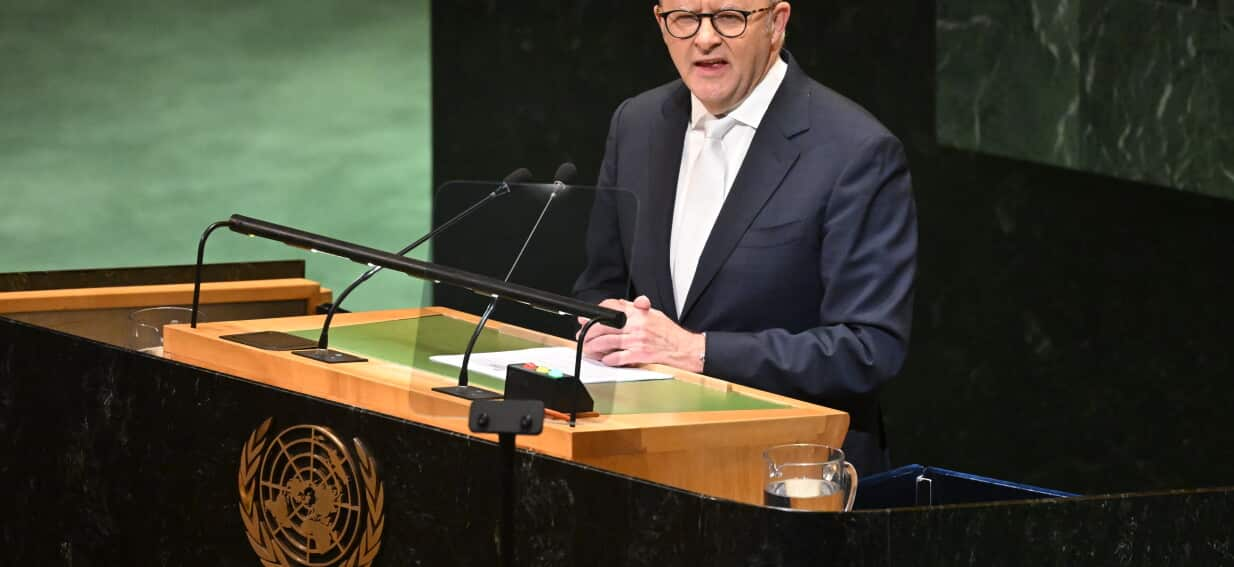
The marble floors of the United Nations headquarters in New York do not echo the way they should. They absorb sound, muffling the hurried footsteps of diplomats who carry the weight of fractured borders in leather briefcases. Outside, autumn winds sweep down First Avenue, carrying the sharp scent of roasting chestnuts and exhaust fumes. Inside, under the grand domed ceiling, the air is stale, conditioned, and heavy with an invisible dread.
This is where speeches are delivered to rows of empty seats. This is where nations talk past one another, locked in a perpetual theater of posturing. Meanwhile, you can find similar stories here: Why Hong Kong is quietly rewriting the rules of higher education.
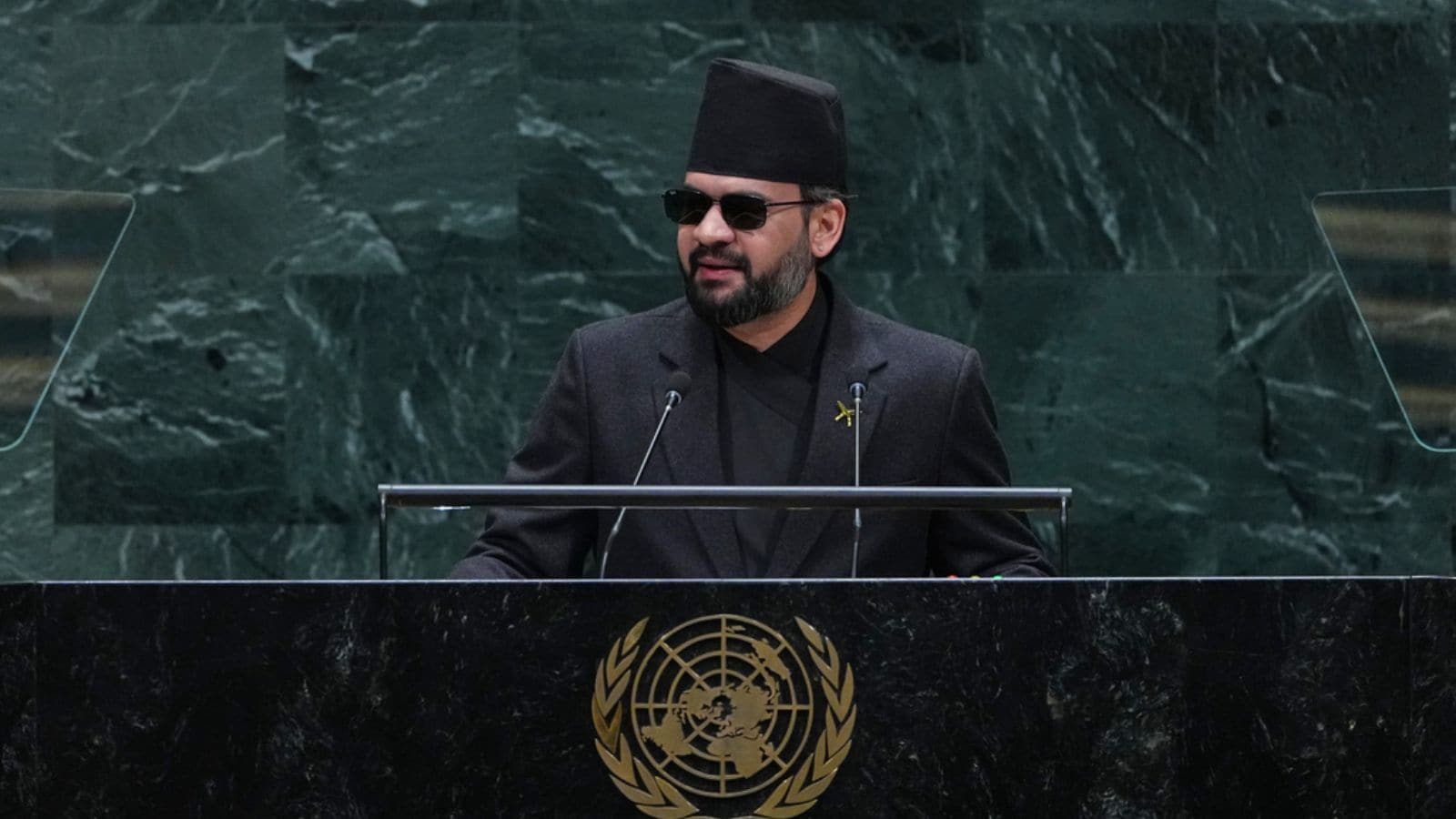
Yet, when Australian Prime Minister Anthony Albanese stepped up to the mahogany podium, the room shifted. He did not offer the usual diplomatic platitudes about cooperation and shared horizons. Instead, he laid bare an uncomfortable truth that smaller nations whisper in hallways but rarely shout from the rooftops: the world’s peace is buckling under the ambition of superpowers who treat the globe as their personal chessboard.
Peace, he warned, is under immense strain. The greatest powers are sliding toward a dangerous exclusivity, carving up influence while the rest of the world holds its collective breath. To understand the full picture, we recommend the recent analysis by The Washington Post.
To understand why this warning matters, you have to look past the diplomatic jargon. You have to look at what happens when giants collide.
Consider a hypothetical scenario, a village market square where two local heavyweights decide to settle an old feud. They do not care about the ceramic pots on the stalls, the children playing in the dust, or the baker whose livelihood depends on a quiet Tuesday. They only care about each other. When they throw their punches, the stalls shatter. The flour spills. The innocent bleed.
This is the exact fear haunting capitals from Canberra to Jakarta, from Wellington to Oslo.
For decades, middle powers operated under a comforting illusion. The assumption was that the post-Cold War architecture—anchored by international law, open trade routes, and multilateral institutions—would permanently keep the peace. Rules were supposed to protect the small just as effectively as they restrained the strong. But rules require enforcers who respect the game. When the architects themselves start tearing down the walls, the house begins to shake.
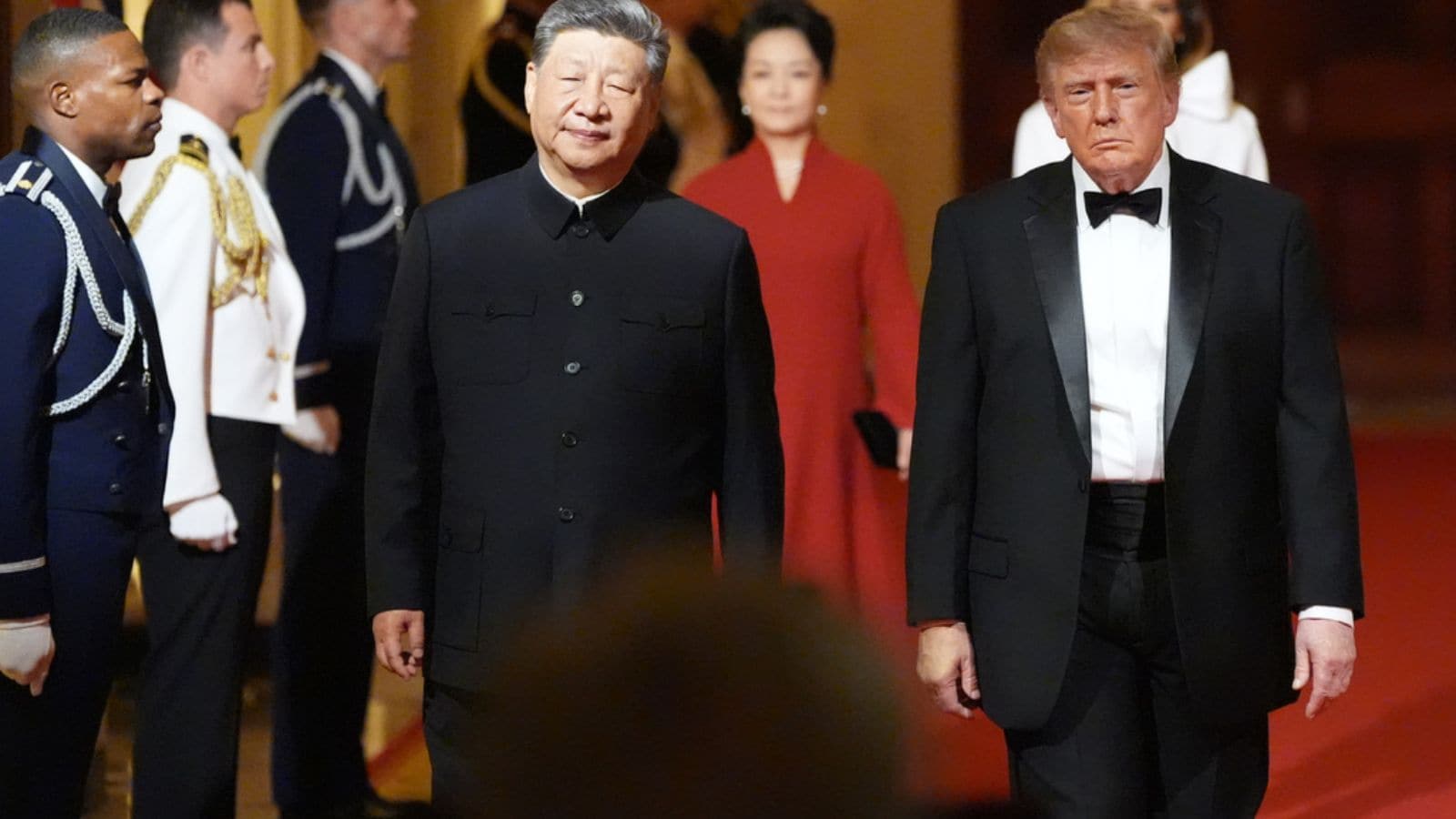
Albanese’s address was not merely a critique of foreign capitals; it was a desperate defense of the rules-based order that allows nations without nuclear arsenals or billion-strong populations to survive and thrive. When the superpowers choose dominance over dialogue, the collateral damage is borne by everyone else. Supply chains fray. Maritime choke points become flashpoints. Economies that rely on stability find themselves forced into binary choices: align with Washington or align with Beijing.
There is a profound exhaustion that comes with living on the fault line.
I remember speaking with a retired trade negotiator in Sydney years ago, a man who had spent decades smoothing out tariffs and maritime disputes across the Indo-Pacific. Over a lukewarm cup of tea, he pointed to a map of the shipping lanes cutting through the South China Sea.
"People think peace is the absence of war," he told me, his finger tracing a narrow blue line on the paper. "It is not. Peace is predictability. It is the boring certainty that the ship you sent out on Monday will dock on Friday. When the big players start rewriting the map every morning, predictability dies. And when predictability dies, panic follows."
That panic is now embedded in federal budgets. Defense spending across the Asia-Pacific region has surged to historic highs. Shipyards are working double shifts. Airbases are being reinforced in remote tropical outposts. These are not the actions of nations preparing for cooperation; they are the grim preparations of nations bracing for impact.
The tragedy is that this collision is not inevitable. It is a choice.
Superpowers are blinded by their own gravity. They mistake their economic and military mass for moral infallibility. They assume that compliance can be coerced through tariffs, threats, and technological blockades. But history offers a brutal lesson on hyper-dominance: empires rarely collapse because they are defeated from the outside. They collapse because they exhaust their allies, alienate the neutral, and overextend their reach until the center cannot hold.
The United Nations Security Council, designed as the ultimate fire extinguisher for global conflicts, has instead become a monument to paralysis. Whenever a crisis erupts, the veto pens of the permanent members scratch out any hope of decisive action. The institution meant to restrain the strong has been captured by them.
What remains?
Middle powers. The nations that cannot dictate terms, but refuse to be dictated to.
Albanese’s warning was an explicit call for these nations to find their spine and their voice. It was an assertion that international law cannot be treated as a menu where superpowers pick only what serves their immediate interests while discarding the rest. If the global order devolves into a raw contest of might makes right, then sovereignty becomes a temporary lease granted by the nearest bully.
We are standing at a historic pivot point. The choices made in Washington, Beijing, and other power centers over the coming months will echo for generations. But the agency does not belong solely to them. It belongs to the chorus of nations willing to demand that the rules apply to everyone, regardless of the size of their navy or the heft of their GDP.
The microphone in New York has been switched off. The delegates have packed their briefcases and returned to their waiting cars. But the echo of that warning remains in the air like ozone before a storm. The floor is shaking. The giants are posturing. And the rest of the world is left watching the horizon, waiting to see which way the first blow will fall.