Wait.
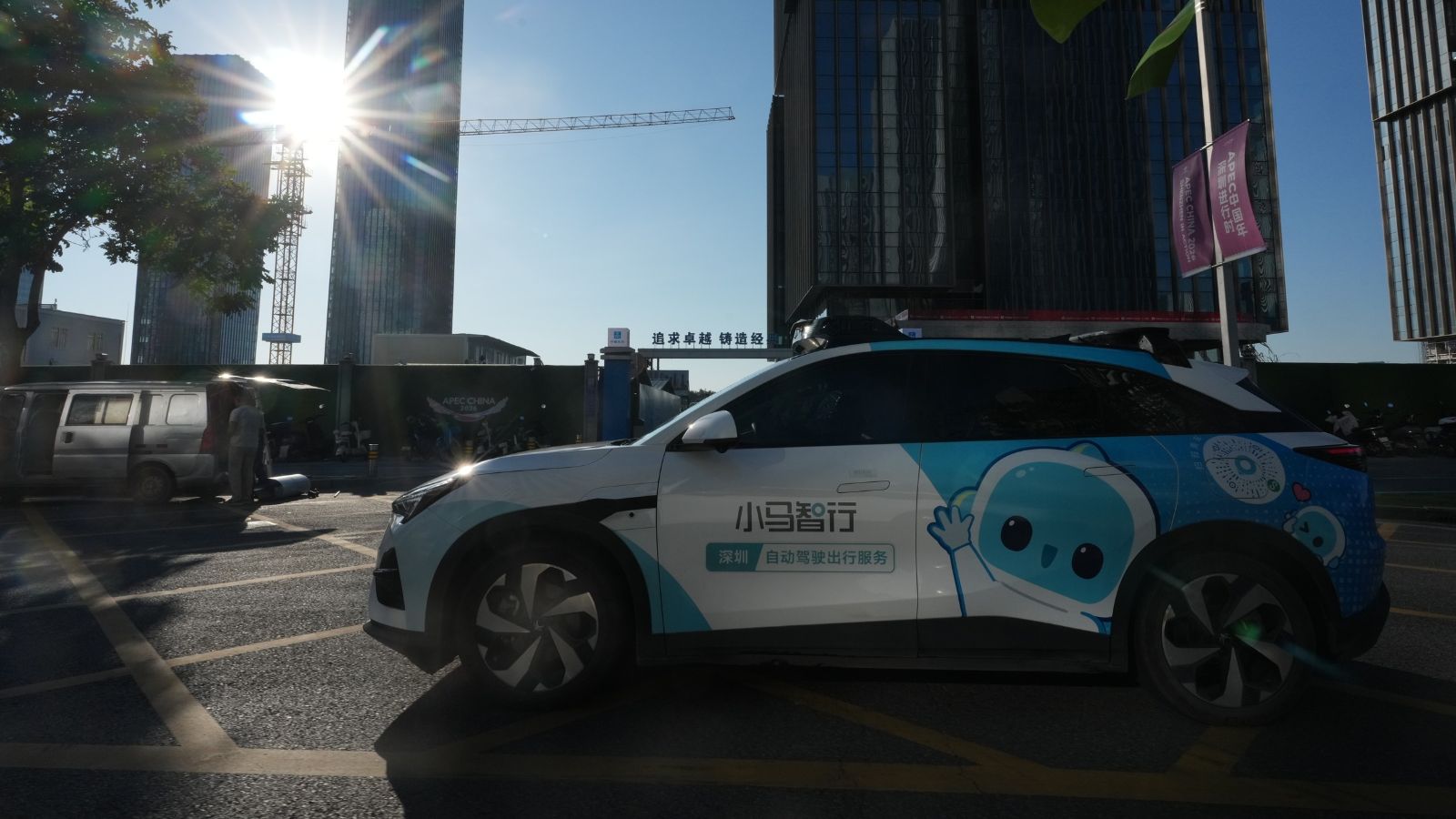
Watch the steering wheel of a white sedan gliding down Shennan Boulevard at midnight, and you will feel a quiet, cold shift in your stomach. There is no thumb resting at nine o'clock, no tired eyes flicking toward the rearview mirror, no subtle human micro-correction when a delivery scooter cuts too close to the bumper. The wheel turns on its own, smooth as water over river stone, guided by spinning roof-mounted sensors and silicon brains trained on millions of miles of chaotic southern Chinese traffic.
For most of the world, autonomous vehicles and humanoid machines remain dinner-party debates or stock-ticker abstractions. In Shenzhen, they are simply Tuesday. Ahead of the Asia-Pacific Economic Cooperation summit hosted in China in November 2026, this sprawling metropolis of seventeen million people has turned its public streets into an open-air showroom for Beijing's deepest technological ambitions.
Diplomats and trade ministers flying into the Pearl River Delta are not merely arriving for policy talks on tariffs and supply chains. They are stepping inside a live rehearsal for the next thirty years of global labor, urban mobility, and economic power.
The Invisible Stakes of a Driverless Ride
To understand why a quiet electric cab matters more than a diplomatic communique, consider a hypothetical commuter named Lin Wei. Let us imagine Lin as a thirty-four-year-old logistics coordinator living in Nanshan District, ten minutes from the gleaming glass towers of Tencent and DJI. Every morning, Lin opens an app on his phone, summons a robotaxi operated by Baidu's Apollo Go or Pony.ai, and steps into a cabin that smells faintly of ozone and clean upholstery.
He does not make small talk. He does not worry about surge pricing driven by a sudden subtropical downpour.
Inside that silence lies the real story. When Shenzhen municipal authorities expanded commercial autonomous driving zones across districts like Nanshan, Qianhai, and Bao'an, they did not merely grant permits to tech companies; they rewrote the social contract of the city street. Over a thousand driverless vehicles now operate commercially across major Chinese cities, with Shenzhen serving as the densest proving ground for fully driverless, fare-charging rides without a human safety monitor in the front seat.
I remember the first time I rode in a vehicle without a driver behind the wheel. My right foot kept pressing against an imaginary brake pedal on the passenger floorboard, every muscle in my shoulders braced for a mistake that never came. That physical tension—the refusal of the human nervous system to trust cold code with flesh and bone—is the exact hurdle every government on earth must cross before automation scales. Shenzhen is crossing it in real time, in front of twenty-one APEC member economies.
Think of an autonomous fleet not as a collection of smart cars, but as a single, city-sized nervous system. When one vehicle encounters a flooded intersection near Shenzhen Bay or an unmarked construction barrier in Futian, every other car on the network learns the hazard within milliseconds. A human driver takes forty years to accumulate street wisdom and takes it with them when they retire. An algorithmic fleet never forgets, never grows drowsy at three in the morning, and never checks a text message at a green light.
Why Shenzhen Became the Showroom
Nothing about this geography is accidental. Forty-six years ago, Shenzhen was a cluster of fishing villages and rice paddies across the border from Hong Kong, designated as China's first Special Economic Zone in 1980. Back then, the city's export to the world was cheap assembly labor—millions of young migrant workers soldering circuit boards and stitching garments under fluorescent factory lights.
Today, those same factory districts house the world's tightest hardware supply chain.
If an engineer in Shenzhen sketches a new LiDAR housing or a custom robotic joint over breakfast, she can walk three blocks to Huaqiangbei electronics market, source the micro-actuators by lunch, and hold a working prototype before dinner. That hyper-compressed industrial ecosystem explains why China's artificial intelligence push looks fundamentally different from Silicon Valley's. While American tech giants poured hundreds of billions of dollars into purely digital large language models, Shenzhen's engineers focused on embodied AI—artificial intelligence given hands, wheels, legs, and spatial awareness.
During the run-up to the APEC summit, visitors walking through convention halls and public plazas in Shenzhen encounter that philosophy in metal and carbon fiber. Bipedal robots from local champions like UBTECH and Unitree walk across polished floors with an unnervingly human gait, sorting warehouse parcels, inspecting high-voltage electrical substations, and pouring tea for foreign delegates.
Let us be honest about what it feels like to stand three feet away from a five-foot-seven humanoid machine whose joints whirr softly as it tracks your eye movement. It is thrilling, and it is deeply unsettling. You find yourself wondering not whether the machine will drop the teacup, but what happens to the person whose livelihood depended on carrying that tray, driving that van, or inspecting that power line.
The Architecture of Machine Perception
How does a robotaxi or a bipedal robot actually navigate a city as dense and unpredictable as Shenzhen? Strip away the marketing jargon, and the technology works much like a bat flying through a crowded cave while simultaneously reading street signs.
First comes sensor fusion. Roof-mounted LiDAR units fire millions of invisible laser pulses every second, bouncing off pedestrians, bicycles, and wet asphalt to build a three-dimensional point cloud accurate to within a couple of centimeters. High-definition cameras read traffic lights, lane markings, and the subtle body language of a pedestrian poised to step off a curb. Millimeter-wave radar punches through heavy coastal fog and torrential rain when optical cameras lose clarity.
Second comes end-to-end neural networks. Older self-driving software relied on brittle, hand-coded rules: if stop sign, then decelerate; if pedestrian in crosswalk, then yield. The problem with rules is that real cities break them constantly. A delivery rider swerves against traffic; a police officer waves cars through a red light; a stray dog darts between parked vans. Modern Chinese autonomous systems—led by players like Huawei's Qiankun intelligent driving unit, BYD, XPeng, and Pony.ai—increasingly train massive AI models directly on millions of hours of human driving video. Instead of following rigid instructions, the car develops something closer to intuition, predicting what a chaotic intersection will look like three seconds into the future.
The same architectural leap powers Shenzhen's robotics boom. Rather than programming every finger movement separately, engineers train humanoid models in virtual physics simulators where a digital robot falls down ten million times in an afternoon, learning balance and grip strength before its physical twin ever steps onto a factory floor.
What the Showcase Hides—And What It Reveals
Yet any honest observer walking Shenzhen's streets ahead of APEC has to admit the gap between a curated summit showcase and messy daily reality.
Automation is not frictionless. Robotaxis still hesitate at chaotic construction bottlenecks where temporary cones contradict painted lane lines, occasionally requiring remote human operators sitting in control centers miles away to nudge them out of a deadlock. Humanoid robots, for all their viral backflips and smooth factory demos, still burn through battery packs in a couple of hours and struggle with tasks a toddler masters effortlessly, like folding a rumpled shirt or twisting open a stubborn jar.
There is also the quiet anxiety humming beneath the civic pride. Shenzhen boasts more than three million registered vehicles and hundreds of thousands of ride-hailing and taxi drivers who migrated from inland provinces to build a middle-class life behind the wheel. When fares for autonomous rides drop below the cost of a bowl of beef noodles—subsidized by fierce corporate price wars and municipal backing—the math turns brutal for human drivers.
Policymakers know this. Behind closed doors at APEC side forums, labor ministers and economists from Southeast Asia, Latin America, and East Asia wrestle with the exact same question Shenzhen is forcing into the open: How do you harvest the productivity of AI and robotics without hollowing out the working class before new industries can absorb them?
Nobody in those conference rooms has a neat answer. Anyone who claims otherwise is selling something.
The New Industrial Diplomacy
Still, look at what Shenzhen is accomplishing on the geopolitical stage, and you begin to see why Beijing chose this city to host the APEC leaders' meeting.
For the past decade, Western export controls on advanced semiconductors sought to slow China's rise in artificial intelligence. By restricting access to top-tier computing chips, policymakers in Washington hoped to create a bottleneck that would keep Chinese AI a generation behind. Instead, those constraints forced Chinese engineers to optimize software efficiency, build domestic chip alternatives, and double down on areas where China already held an unbeatable structural advantage: manufacturing scale and real-world deployment.
You can restrict a blueprint, and you can sanction a microchip, but it is far harder to embargo an entire city's physical supply chain.
When a trade minister from Thailand, Chile, or Malaysia steps out of a Shenzhen hotel into a driverless electric sedan, tours a dark factory where robotic arms assemble smartphones without the lights turned on, and watches AI-powered drones deliver hot coffee to a public park in twelve minutes, the message requires no translation. China is positioning itself not merely as the factory of the world, but as the architect of the automated infrastructure that developing economies will buy over the next twenty years.
The economics are compelling for emerging markets. Electric robotaxis slash urban carbon emissions and reduce road fatalities caused by human fatigue. Industrial cobots and automated logistics hubs allow mid-sized economies to modernize ports and warehouses without waiting decades to build legacy infrastructure. By turning Shenzhen into a living catalog of commercialized AI, China is exporting a complete technological ecosystem—vehicles, sensors, charging grids, cloud software, and regulatory templates bundled together.
A Glimpse Into the Street Outside Your Window
It is tempting, from thousands of miles away, to view Shenzhen's autonomous taxis and walking robots as an exotic curiosity—a sci-fi postcard from a hyper-centralized tech hub that could never be replicated in London, Chicago, São Paulo, or Mumbai.
That comfort is an illusion.
Every major technological wave starts in a concentrated crucible where capital, policy, and engineering collide at abnormal speed. In the 1840s, it was the textile mills of Manchester. In the 1910s, it was the moving assembly lines of Detroit. In the 1990s, it was the semiconductor foundries and software campuses of Silicon Valley. In 2026, ahead of the APEC summit, the crucible is the wide, palm-lined avenues of Shenzhen.
Consider what happens next when the summit delegates pack their briefcases, board their flights home, and land in cities still gridlocked by human error, aging transit fleets, and rising labor shortages. The benchmarks have already been set. Once commuters experience a ride that costs half as much, arrives on schedule, and never drives distracted, going back feels like trading a smartphone for a rotary dial. Once manufacturers see a warehouse operating twenty-four hours a day with near-zero defect rates, competitors across the Pacific have no choice but to automate or vanish.
Late at night in Futian, after the diplomatic motorcades have cleared the avenues and the LED light shows across the skyscrapers fade to black, the white robotaxis keep rolling. A LiDAR dome spins silently on a roof, painting invisible laser maps across empty crosswalks, waiting for the next passenger to tap a screen and step inside.
No hands on the wheel. No foot on the brake. Just the future, idling quietly at the curb, waiting for the rest of the world to get in.