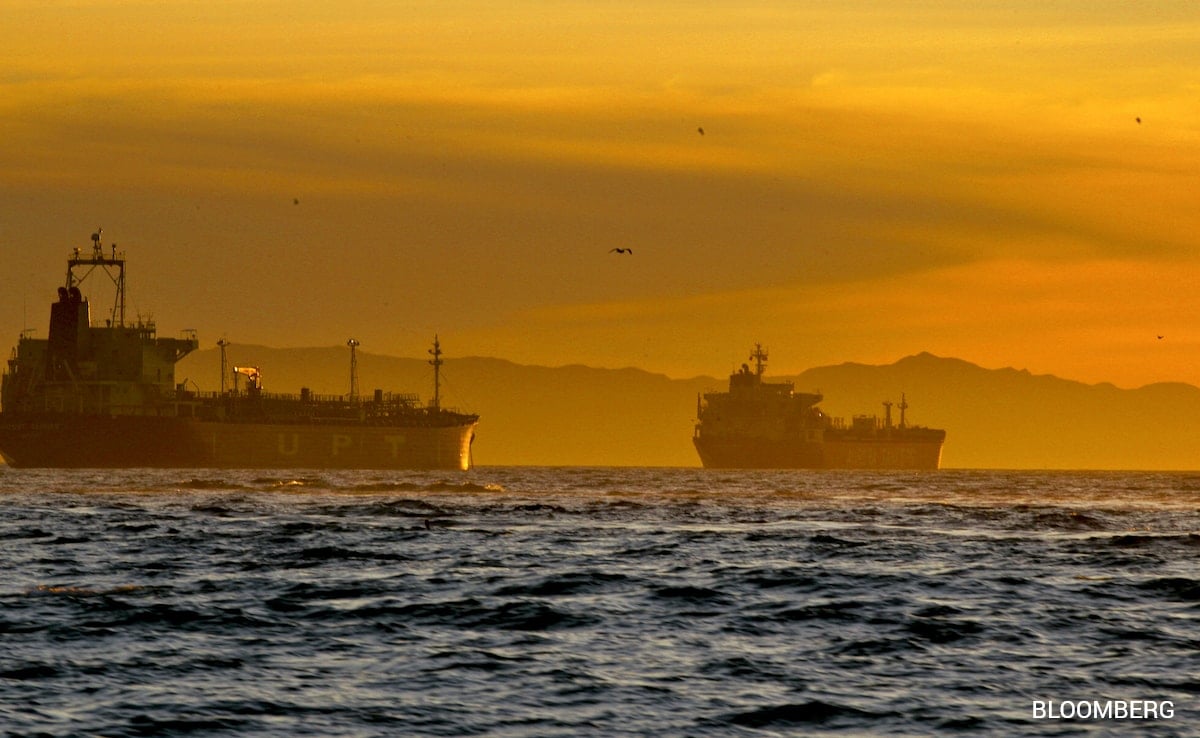
The steel hull of an oil tanker doesn’t just carry crude. It carries a heavy, invisible weight: the tension of two superpowers staring each other down across a narrow strip of turquoise water.
Imagine a bridge officer standing on the wing of a bridge as the sun begins to bake the Persian Gulf. Below him, two million barrels of oil sit in the dark, a fortune bound for the refineries of the East. But this ship has no name on the radio that anyone wants to acknowledge. To the United States Treasury, it is a ghost. To the Chinese economy, it is a lifeline. To the crew, it is just a job that has suddenly become very, very dangerous.
The Strait of Hormuz is barely twenty-one miles wide at its narrowest point. It is the jugular vein of the global energy market. When a US-sanctioned tanker—specifically one linked to the vast, shadowy network of Chinese trade—decides to sail through these waters, it isn't just moving cargo. It is throwing a gauntlet at the feet of the most powerful office in the world.
The Invisible Fleet
For years, a "shadow fleet" has operated in the margins of the law. These ships change their names like seasonal fashions. They flip their transponders off, disappearing from satellite tracking like stones dropped into a well. They engage in ship-to-ship transfers in the middle of the night, bleeding oil from one vessel to another to scrub the origin of the crude.
This isn't a spy novel. It is the modern reality of global commerce.
The recent transit of a sanctioned vessel through the Hormuz chokepoint represents a calculated gamble. Under the previous administration, the "maximum pressure" campaign sought to choke off Iranian and Venezuelan exports, much of which flows toward China. Now, as the political winds in Washington shift toward a return to that hardline stance, the stakes have transformed from a game of hide-and-seek into a high-stakes test of resolve.
China needs the oil. The United States needs the sanctions to mean something. Between those two needs lies a rusted hull navigating a minefield of geopolitical ego.
A Calculation of Risk
The math on the bridge of a tanker is different from the math in a boardroom in D.C. or Beijing. A captain considers the draft of his ship and the proximity of patrol boats. A politician considers the price of gas at a pump in Ohio or the industrial output of a factory in Guangdong.
When this sanctioned tanker entered the Strait, it sent a message: The blockade is only as strong as your willingness to enforce it.
Sanctions are often viewed as a digital "off" switch for an economy. In reality, they are more like a leaky dam. Water always finds a way through the cracks. China has mastered the art of the crack. By utilizing smaller, independent refineries—often called "teapots"—and paying in currency other than the US dollar, they have created a parallel economy that the Treasury Department struggles to touch.
But physical transit is where the digital world meets the real one. You can hide a bank transfer. It is much harder to hide a 300-meter-long piece of floating iron.
The transit through Hormuz was a probe. It was a finger poked into the chest of the American enforcement apparatus. If the ship passes without incident, the sanctions lose their teeth. If the ship is seized, the escalation could spiral into a maritime conflict that sends insurance rates through the roof and oil prices into the stratosphere.
The Human Cost of High Policy
We often talk about these events in the abstract. We speak of "vessels," "entities," and "jurisdictions." We forget the people.
Consider the deckhands on a sanctioned ship. They are often from developing nations, working for agencies that offer little protection. They know their ship is "hot." They know that at any moment, a helicopter could appear overhead or a destroyer could come over the horizon. They are the human collateral in a war of spreadsheets and trade barriers.
They watch the Iranian coast on one side and the Omani coast on the other. They are sailing through a graveyard of previous conflicts—tankers hit by mines in the 80s, ships seized in the 2020s. The water is beautiful, but it holds its breath.
Why the Blockade is Fraying
The concept of a blockade suggests a wall. But the world is too interconnected for walls to hold forever.
China’s demand for energy is insatiable. They have spent decades building "Silk Road" alternatives to Western-dominated trade routes. When the US sanctions a tanker, it isn't just penalizing a company; it is challenging China’s perceived right to fuel its own growth.
The "Trump Blockade"—a term used to describe the aggressive enforcement of secondary sanctions—relies on the fear of being cut off from the US financial system. For a long time, that fear was absolute. But fear wears off. When a sanctioned ship brazenly sails through a primary naval corridor, it suggests that the fear of the US Treasury is being eclipsed by the necessity of the cargo.
Think of it as a game of chicken played with millions of tons of flammable liquid.
The Sound of the Engine
There is a specific vibration you feel when you are on a massive ship. It is a deep, rhythmic thrum that vibrates in your teeth. It tells you that despite the politics, despite the sanctions, and despite the threats, the engine is still turning.
The ship in the Strait didn't stop. It didn't turn back. It moved with the steady, indifferent momentum of a world that is tired of being told where it can and cannot go.
The real story isn't the oil. It isn't even the ship. It is the realization that the tools of 20th-century diplomacy—the sanctions, the blockades, the red lines—are being tested by a 21st-century reality where the players are no longer afraid of the consequences.
The tanker cleared the Strait. It moved into the open sea, its wake a white scar on the blue water that faded almost as soon as it appeared. The shadow fleet continues to grow, ship by ship, until the shadows become the new daylight.
The world watched the transit, waiting for a flashpoint that didn't come this time. But the silence that followed wasn't peace. It was the sound of a system shifting, a quiet grinding of tectonic plates that indicates the old maps no longer show where the land ends and the danger begins.