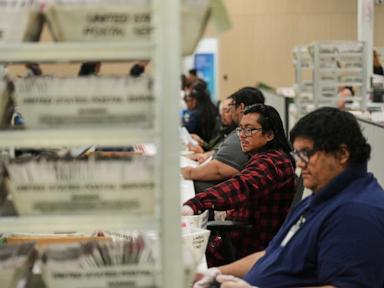
The fluorescent lights in a county registrar’s office hum at a frequency that gets behind your eyes by noon.
I spent three autumn cycles working the front counter of a municipal elections division, long before the phrase "voter roll maintenance" became a grenade lobbed across cable news desks. Back then, the job smelled like toner, stale coffee, and damp cardboard boxes hauled up from basement archives. People came to the counter with torn birth certificates, faded utility bills, and hands shaking slightly because they had just raised their right hand in a federal auditorium three hours earlier and wanted to make sure their name was finally, officially, in the book. Recently making waves in related news: Coalition Mathematics in Israel Why Electoral Gains Rarely Translate into Joint Governance.
That is what a voter roll actually is. Not an abstract spreadsheet. Not a weapon. It is a ledger of human arrival and human departure, stitched together from millions of administrative handoffs between motor vehicle clerks, postal carriers, county coroners, and federal immigration courts.
And right now, in a federal courtroom in California, that ledger is sitting on an operating table while the United States Department of Justice and the State of California argue over who gets to hold the scalpel. More information into this topic are detailed by Associated Press.
According to court filings and reporting surrounding the dispute, a federal judge has floated the appointment of a special master to evaluate Justice Department claims that noncitizens remain on California’s voter registration rolls. On the surface, it sounds like dry procedural plumbing. A special master. An audit. A legal tug-of-war between Washington and Sacramento over federal election law and state sovereignty.
Look closer, though. When a judge reaches for a special master in a fight over who is allowed to vote, the stakes stop being procedural. They become deeply, unsettlingly personal.
The Architecture of an Imperfect List
To understand why two armies of lawyers are fighting over a third-party referee, you have to picture how a name lands on a California registration list in the first place.
Consider a hypothetical voter—let us call her Elena—who arrived in Los Angeles on a work visa, earned her green card, spent five years paying payroll taxes, and finally took her oath of citizenship at the Los Angeles Convention Center. Before her naturalization, Elena renewed her driver’s license at a California DMV office under the state’s automatic voter registration system, known as Motor Voter. Under California law, eligible applicants are automatically registered unless they opt out, while noncitizens who provide proof of lawful presence are supposed to be filtered out before their records ever reach the Secretary of State.
Now imagine the reverse scenario—another hypothetical resident, David, who holds a green card and has zero intention of breaking federal law. A clerk checks the wrong box during a hectic afternoon shift at a field office, or a database synchronization hiccup pushes an incomplete record across an encrypted pipeline between state agencies. Suddenly, David’s name sits in a pending or active voter file he never asked to join.
Both Elena and David exist inside the tension of modern election administration. One represents the constitutional promise that an eligible citizen should not be silenced by clerical friction. The other represents the statutory mandate that an ineligible registration should not dilute the franchise or expose an unwitting immigrant to catastrophic legal jeopardy.
Federal law—specifically the National Voter Registration Act of 1993 and the Help America Vote Act of 2002—requires states to conduct regular, reasonable list maintenance. At the same time, federal statutes strictly prohibit noncitizens from voting in federal elections, carrying penalties that include fines, imprisonment, and deportation. California election officials maintain that their multi-layered verification checks, cross-referencing Department of Motor Vehicles records and federal citizenship databases, already catch and remove ineligible entries while protecting lawful voters from erroneous purges.
The Justice Department, in bringing its challenge, contends that California’s existing safeguards fall short of federal list-maintenance obligations and that noncitizen records have slipped through the cracks onto the rolls. State officials counter that the federal government’s demands overreach, threaten to ensnare newly naturalized citizens whose federal records lag behind their oath ceremonies, and rely on flawed matching methodologies.
Neither side is arguing in a vacuum. Every database match is a probability game played with human names.
Why Databases Lie About Names
If you have never tried to reconcile two government databases, imagine trying to confirm whether two people are identical using only a smudged library card and a gym receipt.
Computers are literal creatures. Humans are messy.
In a state as vast as California, home to more than twenty-two million registered voters, thousands of residents share the exact same first and last name, and hundreds share the exact same birth date. When federal immigration records—such as the Department of Homeland Security’s SAVE system—are compared against state voter files, discrepancies happen constantly. A newly naturalized citizen might vote on Tuesday after taking her oath on Friday, weeks before a federal clerk updates her status from lawful permanent resident to citizen in the national database. To a raw database query run too quickly, that citizen looks like a noncitizen casting a ballot.
Conversely, when a state relies on self-attestation at a busy counter or a multi-step automated handoff between agencies, human error introduces false positives in the other direction. A tick box missed. A middle initial dropped. A change-of-address form misread by optical character recognition software.
I remember sitting across from a seventy-two-year-old retired machinist in my old elections office whose registration had been flagged for removal because a distant cousin with the same name and birth month had moved out of state. He brought a shoebox of property tax receipts dating back to 1984 and laid them across the counter one by one, his jaw tight, asking me how a computer could erase forty years of his civic life without a single human being picking up a telephone.
That is the emotional core that rarely makes it into legal briefs. When list maintenance is too loose, public trust erodes because critics see an unguarded door. When list maintenance is too aggressive, eligible citizens—disproportionately naturalized immigrants, married women who changed their surnames, and young voters who move frequently—get swept off the rolls right before an election.
Enter the Referee
This is where the courtroom drama takes a sharp turn.
Faced with competing claims from the Justice Department and California election officials—one side alleging systemic noncitizen entries on the rolls, the other insisting its verification protocols comply with federal law and protect eligible voters—a federal judge raised the possibility of appointing a special master.
In the architecture of the federal courts, a special master is an extraordinary instrument. Think of a trial judge as an emergency room physician managing forty critical cases at once; a special master is the specialist called in to spend six months examining a single patient’s nervous system under an electron microscope.
Authorized under Rule 53 of the Federal Rules of Civil Procedure, a special master is an independent court-appointed expert—often a retired judge, a seasoned litigator, or a technical specialist—tasked with digging into complex factual disputes, auditing massive datasets, and reporting findings back to the bench. Instead of relying on partisan press releases or dueling expert declarations filed from twenty paces, the court hands a neutral investigator subpoena-backed access to inspect the machinery directly.
Consider what happens next when a special master steps into a dispute over California’s voter rolls.
First, the rhetoric has to survive contact with raw data. Claims about thousands of noncitizens on the rolls, or assurances that automated filters catch every anomaly, get stripped down to individual lines of code and individual registration files. The special master can examine how records travel from the DMV to the Secretary of State, how mismatch notices are triggered, what happens when a registrant fails to respond to a verification letter, and whether flagged records actually resulted in cast ballots or remained inactive administrative ghosts.
Second, the timeline changes. Audits of twenty-two million records do not happen overnight. A special master’s investigation introduces forensic rigor, forcing both the Justice Department and California officials to justify their methodologies under neutral scrutiny rather than courtroom theater.
The Invisible Stakes in the Audit
Yet appointing a special master carries its own quiet perils, and anyone who tells you it is a clean, painless solution is ignoring history.
Who picks the referee? Both sides will fight fiercely over the candidate’s background, technical literacy, and perceived ideological leanings. An expert steeped in data science might miss the nuances of federal civil rights statutes; a constitutional lawyer might struggle to parse SQL queries and database schema logs.
Then there is the question of privacy. California’s voter files and DMV databases contain sensitive personal information—driver’s license numbers, partial Social Security digits, dates of birth, home addresses, and immigration history indicators. Handing a third-party investigator the keys to cross-check those files against federal immigration records raises profound data-security and statutory privacy questions that state officials and civil liberties advocates scrutinize intensely.
Most of all, there is the shadow cast over real people living in the crossfire.
Let us return to our hypothetical green-card holder, David, whose name ended up on a voter roll through a clerical error he never noticed. Under federal immigration law, even an unintentional false claim to U.S. citizenship or an unlawful registration can trigger severe consequences when David applies for naturalization years later. Immigration officers routinely ask applicants whether they have ever registered to vote in the United States. An honest "I didn't know I was registered" can spiral into years of legal fees and stalled citizenship applications.
And what about Elena, the newly naturalized citizen? If an aggressive, court-ordered purge cross-references outdated federal immigration records against active voter rolls too close to an election cycle, Elena could show up at her neighborhood polling place—the one in the elementary school gymnasium where she waited four years to cast her first ballot as an American—only to be handed a provisional ballot because a database lagged behind her naturalization certificate.
Federal law actually anticipates that exact danger. Under the National Voter Registration Act, states are barred from conducting systematic programs to remove ineligible voters within ninety days of a federal election—a cooling-off period Congress enacted precisely because last-minute purges inevitably sweep up lawful citizens with no time left to fix the mistake.
The History Beneath the Battle
None of this tension is new, even if the digital tools are faster and the political megaphone is louder.
For more than a century, American election administration has swung like a pendulum between two fears: the fear of the ineligible ballot and the fear of the locked polling-place door. In the late nineteenth and early twentieth centuries, registration laws were frequently deployed in cities and across the South as intricate obstacle courses designed to keep immigrants, working-class laborers, and Black citizens away from the ballot box under the banner of "purifying" the rolls.
Decades later, Congress passed the Voting Rights Act and the National Voter Registration Act to dismantle those barriers, tying voter registration to everyday civic touchpoints like driver’s license renewals. That expansion brought millions of eligible Americans into the electorate, but it also created massive, interconnected data pipelines that require constant maintenance.
Over the past twenty years, legal battles over voter roll accuracy have flared across states from Ohio and Georgia to Texas and California. Again and again, courts have had to draw a razor-thin line: states must remove people who have died, moved away, or lack legal eligibility, yet they cannot use blunt statistical matches that strip the vote from citizens who simply forgot to mail back a postcard.
What makes the California clash stand out is its scale and its institutional collision. When the federal Justice Department challenges the nation’s most populous state over how it polices citizenship on its rolls, the courtroom becomes a test case for the entire country’s election infrastructure.
What the Ledger Actually Measures
I think back often to that front counter in the municipal elections division, and to the boxes of registration cards stacked behind my desk.
People outside the system tend to imagine a voter roll as a marble monument—permanent, carved in stone, either pristine or defiled. Anyone who has ever worked inside an elections office knows it is much closer to a living riverbank. Every single day, people turn eighteen, take naturalization oaths, move across county lines, change their names, or pass away. The water never stops moving.
A special master cannot freeze that river. No audit, no court order, and no federal lawsuit will ever produce a database of twenty-two million human lives with zero latency and zero clerical dust.
What a special master can do—if chosen carefully and given a narrow, disciplined mandate—is pull the argument out of the fog of speculation and into the light of verifiable evidence. It can answer the questions that actually matter to voters across the political spectrum: Are noncitizens registering in meaningful numbers, or are isolated clerical glitches being inflated into a crisis? Are California’s automated safeguards catching errors as intended, or are real gaps letting ineligible records sit unchallenged? And can those gaps be closed without knocking a single newly naturalized citizen off the list?
Late on the last night I worked an election counter, after the polls closed and the memory cartridges were sealed in tamper-evident bags, a young man in a delivery uniform hurried through the lobby doors holding a wet paper receipt from a drop box outside. He wanted to know if his ballot had really counted. He had taken his citizenship oath two weeks earlier, and he stood by the counter watching the clerk scan his barcode until the screen flashed green.
He didn't ask about federal statutes, Rule 53, or database synchronization intervals. He just stared at that green confirmation line, let out a breath he seemed to have been holding all week, and walked back out into the rain.