Stone does not forget.
It remembers the scrape of silver-plated serving trays across walnut sideboards. It absorbs the low murmur of contracts negotiated in rooms smelling of cigar smoke and damp gardenia. It keeps the secrets of the people who bought it as a monument to themselves, only to vanish into the quiet drift of history.
Stand at the intersection of quiet luxury and architectural ambition in Southern California, and you can almost hear the ticking.
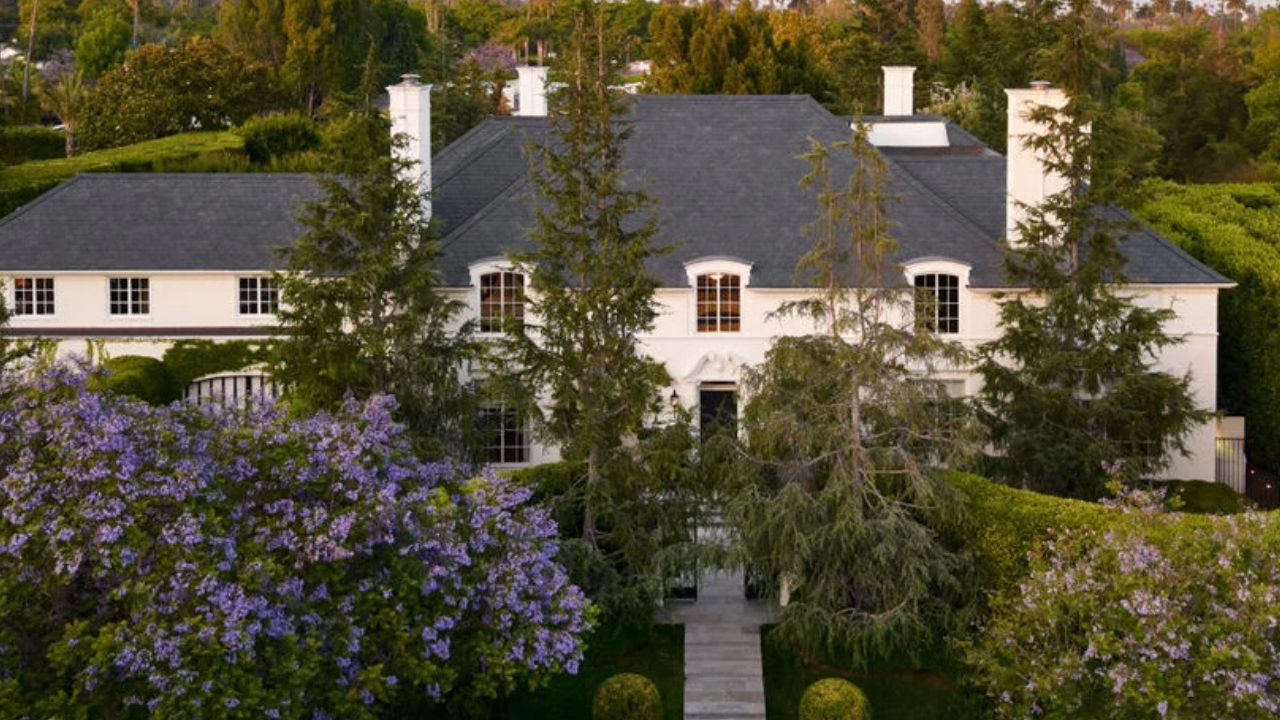
Right now, in the gilded corridors of Beverly Hills, a property known as the Rutherford House has returned to the market carrying a staggering price tag of thirty-five million dollars. To the casual observer scanning real estate tickers over morning coffee, it is just another number in an era of stratospheric wealth. Another zero added to the ledger of a city that measures its worth in limestone and square footage.
(Note: The following historical scene is a narrative reconstruction based on documented architectural eras of ultra-luxury estates in Beverly Hills.)
Imagine the architect in nineteen-twenty-something, leaning over a drafting table with a yellowed HB pencil. He is drawing sightlines. He is calculating how the California afternoon light will strike the crown molding at precisely four-fifteen in the afternoon. He does not know who will sleep under the roof he is imagining. He only knows that he is building a fortress against mortality.
Homes like the Rutherford House were never really built to be lived in. They were built to outlast.
Yet, as this particular estate bounces back onto the market, it tells a story far larger than the architectural pedigree of its past or the aspirations of its current custodians. It serves as a thirty-five-million-dollar mirror reflecting the strange, hyper-inflated physics of modern high-end real estate. When a property commands a figure that could fund a small town's infrastructure for a decade, you have to ask what, precisely, is being bought and sold.
You are not buying square feet. You are buying immunity.
For the ultra-wealthy buyer navigating global economic shifts, inflation, and currency volatility, tangible monuments of extreme scarcity act as a financial life raft. Cash loses its punch when printed by the trillion. Stocks flicker green and red on terminal screens like nervous heart monitors. But a sprawling estate behind manicured hedges in the most exclusive zip code on earth? That is granite. That is gravity.
Consider the mechanics of how we got here. Over the past decade, the top tier of the housing market has decoupled entirely from the reality experienced by the rest of the world. While median-income families wrestle with interest rates and inventory freezes, the stratosphere operates on a different plane. It is a closed-loop ecosystem driven by international capital, generational wealth preservation, and a desperate shortage of peerless properties.
When a trophy asset like this relists at thirty-five million, it establishes a benchmark. It tells every other seller in the neighborhood that their legacy is worth more today than it was yesterday. It is a psychological anchor dropped into an ocean of fluid capital.
Walk through these empty rooms before the staging furniture arrives and the buyers begin their slow, critical processions. The silence is heavy. It smells of fresh white paint and old timber. You look out the arched French doors toward the pool, where the water lies flat and glassy under a bruised sky, and you realize the true commodity being traded here is narrative control.
Every billionaire wants to be the protagonist of an architectural epic. They want to inherit a lineage. Even if that lineage was manufactured ninety years ago by a forgotten developer who went bankrupt during the Depression, the patina of age lends instant authenticity to a newly minted fortune.
We live in a culture terrified of impermanence. Everything is digital, ephemeral, floating in the cloud, vulnerable to a server crash or a algorithm update. So we pour our capital into things that feel heavy. We buy bricks. We buy wrought iron. We buy addresses that command instant respect from strangers across the globe.
The Rutherford House standing tall at thirty-five million dollars is not an anomaly. It is a symptom. It is the physical manifestation of our collective desire to plant a flag in the dirt and declare that we were here, that we mattered, that we beat the house.
The gates will open soon. A fleet of black SUVs will idle in the driveway. Well-dressed men and women will step out, adjusting their sunglasses, hiding their calculations behind polite smiles. They will walk the marble halls, tapping the walls with an absent-minded curiosity, wondering how the light will look when they finally decide to make this monument their own.
And the house will watch them, just as it watched the ones before them, keeping score in stone.