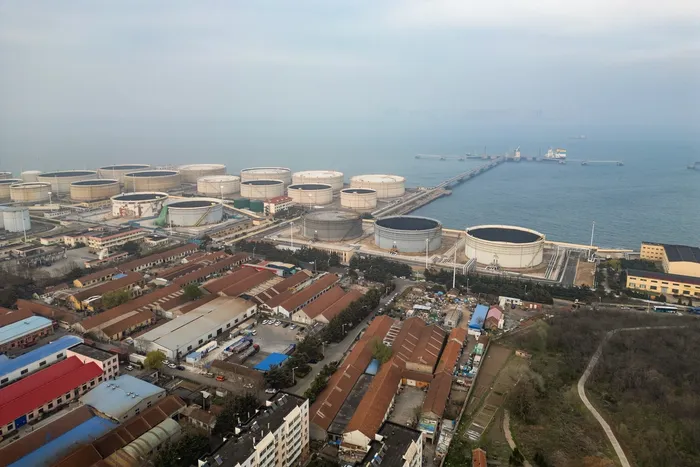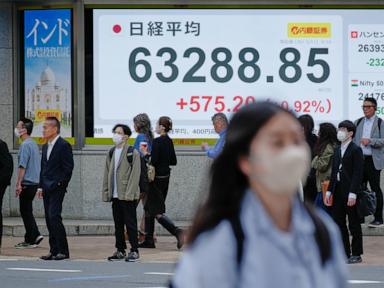
Capital markets are currently pricing a specific breed of geopolitical friction: the collapse of expectation-driven diplomacy in the Middle East. When a United States administration rejects an Iranian response to a ceasefire proposal, it does not merely signal a diplomatic impasse; it triggers a fundamental recalibration of risk premiums across two distinct asset classes: energy commodities and regional equities. The current 4% surge in Brent crude alongside mixed Asian equity performance reflects a structural "decoupling of certainty." Investors are no longer hedging against the probability of conflict; they are pricing the certainty of extended instability.
The Crude Risk Premium Formula
The 4% jump in oil prices is the direct mathematical result of a shrinking "peace discount." For the past fiscal quarter, energy markets traded with an implicit assumption that a diplomatic floor existed. The rejection of the Iranian response removes that floor. We define the current price action through the Energy Supply Integrity Framework, which rests on three variables:
- The Strait of Hormuz Bottleneck Coefficient: Approximately 20% of global petroleum liquids consumption passes through this transit point. Any diplomatic breakdown involving Iran increases the probability of "gray zone" kinetic activity—harassment of tankers or mine-laying—which adds an immediate $3 to $5 USD premium per barrel as insurance against logistical failure.
- Spare Capacity Elasticity: Global spare capacity is concentrated within a few OPEC+ members. When geopolitical tension spikes, the "effective" spare capacity drops because the risk of regional infrastructure sabotage (drones or cyberattacks) renders that capacity theoretically accessible but operationally vulnerable.
- Sanctions Enforcement Intensity: A rejection of diplomatic overtures usually precedes a tightening of the Treasury Department’s enforcement of oil sanctions. Market participants are anticipating a reduction in "ghost fleet" volumes—untracked Iranian exports that have previously dampened global price volatility.
Asian Equity Inertia and the Inflationary Feed-Forward Loop
While oil reacted with high-velocity upward movement, Asian markets displayed a fragmented, low-conviction response. This "mixed" performance is not a sign of indecision but a reflection of the Asymmetric Impact of Input Costs.
Japan’s Nikkei and South Korea’s KOSPI are hyper-sensitive to energy imports. For these economies, a 4% rise in oil acts as a regressive tax on manufacturing. The logic follows a rigid path: higher energy costs increase the Producer Price Index (PPI), which narrows corporate margins because global consumer demand is currently too brittle to absorb significant price pass-throughs.
Conversely, some Southeast Asian indices remained resilient or traded higher. This divergence stems from the presence of domestic energy producers and the regional "carry trade" dynamics. When the U.S. takes a hardline stance on Iran, it often strengthens the USD through a flight-to-safety mechanism. For emerging Asian markets, this creates a dual-pressure system:
- The Currency Devaluation Risk: A stronger dollar makes dollar-denominated debt more expensive to service.
- The Energy Inflation Risk: Since oil is priced in dollars, these nations face "double inflation"—the price of the commodity rises while their purchasing power falls.
The Failure of the Ceasefire Logic Model
The rejection of Iran’s response suggests a misalignment in the Diplomatic Cost-Benefit Analysis. Historically, ceasefires are reached when the cost of continued kinetic engagement exceeds the political capital required to make concessions. The current breakdown indicates that both parties still perceive the "Value of Holdout" to be higher than the "Value of Resolution."
From a strategic consulting perspective, this identifies a Duration Risk that the initial 4% oil jump might actually understate. If the rejection signals a pivot toward a "Maximum Pressure 2.0" strategy, we are moving out of a temporary spike and into a structural shift in the forward curve for energy. The market is transitioning from "Contango" (future prices higher than spot) to "Backwardation" (immediate demand vastly outstripping future supply expectations), as refiners scramble to secure physical barrels before any potential escalation.
Logistics and the Risk of Maritime Insurance Cascades
One factor overlooked by generalist reporting is the War Risk Insurance Tiering. When a ceasefire is rejected, Lloyd’s of London and other major underwriters frequently redefine "High Risk Areas."
This creates a hidden cost function:
- Base Freight Rates: Rise due to fuel surcharges (bunker fuel).
- Additional Premium (AP): Insurance companies charge an extra fee for every transit through the Persian Gulf or Red Sea.
- Crew Hazard Pay: Mandatory salary doublings for sailors in contested waters.
These three factors combined can increase the landed cost of goods by 1.5% to 3% within weeks, independent of the actual price of the commodity. This is the "hidden friction" currently stalling the recovery of export-heavy economies in Asia.
Strategic Allocation Under Global Friction
For institutional allocators, the play is no longer about picking "growth vs. value" but about Energy Beta vs. Regional Exposure.
The second-order effect of this diplomatic failure will be felt in the central bank policies of energy-importing nations. If oil remains above the $85–$90 threshold due to this geopolitical floor, the "Pivot Narrative"—the idea that central banks will aggressively cut interest rates—becomes mathematically impossible. Inflation will be imported via energy, forcing banks like the Reserve Bank of India or the Bank of Korea to maintain a hawkish stance to protect their currencies.
Investors must categorize their portfolios into Geopolitical Heatsinks and Vulnerability Nodes.
- Heatsinks: Upstream energy, defense contractors with backlogs tied to Middle Eastern stability, and USD-denominated cash equivalents.
- Vulnerability Nodes: Non-integrated airlines, chemical manufacturers with high feedstock costs, and consumer discretionary sectors in import-heavy nations.
The immediate strategic requirement is to hedge against a "Mean Reversion Failure." Most retail models assume that a 4% jump will settle. However, when the underlying cause is a structural rejection of diplomatic frameworks, the "new normal" for the risk premium is higher. The volatility isn't the story; the new, higher baseline is. Stop-loss orders should be recalibrated to reflect a wider standard deviation in the energy complex, as the delta between "diplomatic breakthrough" and "regional escalation" has widened significantly.
The most probable path forward involves a period of "Stagnant Volatility." This is a state where prices remain high and fluctuate wildly within that high range, preventing the price discovery necessary for a sustained equity rally. Until a new credible diplomatic framework is proposed, the "Geopolitical Tax" on global trade remains in full effect.