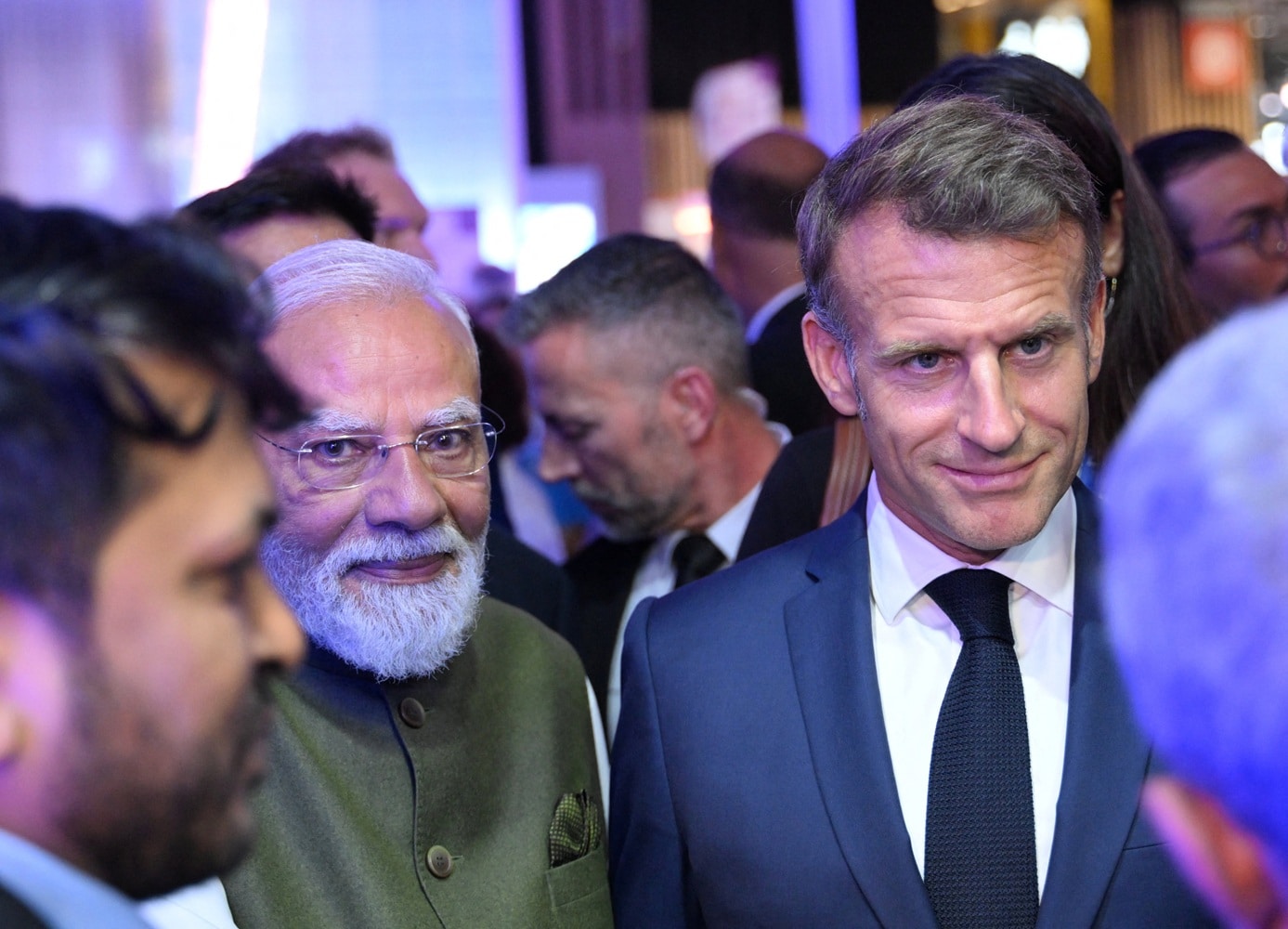
Diplomats love a good show. When French President Emmanuel Macron bid farewell to Indian Prime Minister Narendra Modi with a tweet in Hindi proclaiming the India-France friendship amar rahe (immortal), mainstream media commentators swooned. The press treated a standard piece of public relations theater as a profound diplomatic breakthrough. They fell for the lazy narrative that international relations are built on shared cultural affection and deep personal bonds.
They are completely wrong.
International diplomacy is not a buddy comedy. It is a cold, calculated boardroom meeting driven by defense contracts, strategic hedging, and hard-nosed national interest. Having spent over a decade analyzing bilateral trade flows and defense procurement cycles, I can tell you that the poetic rhetoric of "immortality" masks a relationship built on naked necessity. When you strip away the Hindi tweets and the ceremonial banquets, what remains is not an emotional alliance, but a highly effective transactional partnership.
The Myth of Shared Values in Global Realpolitik
The mainstream press constantly pushes the narrative that India and France are bound by a shared commitment to democratic values and multilateralism. This is a comforting illusion designed for public consumption.
In reality, nations do not sign multi-billion dollar fighter jet deals because they admire each other's philosophy. They do it because their strategic vulnerabilities align. France needs a massive, non-aligned market for its military-industrial complex to remain viable outside the constraints of Washington. India needs a reliable Western veto power in the United Nations Security Council that will not lecture it on domestic policy or impose sudden sanctions.
Consider the defense procurement architecture. When New Delhi bought Rafale fighter jets from Dassault Aviation, it was not an act of friendship. It was a calculated diversification strategy. India knows that relying too heavily on Washington comes with political strings, while relying on Moscow carries severe supply-chain risks due to the ongoing conflict in Ukraine. France fits the bill perfectly: a technologically advanced partner that views weapons sales as purely business, completely devoid of the moralizing lectures that typically accompany American hardware.
The Brutal Math Behind the Poetry
Let us look at the actual numbers rather than the diplomatic poetry. France's defense industry is heavily reliant on export markets to sustain its domestic defense budget and research capabilities. Without buyers like India, Egypt, and the UAE, the unit cost of maintaining France's independent military tech would skyrocket.
Imagine a scenario where India suddenly halts its procurement of European defense tech. The French domestic defense sector would face an immediate existential crisis. This is why Macron speaks Hindi on social media. It is high-level salesmanship.
- French Defense Exports: India has consistently ranked as one of the top importers of French arms over the last decade.
- Strategic Sovereignty: Both nations fiercely protect their strategic autonomy. They refuse to be swallowed whole by the rigid bipolarity of the US-China rivalry.
- The Indo-Pacific Pivot: Paris views its overseas territories in the Indian Ocean as vital sovereign outposts. It needs New Delhi as a maritime anchor to protect these assets without relying entirely on the US Navy.
The downside to this stark realism? A relationship based purely on transactions is inherently limited. It lacks the institutional, deep-rooted societal ties that define alliances like the US-UK "Special Relationship." If a competitor offers India a better deal with superior technology transfer provisions, the poetic "immortality" of the French alliance will be tested at the checkout counter.
Dismantling the Premise of "True Alignment"
People frequently ask: "Does the personal chemistry between Modi and Macron genuinely change the geopolitical equation?"
The brutal answer is no. Personal chemistry is a tool, not a driver. It is an instrument used to grease the wheels of complex bureaucratic negotiations. When Macron invites Modi as the guest of honor at the Bastille Day parade, it is a deliberate marketing strategy aimed at securing future contracts for Scorpène submarines and additional naval fighter jets.
The mainstream consensus views these cultural gestures as evidence of a deeper, holistic integration. But look closer at the friction points. On global trade structures, agricultural subsidies, and climate finance, Paris and New Delhi are often on completely different pages. France operates within the highly regulated framework of the European Union, which frequently clashes with India's protectionist economic tendencies. The "friendship" stops working the moment it enters the arena of competitive trade policy.
The Illusion of a Shared Indo-Pacific Strategy
We are constantly told that India and France are building a seamless, joint security architecture for the Indo-Pacific region. This overlooks a fundamental divergence in objectives.
France is a resident power in the Indian Ocean through territories like Réunion and Mayotte. Its primary goal is maintaining status quo stability and protecting its exclusive economic zones. India, conversely, faces direct, existential continental threats on its borders and views the maritime domain as a theater to project power and counter encirclement. Paris wants a police force; New Delhi wants a deterrent. Blending these two distinct military objectives under the banner of a unified vision is a rhetorical trick that falls apart under rigorous operational analysis.
Stop reading the sentimental headlines about global leaders sharing hugs on the world stage. Stop assuming that a tweet written in a foreign language represents a shift in tectonic geopolitical plates. The India-France relationship is strong precisely because it is cold, practical, and transactional. It works because both sides know exactly what they want, what they are selling, and what they are buying. The moment we mistake the marketing for the product is the moment we lose our grip on geopolitical reality.