The 3.3% year-over-year increase in the Consumer Price Index (CPI) for March 2026 represents a critical inflection point where geopolitical volatility and domestic structural rigidities have converged to stall the disinflationary trend. While headline figures often mask the underlying mechanics, the current inflationary environment is dictated by a specific friction: the translation of Middle Eastern supply-chain shocks into a high-velocity energy cost spike, occurring simultaneously with a "sticky" services sector that refuses to mean-revert. To understand why inflation remains above the Federal Reserve's 2% target, one must deconstruct the interplay between the Brent crude risk premium and the persistent lag in shelter and labor-intensive services.
The Energy Transmission Mechanism
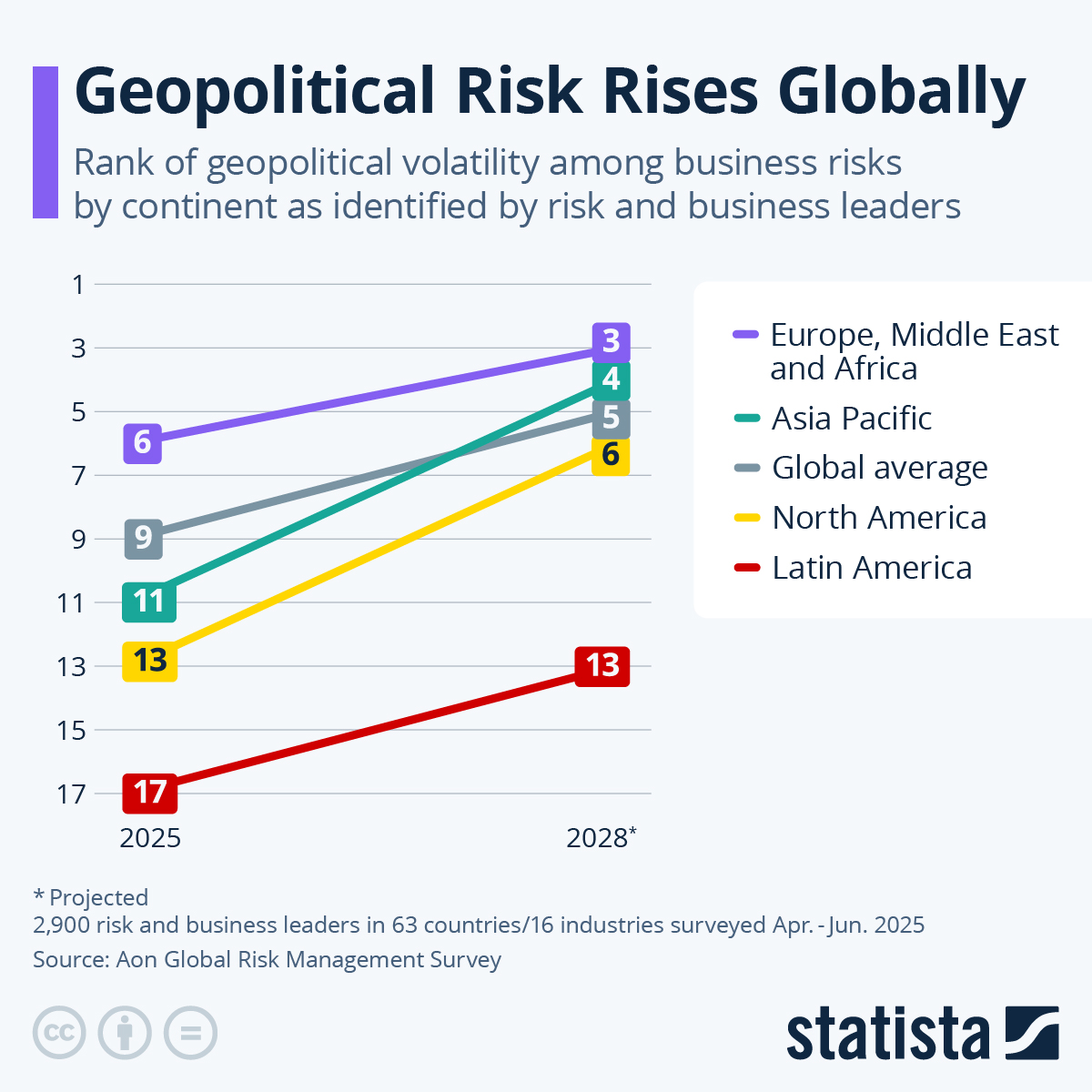
The primary driver of the March acceleration is the direct and indirect impact of the Iran-Israel conflict on global energy markets. This is not merely a matter of higher prices at the pump; it is a structural repricing of energy risk.
The Geopolitical Risk Premium (GRP)
Under normal market conditions, oil prices reflect the intersection of global demand and production capacity. However, the intensification of the Iran conflict has reintroduced a "scarcity premium" that functions as a tax on the global supply chain.
- Direct Cost Injection: As Brent crude surged toward the $95–$100 range, the immediate impact was felt in the "Energy" component of the CPI, which grew at a disproportionate rate relative to the 0.4% month-over-month headline increase.
- Intermediate Input Pressure: Energy is a primary input for almost all physical goods. The March data shows a burgeoning "second-round effect" where transportation and logistics costs are being passed through to consumer goods, even as supply chain pressures from the pandemic era have largely resolved.
The Refinery Bottleneck
The spike is exacerbated by seasonal transitions. March typically involves a shift to more expensive summer-blend gasoline. When this seasonal pivot coincides with a geopolitical supply shock, the resulting price action is non-linear. Refineries, operating near maximum utilization, have limited capacity to absorb crude price spikes, forcing a 1:1 pass-through to the retail level.
The Services Sector and The "Last Mile" Problem
While energy provides the headline-grabbing volatility, the structural core of inflation is found in the Services Less Energy Services category. This sector represents the "Last Mile" of the inflation fight—the most difficult portion to compress because it is driven by human behavior and long-term contracts rather than commodity fluctuations.
Labor-Cost Push Inflation
Services are inherently labor-intensive. Despite high interest rates, the labor market has maintained a tightness that supports nominal wage growth. In industries like healthcare, education, and personal services, wage increases are almost immediately reflected in consumer prices because these sectors lack the productivity-gain levers available in manufacturing.
The Shelter Lag Variable
Shelter accounts for roughly one-third of the total CPI basket. Because leases are signed on annual or biennial cycles, changes in market rents take 6 to 12 months to manifest in the Bureau of Labor Statistics data.
- The Rollover Effect: Many tenants are currently renewing leases that were originally signed during periods of lower inflation, resulting in a "catch-up" adjustment that keeps the shelter component elevated even as real-time market rents in some cities have begun to plateau.
- The Inventory Trap: High mortgage rates have disincentivized homeowners from selling, creating a supply drought in the housing market that maintains upward pressure on OER (Owners' Equivalent Rent).
The Mathematics of the Core vs. Headline Divergence
A critical failure in standard reporting is the conflation of "Headline CPI" and "Core CPI." The 3.3% figure includes the volatile food and energy sectors, while Core CPI (which excludes them) provides a clearer view of the economy's internal temperature.
$$CPI_{Headline} = w_{e}P_{e} + w_{f}P_{f} + w_{c}P_{c}$$
Where:
- $w_{e}, w_{f}, w_{c}$ are the weights for energy, food, and core components.
- $P_{e}, P_{f}, P_{c}$ are the price indices for those components.
In March, the divergence widened. While Core CPI showed signs of moderate cooling in some durable goods (like used vehicles), the $w_{e}P_{e}$ (energy) variable spiked so aggressively that it neutralized the gains made in other sectors. This creates a policy dilemma: the Federal Reserve cannot use interest rates to fix a broken oil pipeline or a regional war, but they must respond to the aggregate inflation those events produce.
Risk Asymmetry in the Supply Chain
The March data reveals a vulnerability in the "Just-in-Time" inventory model. When a conflict in the Middle East threatens the Strait of Hormuz, the "Cost of Carry" for inventory increases.
- Preemptive Stockpiling: Fearing further escalations, firms may begin stockpiling raw materials, which artificially inflates demand and drives prices higher in the short term.
- Insurance Premia: Maritime insurance rates for cargo passing through volatile corridors have tripled in some instances. These costs are invisible to the average consumer but are embedded in the final price of imported electronics, clothing, and machinery.
The Monetary Policy Bottleneck
The Federal Reserve's primary tool—the federal funds rate—is a blunt instrument. It functions by suppressing demand. However, the March CPI report suggests that current inflation is increasingly "Supply-Side" driven.
- Interest Sensitivity: Sectors like technology and housing are highly sensitive to rates.
- Interest Insensitivity: Energy consumption and basic grocery needs are "inelastic." People must drive to work and eat regardless of whether the interest rate is 2% or 5.5%.
This creates a scenario where the Fed risks over-tightening and damaging the productive capacity of the economy without actually solving the energy-driven inflation spike. The "Neutral Rate" (R-star), which is the interest rate that neither stimulates nor restrains the economy, is likely higher than previously estimated, meaning the "higher for longer" stance is not just a preference but a structural necessity.
Behavioral Expectations and the Inflationary Spiral
The most significant risk identified in the March data is not the 3.3% number itself, but the potential unanchoring of inflation expectations. If consumers believe that 3.3% is the "new normal," they change their behavior:
- Front-loading Purchases: Buying durable goods now to avoid higher prices later, which further drives up current demand.
- Wage Demands: Workers demand higher cost-of-living adjustments, which firms then pass on through higher prices, creating the classic wage-price spiral.
The March report indicates that while long-term expectations remain relatively stable, short-term sentiment is deteriorating. The "Psychological Ceiling" of 3% has been breached for several months, eroding the credibility of the "transitory" narrative that dominated 2021-2022.
Quantifying the Iran Conflict Impact
The specific escalation between Iran and Israel added an estimated $12 to $15 per barrel to the price of oil in the weeks leading up to the March CPI release. This "Conflict Premium" accounts for approximately 40 to 60 basis points of the headline CPI figure. Without this geopolitical event, March inflation would likely have hovered around 2.8% to 2.9%—still above target, but within a range that would allow for a more dovish monetary pivot.
The Fiscal Contradiction
While the Federal Reserve is attempting to drain liquidity from the system, fiscal policy remains expansive. Massive government spending on infrastructure and energy transition projects acts as a counter-force to high interest rates. This "Fiscal-Monetary Tug-of-War" means that the economy is receiving mixed signals. The government is stimulating demand in construction and manufacturing at the exact moment the Fed is trying to cool it. This friction results in the "sideways" inflation movement observed in the March data.
Strategic Asset Allocation in a 3% Inflation Environment
For decision-makers and investors, the March CPI report dictates a shift away from "Growth" and toward "Real Assets" and "Quality."
- Commodity Exposure: Direct or indirect exposure to energy remains a necessary hedge against geopolitical instability.
- Pricing Power: Investments must be focused on firms with the "Moat" necessary to pass through rising input costs without losing market share.
- Duration Risk: With inflation stalling at 3.3%, the "pivot" to lower rates is delayed. Long-duration bonds remain high-risk, as the yield curve must eventually adjust to reflect a structurally higher inflation floor.
The path forward requires a recognition that the "2% Target" may be functionally unattainable in a world of fragmented trade and perpetual geopolitical friction. The strategy must move from waiting for a return to the 2010s baseline to optimizing for a volatile, high-input-cost reality. Position for a sustained plateau in interest rates and prioritize liquidity to capitalize on the periodic market corrections that this "sticky" inflation will inevitably trigger.