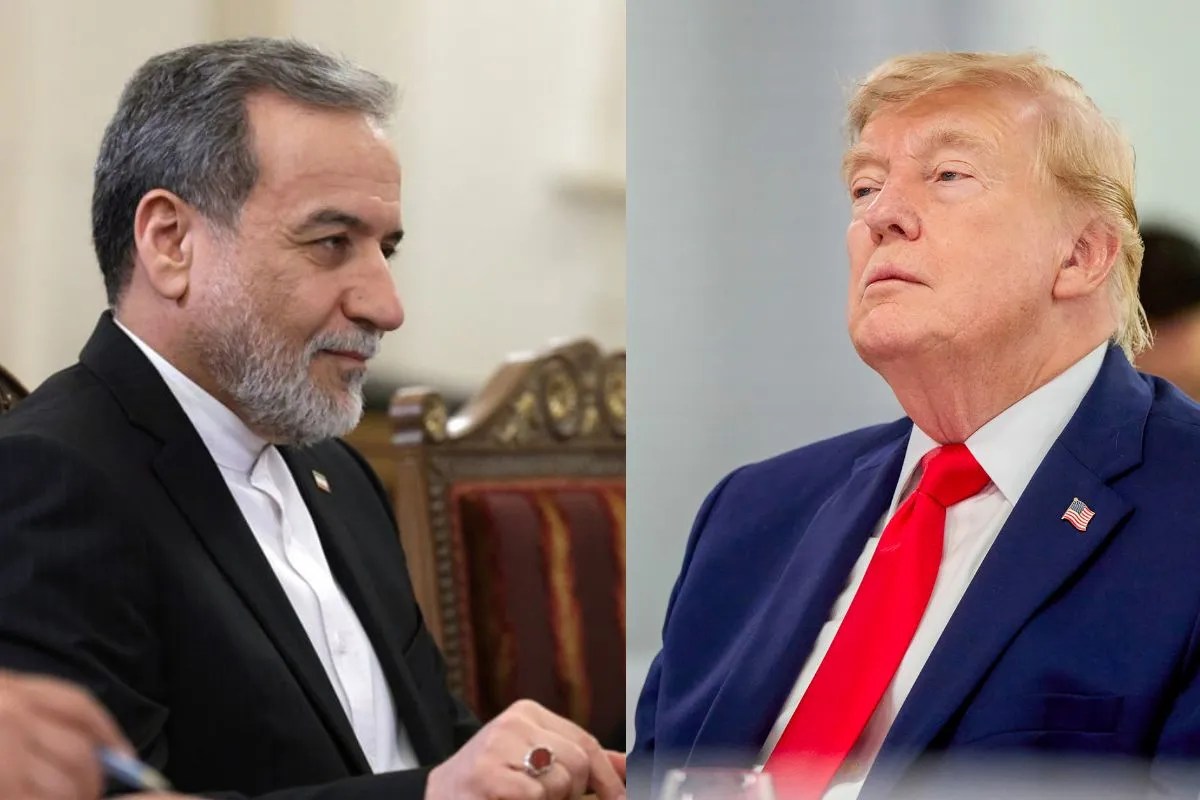
Iran has officially rejected claims made by the US administration regarding massive agricultural procurement deals, demanding the immediate return of frozen state funds instead of entering barter arrangements for American crops. Tehran's public refusal to purchase US grain blows a massive hole in Washington's narrative of using agricultural trade as a diplomatic lever. While political campaigns frequently tout American farming exports as a tool to force adversarial regimes to the negotiating table, the reality on the ground is governed by broken banking channels, parallel black market shipping routes, and a deep-seated Iranian strategy to decouple its food security from Western supply chains.
The friction reached a boiling point following assertions from Washington that recent diplomatic maneuvering would open up lucrative pathways for Midwest farmers to export wheat and soybeans directly to Iranian ports. Tehran didn't just deny the claim. They dismantled the premise entirely. Iranian trade officials made it clear that they have no intention of bailing out Western agricultural surpluses while their own foreign reserves remain trapped in international banks under the weight of primary and secondary US sanctions.
The Friction Between Campaign Rhetoric and Global Shipping Realities
Political speeches routinely simplify global trade into a series of transactional wins. The assertion that a hardline stance could simultaneously punish a foreign adversary and enrich the American heartland makes for excellent domestic messaging. It rarely survives contact with the actual mechanics of international logistics. Iran's agricultural import strategy has spent the last decade adapting to Western pressure, shifting its dependency away from the Americas and toward regional powers like Russia and Kazakhstan.
To understand why the proposed grain deals collapsed before they even started, one has to look at the financial architecture governing global agricultural trade. Food and medicine are technically exempt from US sanctions under humanitarian carve-outs. On paper, any international grain merchant can sell wheat to the Iranian state-backed importer.
In practice, the system is fundamentally broken.
Global banks refuse to process payments involving Iranian entities because the compliance risks are too high. A single clerical error can trigger billions of dollars in fines from the US Department of the Treasury. Consequently, even when Iran wants to buy commodities on the open market, it cannot reliably open letters of credit or transfer funds through the SWIFT banking network. The suggestion that Iran would suddenly buy millions of tons of American crops ignores the fact that Washington's own financial architecture makes the transaction virtually impossible.
The Battle Over Frozen Capital
Tehran's counter-demand is straightforward. They want their cash back. Billions of dollars in Iranian oil revenues remain locked in escrow accounts across South Korea, Iraq, and various European banking hubs due to compliance mandates tied to US sanctions. For the Iranian leadership, agreeing to buy American agricultural goods as a condition for sanctions relief or diplomatic engagement is a non-starter. They view it as paying twice for their own property.
The internal economics of Iran explain this rigid stance. The country is grappling with severe inflation and a depreciating currency. Importing expensive grain using hard currency reserves that are already heavily depleted would worsen domestic fiscal strain.
Instead, Tehran has mastered the art of sanctions evasion through asymmetric trade partnerships. When Iran needs wheat, corn, or livestock feed, it looks to the Caspian Sea and the land routes cutting through Central Asia. By utilizing local currency swaps and barter mechanisms—such as trading fuel and petrochemicals for Russian wheat—Iran bypasses the US dollar entirely. This alternative supply network reduces the effectiveness of American trade carrots and sticks.
How the Black Sea Displaced the Midwest
American farmers used to view the Middle East as a reliable destination for export growth. That era has ended. The structural shift in where Iran buys its food is not a temporary political protest. It is a permanent realignment of agricultural logistics.
- Proximity and Freight Costs: Shipping grain from the US Gulf Coast to the Iranian port of Bandar Imam Khomeini requires navigating massive maritime choke points and enduring long transit times. In contrast, Russian ports on the Volga River and the Caspian Sea offer direct, secure access to northern Iran with minimal transit friction.
- Strategic Interdependence: Moscow and Tehran have integrated their logistics networks through the International North-South Transport Corridor. This infrastructure project ensures that food supplies can move between the two nations completely insulated from Western naval interdiction or financial blacklisting.
- Quality and Price Alignment: Central Asian grain production has scaled up dramatically. While American grain remains highly competitive on a pure yield-per-acre basis, the added costs of Western supply chains make it unviable for an economy operating under a state of siege.
This geopolitical shift leaves American agricultural producers caught in the crossfire of a strategy that promises them access to markets that are structurally closed to them.
The Core Flaw in Food Diplomacy
Using food as a diplomatic weapon frequently backfires because it forces target nations to achieve agricultural self-sufficiency or find alternative suppliers at any cost. Iran is a textbook case of this dynamic. The country's leadership has designated food security as a national defense priority, pouring resources into domestic irrigation, subsidized fertilizer production, and regional contract farming.
When Western policymakers threaten to cut off access or offer access as a reward for geopolitical concessions, they assume the target nation has no other options. That assumption is obsolete. The global commodity market has become highly fragmented. Brazil, Argentina, and Russia now dictate the terms of grain flows to the developing world just as much as the United States.
Furthermore, the domestic political landscape in Iran makes any overt reliance on American imports highly dangerous for the ruling class. Relying on a geopolitical rival for basic dietary staples leaves a government vulnerable to sudden policy shifts in Washington. No administration in Tehran can afford to let its national bread supply depend on the political whims of a changing US Congress.
The Dead End of Transactional Foreign Policy
The public spat highlights a broader systemic failure in how modern economic warfare is conducted. Sanctions are highly effective at freezing assets and disrupting traditional commerce, but they lose their utility when they are maintained indefinitely without a clear, realistic off-ramp.
Iran has adapted to the economic pressure by building a parallel economic reality. They have normalized a highly inefficient but functional network of front companies, shadow banks, and regional trade agreements. Because they have already paid the steep structural costs of adapting to isolation, the offer of buying American grain holds no political or economic appeal.
The demand for the return of frozen funds is a clear indication that Tehran will only engage in negotiations from a position that restores their financial sovereignty. Barter deals designed to support Western agricultural sectors do nothing to stabilize the Iranian domestic economy. Until Washington addresses the fundamental contradiction of demanding trade concessions while blocking the financial channels required to execute them, these diplomatic announcements will remain entirely rhetorical. The grain deals will stay on paper, the cargo ships will look elsewhere, and the frozen funds will remain a permanent barrier to any meaningful resolution.