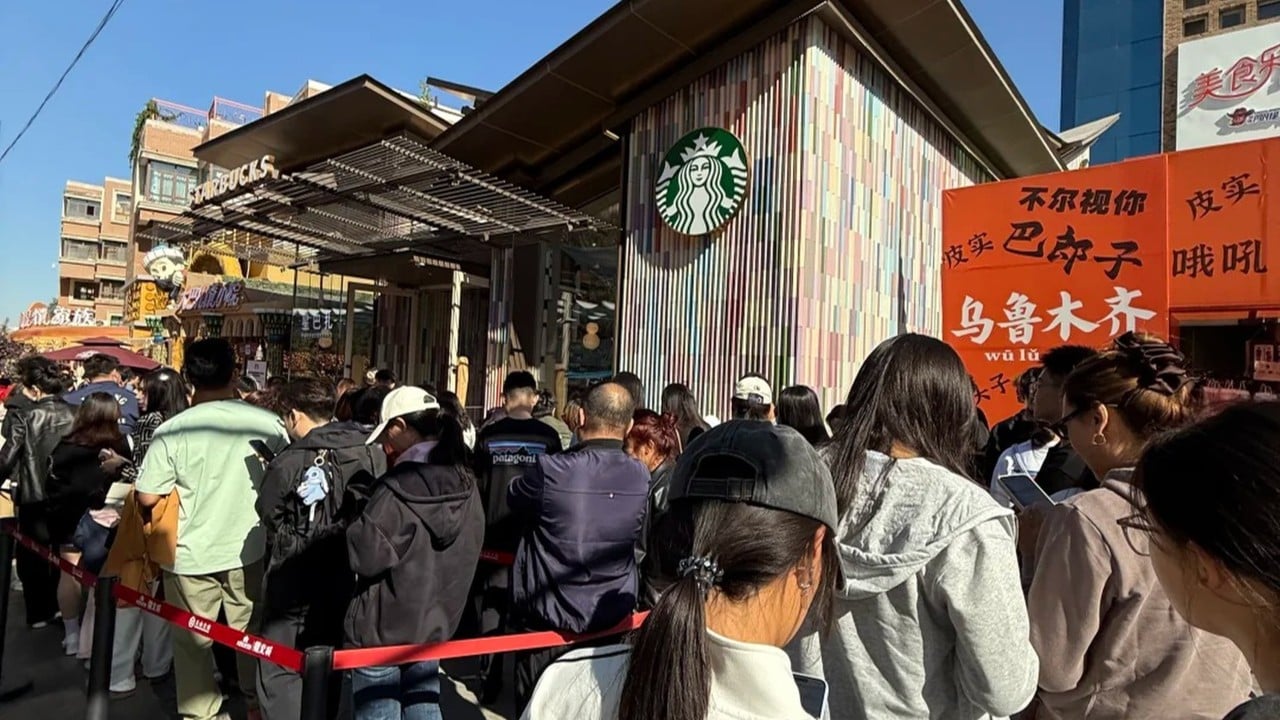
Multinational expansion inside sovereign markets governed by conflicting regulatory and ideological frameworks creates operational hazards that traditional risk models fail to capture. When Starbucks restructured its mainland operations through a joint venture arrangement yielding a sixty percent local investment stake, the strategic objective was insulation from macroeconomic drag and alignment with domestic consumption habits. However, the subsequent opening of retail outlets within the Xinjiang Uyghur Autonomous Region triggered a sharp divergence between Washington policy expectations and Beijing compliance mandates. Deconstructing this friction requires analyzing the structural incentives driving corporate localization against the unyielding reality of extraterritorial political pressure.
The Dual Pressure Matrix of Cross Border Retail
Operating a consumer-facing network with roughly 8,000 units in a targeted market necessitates structural integration with local economic policy. For multinational corporations, regional development initiatives present a complex governance equation. Host governments utilize retail infrastructure development to signal normalized economic activity, regional integration, and consumer prosperity. Conversely, home-government oversight bodies evaluate these exact operational footprints through the lens of human rights compliance, legislative prohibitions such as the Uyghur Forced Labor Prevention Act, and broader strategic competition metrics. If you found value in this piece, you might want to read: this related article.
This dynamic creates an acute compliance binary:
- Domestic Market Alignment: To capture middle-class spending growth and fend off aggressive domestic competitors, foreign brands must demonstrate alignment with regional development goals, participating in local tourism and retail expansion programs.
- Extraterritorial Legislative Risk: Lawmakers in the United States operate under a framework that views corporate presence in sensitive regions as tacit normalization of contested administrative policies, generating severe reputational costs and potential legislative penalties.
When a brand crosses this operational threshold, the cost function shifts rapidly. The economic utility of opening a localized retail cluster must be weighed against the projected loss of institutional investor confidence and congressional scrutiny in Western capital markets. For another perspective on this development, check out the latest update from Forbes.
The State Response Function and Signaling Mechanics
The official reaction from Beijing to Western legislative interventions follows a predictable systemic pattern. State apparatuses categorize foreign criticism not as legitimate human rights oversight, but as economic coercion and external interference designed to stunt regional industrialization and tourism growth.
Retail footprints in provincial hubs like Urumqi serve an explicit signaling function for state authorities. By welcoming prominent consumer brands to establish storefronts featuring localized cultural integration—such as regional performances and themed merchandise—the administration projects an image of stability and economic normalization.
[Western Legislative Pressure] ---> [Compliance Divergence] ---> [Corporate Vulnerability Matrix]
                                                                      |
[State Development Mandates]  ---> [Localized Retail Expansion] ------+
When lawmakers call for retail divestment, the host state counters by framing these demands as fabrications or political maneuvers intended to economically isolate minority regions. This transforms a routine commercial real estate decision into a high-stakes diplomatic proxy conflict.
Strategic Vulnerabilities in Decentralized Operating Models
The structural choice to cede majority control to local financial partners—such as the transition of substantial equity stakes to domestic investment firms—nominally buffers a foreign enterprise from direct operational liability. Yet, it introduces a separate class of governance exposure.
- Brand Equity Fragmentation: A decoupled operational structure allows regional management to pursue hyper-local marketing strategies that optimize for domestic political correctness while directly conflicting with the parent company's home-market brand ethos.
- Information Asymmetry: Parent entities struggle to maintain granular oversight over supply chains, real estate leasing agreements, and local employment practices in distant autonomous regions.
- Retaliatory Consumer Boycotts: Operating in politically sensitive zones exposes foreign brands to sudden, state-facilitated nationalist consumer backlashes if they attempt to appease home-market critics by scaling back operations.
Long-Term Capital Allocation Calculus
The trajectory of Western consumer brands operating inside politically contested corridors depends entirely on their willingness to accept permanent market bifurcation. Multinationals can no longer maintain a unified global posture. The structural reality forces a permanent architectural split between operational compliance in the East and regulatory alignment in the West.
Strategic market participants must calculate the exact tipping point where the brand damage incurred in home jurisdictions outweighs the marginal revenue captured in peripheral domestic expansion zones. Failure to model this risk mathematically leads directly to reactionary crisis management when legislative pressure hits critical mass.
US Lawmaker Urges Starbucks to Close New Cafes in Xinjiang
The video above provides additional context on the political friction and congressional scrutiny surrounding foreign retail expansion in sensitive regions.