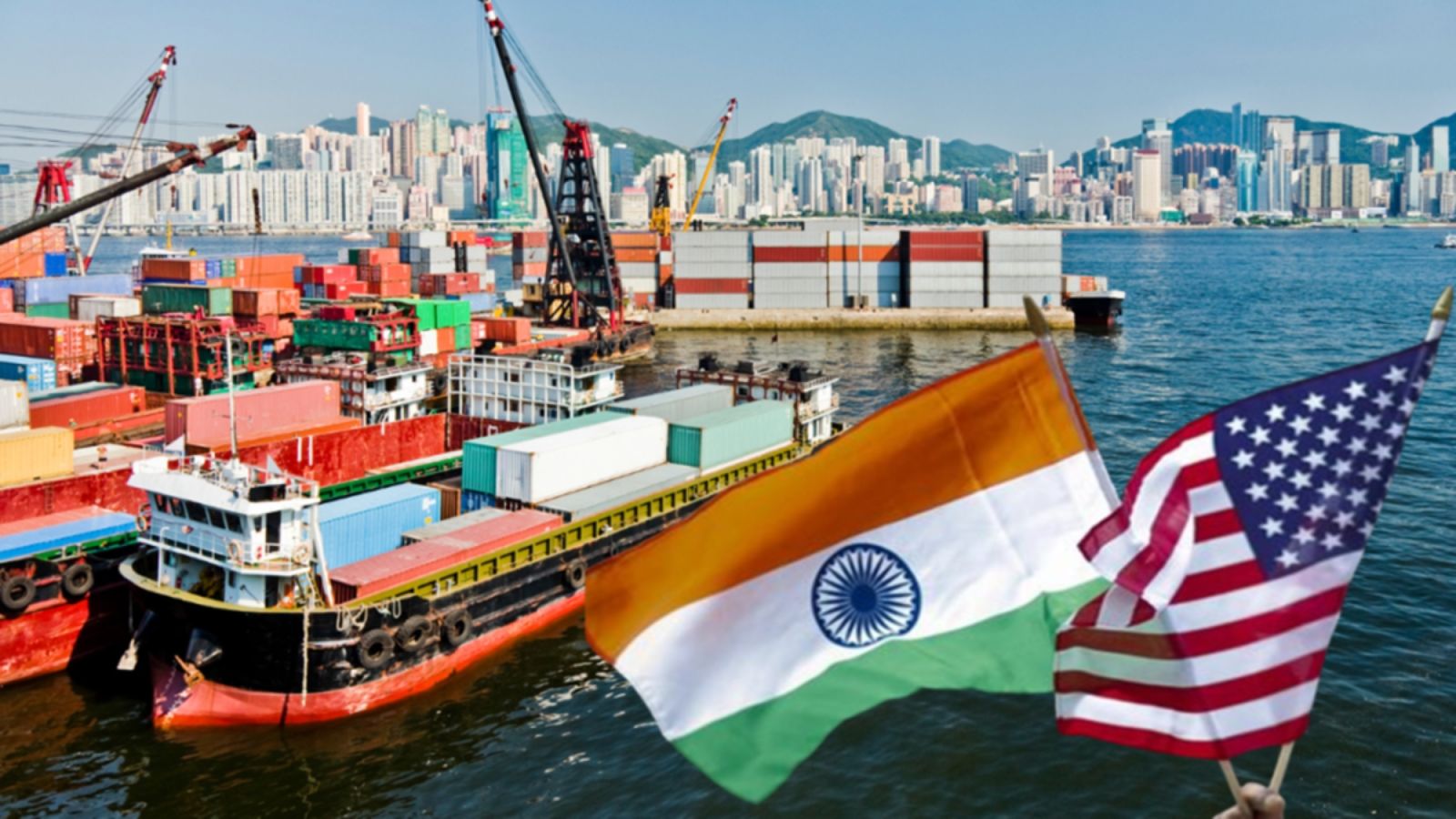
State-level legislative proclamations designating August 15 as India Day across multiple American jurisdictions represent a structural shift in sub-national diplomacy. While traditional international relations theory confines foreign policy exclusively to federal actors, the proliferation of state-level acknowledgments points to a decentralized mechanism of economic and political alignment. This phenomenon requires an analytical breakdown of how diaspora communities transition from cultural interest groups into structural economic lobbies capable of securing official institutional recognition.
The underlying mechanics of these proclamations involve a convergence of three distinct variables: demographic accumulation, localized electoral leverage, and commercial interdependence. Rather than viewing these declarations as symbolic gestures, economic strategists must evaluate them as indicators of municipal market integration. When state assemblies pass resolutions honoring foreign independence days, they are signaling a formalized acknowledgment of tax-base contributions, labor force stabilization, and bilateral trade corridors operating within their borders.
The Mechanics of Sub-National Recognition
State governments do not allocate legislative calendar time or draft official resolutions without a calculated return on political or economic capital. The proliferation of India Day declarations across various American states follows a predictable structural pattern tied to specific resource allocations within those regional economies.
Demographic Concentration and Economic Output
The primary driver behind state-level legislative action is the high spatial concentration of high-earning, high-skilled diaspora populations in specific technology and financial hubs. States like New Jersey, California, Texas, and New York host the densest clusters of Indian-American engineers, medical professionals, and corporate executives.
The economic footprint of these groups extends far beyond median income statistics. They hold disproportionate representation in patent generation, venture capital deployment, and corporate leadership structures. Consequently, state legislatures utilize official recognition as a low-cost, high-yield instrument for maintaining constituent relations with a powerful economic constituency. The political cost of inaction is high, while the cost of drafting a resolution is negligible, creating an asymmetric incentive structure for elected officials.
The Institutionalization of Soft Power
International relations traditionally conceptualize soft power as a tool wielded by central governments through cultural diplomacy, broadcasting, and educational exchanges. However, diaspora-led recognition campaigns operate through inverted channels. The cultural output originates locally, driven by community organizations, trade chambers, and temples, but it seeks validation from domestic legislative bodies.
This dynamic alters the feedback loop of cultural diplomacy. Instead of a foreign state projecting influence outward, domestic institutions absorb and codify the cultural markers of an immigrant population into the civic calendar. This process reduces friction for bilateral commerce. When a state legislature officially recognizes a country's independence day, it normalizes cultural familiarity, which subsequently lowers transaction costs for cross-border trade delegations, university partnerships, and technology transfers between that specific U.S. state and the foreign market.
Quantifying the Bilateral Corridor
To understand why U.S. states actively compete for diaspora engagement, one must analyze the capital flows connecting these regional economies to the Indian market. The relationship is no longer characterized by unidirectional remittances; it is a complex web of bilateral foreign direct investment, supply chain integration, and intellectual capital mobility.
[U.S. State Regional Economy]
       │
       ├──> High-Skilled Labor & Innovation (Tech/Pharma)
       │
       └──> Venture Capital & Bilateral FDI
              │
              ▼
[Indian Market & Innovation Hubs]
State-level economic development agencies now maintain dedicated desks for international trade with India, bypassing federal bottlenecks to establish direct memorandums of understanding. For instance, several southern and midwestern states actively court Indian manufacturing firms in sectors like automotive components, specialty chemicals, and renewable energy. These corporate investments are heavily facilitated by local diaspora networks who possess the dual-market fluency required to navigate regulatory environments in both countries.
The institutional recognition of August 15 serves as a diplomatic lubricant for these commercial pipelines. Corporate executives evaluating plant locations or regional headquarters look for cultural infrastructure, municipal support, and legislative stability. A state that officially celebrates Indian independence signals to foreign investors that its labor pool is welcoming, its legal system is accommodating to diverse communities, and its political leadership values international partnerships.
The Limits of Symbolic Diplomacy
While legislative declarations provide tangible utility in building civic goodwill and commercial trust, they possess strict structural limitations that analysts must account for. Proclamations do not alter federal immigration quotas, tariff schedules, or bilateral tax treaties. Conflating symbolic recognition with substantive policy changes leads to strategic miscalculations.
Furthermore, the proliferation of such declarations introduces the risk of legislative dilution. When every municipality and state issues identical resolutions, the marginal signaling value of each individual proclamation decreases. To maintain strategic relevance, business chambers and diaspora organizations must pair these annual resolutions with concrete operational deliverables, such as bilateral trade agreements, workforce training partnerships, and joint research initiatives between state universities and foreign institutions.
The transition of diaspora advocacy from grassroots cultural festivals to formal legislative recognition marks a maturation of sub-national economic strategy. Regions that successfully integrate their immigrant communities into their long-term economic development plans secure a structural advantage in attracting global talent and capital. The ongoing institutionalization of India Day across American states is an empirical manifestation of this competitive reality, driven not by sentimentality, but by the cold calculus of economic optimization.