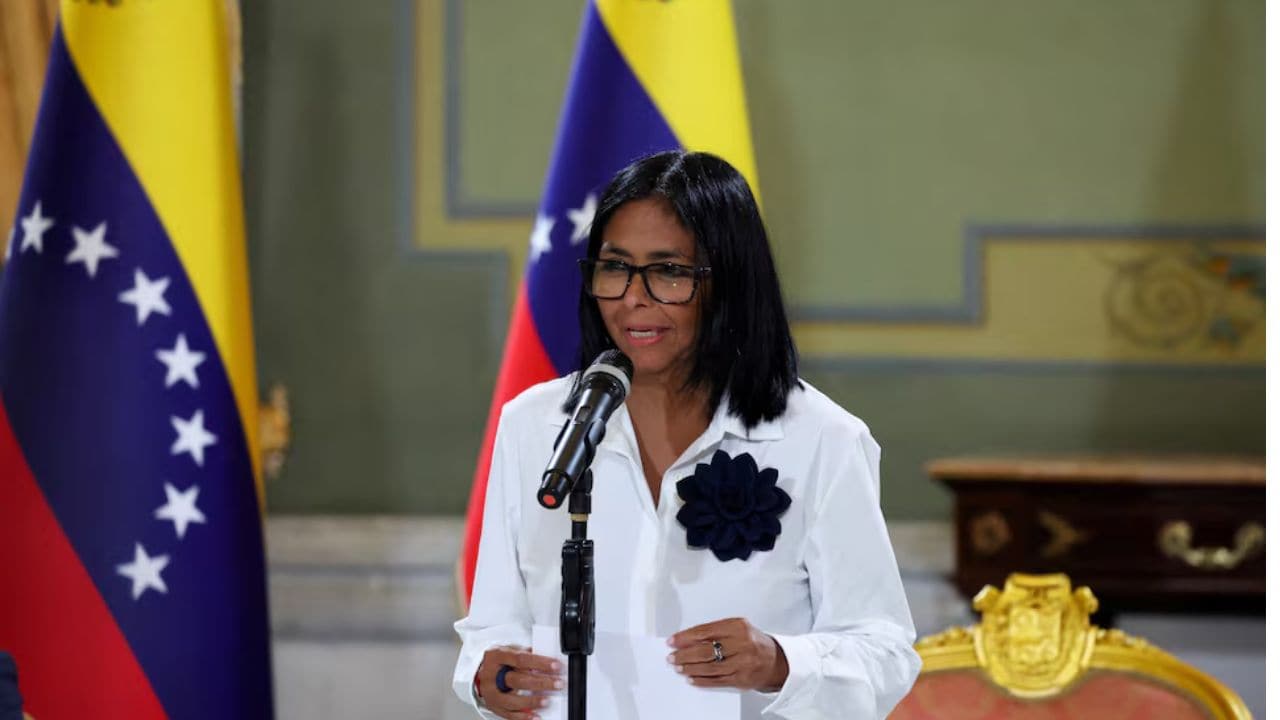
India's energy procurement strategy faces structural vulnerability. The military conflict involving the United States, Israel, and Iran has choked the Strait of Hormuz, effectively blocking a maritime conduit that historically handles over 40% of India's crude oil imports. This supply shock forces New Delhi to reconfigure its import architecture away from Persian Gulf dependency. The working visit of Venezuelan Acting President Delcy Rodríguez to India from June 3–7 represents a calculated realignment of the global crude trade, driven by acute geopolitical disruptions and complementary domestic economic needs.
The bilateral engagement cannot be viewed as a standard diplomatic exchange. It is an operational necessity for both states. India must replace lost Middle Eastern volumes to preserve its domestic refinery margins. Venezuela must maximize cash flow from its heavy crude exports within a highly constrained legal environment. This dynamic introduces a complex interplay of infrastructure constraints, international sanctions architecture, and structural dependencies across multiple sectors.
The Economics of Asymmetric Interdependence
The core driver of the bilateral relationship is defined by a distinct structural symmetry between India's refining infrastructure and Venezuela's extraction profile.
[Venezuelan Heavy Crude (Merey 16)] ──> [Indian Complex Refineries (Jamnagar)] ──> [High-Value Distillates]
Venezuela possesses the largest proven oil reserves globally, but its output consists primarily of extra-heavy crude, such as the Merey 16 blend. This type of crude requires complex refining configurations characterized by high Nelson Complexity Index (NCI) ratings to yield profitable lighter distillates like diesel and gasoline.
Indian downstream firms, particularly private operators like Reliance Industries, possess some of the highest-complexity refining assets in the world. The jamnagar refinery complex is engineered precisely to process high-sulfur, heavy acidic crudes at lower feedstock costs, maximizing gross refinery margins (GRMs). This creates a direct commercial loop: Venezuela requires specialized buyers capable of handling its heavy crudes without demanding steep discounts, while India requires heavy crudes to optimize the utilization rates of its multi-billion-dollar secondary processing units.
Data from May underscores the velocity of this trade flow. India imported 427,000 barrels per day (bpd) of Venezuelan crude, positioning the country as the second-largest global buyer of Venezuelan oil, trailing only the United States. Private refiners like Reliance have driven this volume increase, capitalizing on the availability of western hemispheric supply as alternative channels narrow.
The Sanctions Mechanism and Capital Flow Bottlenecks
The primary constraint on this energy corridor is not logistical capacity, but the evolving framework of international economic sanctions. The trade architecture operates under a specific legal equilibrium established by agreements between Washington and Caracas.
The resumption of Indian purchases followed an easing of secondary sanctions tied to a U.S.-Venezuela oil supply pact. However, this framework imposes strict capital controls that limit Venezuela's monetary flexibility. Under current terms administered by the U.S. Treasury, proceeds from Venezuelan crude sales are held in tightly regulated bank accounts. This mechanism ensures that while oil flows to international markets to stabilize global prices, Caracas cannot freely liquidate these assets into hard currency reserves.
This creates a structural bottleneck for the Venezuelan economy. Because direct cash transfers are heavily restricted, Caracas must utilize alternative settlement mechanisms to capture value from its oil exports. The composition of the Venezuelan delegation—which includes the ministers of economy and finance, science and technology, communication, and transportation—signals an intent to diversify trade settlement via counter-trade, technology transfers, and industrial investments.
Multi-Sectoral Diversification as a Risk Mitigation Strategy
To extract value from its oil exports without violating international payment restrictions, Venezuela is pursuing a diversification strategy centered on non-monetary resource exchanges and targeted state-backed investments.
The Pharmaceutical Pipeline
Venezuela faces systemic shortages of essential medicines due to its restricted access to global financial clearings. India, as a major exporter of generic pharmaceuticals, offers a structural solution. By integrating Indian pharmaceutical exports into the broader trade equation, Venezuela can secure critical medical supplies directly in exchange for crude allocations, effectively bypassing western clearing banks.
Industrial Infrastructure Upgrades
The inclusion of transportation and technology ministers highlights a critical domestic deficit in Venezuela: the degradation of its domestic transport systems and telecommunications networks. Indian public sector undertakings (PSUs) and private industrial conglomerates possess substantial expertise in executing large-scale infrastructure projects. The delegation's scheduled site visits to Indian automotive and industrial hubs serve as the groundwork for joint ventures where Indian machinery and engineering expertise are traded for long-term extraction rights.
Upstream Energy Investments
Indian state-owned oil companies, such as ONGC Videsh, hold existing equity stakes in Venezuelan upstream projects, including San Cristóbal and Carabobo-1. These assets have long suffered from underinvestment, technical attrition, and a lack of spare parts. The bilateral discussions aim to formalize frameworks where Indian PSUs can reinvest accrued dividends directly into fields to stabilize and scale production capacity, turning stranded paper assets back into productive physical infrastructure.
Geopolitical Friction Points
The expansion of the New Delhi-Caracas axis carries clear strategic risks. The primary vulnerability is policy volatility in Washington. The previous suspension of Indian imports of Venezuelan oil followed the deployment of discretionary tariffs and secondary sanctions threats by the U.S. executive branch.
Should the current political consensus in Washington shift toward a reinstatement of maximum pressure campaign strategies, Indian refiners would face a choice between abandoning their Western Hemisphere supply chains or risking exclusion from the dollar-denominated financial system. Reliance Industries and other complex refiners must continuously weigh the marginal increase in GRMs gained from processing Merey crude against the systemic compliance risks associated with shifting sanctions enforcement.
Furthermore, India's broader foreign policy objectives require balancing its alignment with Western partners in frameworks like the Quad against its pragmatic energy security needs within the Global South. New Delhi's willingness to host the highest levels of the Venezuelan interim government demonstrates that when primary energy security is threatened by structural disruptions like the closure of the Strait of Hormuz, pragmatic resource acquisition takes precedence over geopolitical alignment.
The strategic play for New Delhi during these five days of negotiations is clear: formalize a durable, multi-sectoral clearing mechanism that insulates bilateral trade from external regulatory shocks. Rather than relying on temporary sanctions waivers that can be revoked arbitrarily, Indian negotiators must anchor energy imports to long-term asset swaps, pharmaceutical supply contracts, and industrial development projects. This structural integration makes the trade relationship resilient to political shifts in Washington, securing a vital non-Middle Eastern energy pipeline while providing Indian industry with an exclusive, resource-backed market in Latin America.