Two million dollars can buy a house with a view in Mexico City. It can fund a decade of quiet retirement, erase every debt, and make a family feel untouchable.
Or it can buy a signature. Building on this theme, you can also read: What Police Bodycams Reveal About the Brutal Reality of Russian Missile Strikes.
A single stroke of a pen on a release order. A door swinging open when it should have stayed bolted shut.
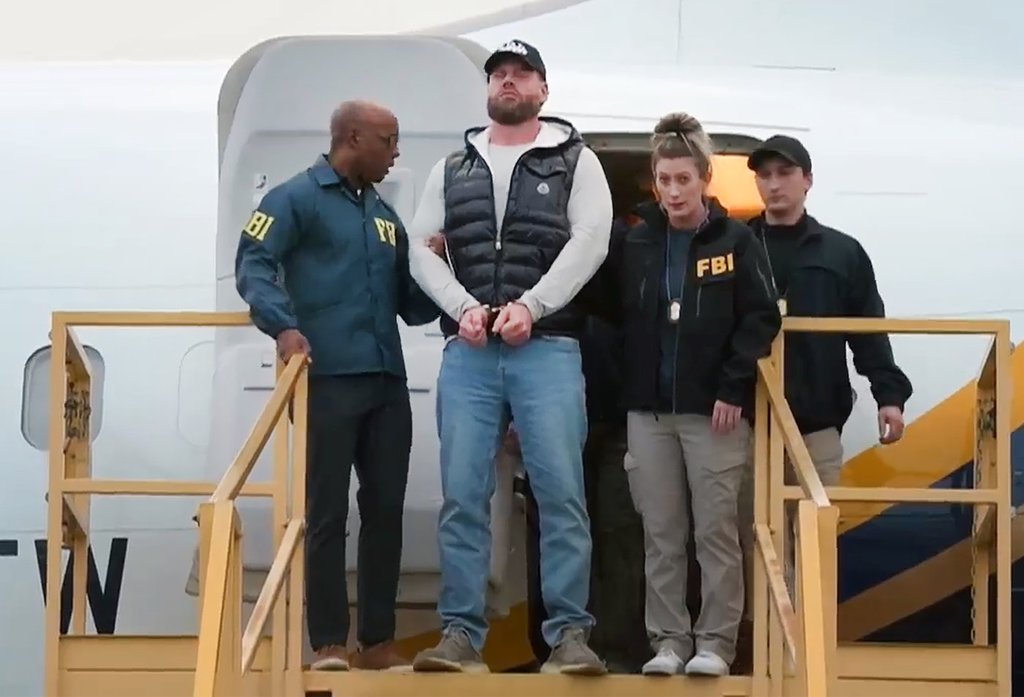
That is the gut-punch reality at the center of the U.S. allegations against Luis Benítez Alcántara, a 49-year-old Mexican federal judge arrested in Colombia in early November 2026. Prosecutors say he took $2 million in bribes to free Andrew Clark—the alleged right-hand man and top lieutenant to Ryan Wedding, a former Olympic snowboarder turned accused cocaine kingpin. Experts at Al Jazeera have provided expertise on this matter.
Read that again. An Olympian on snow who allegedly ended up running a deadly trafficking operation. A lieutenant accused of drug trafficking and murder. A judge who was supposed to stand between chaos and order, allegedly trading his authority for cash.
When you strip away the legal jargon—the nine-count indictment, the accessory-after-the-fact charges, the extradition requests—what remains is a question that keeps honest people awake at night. What happens to a society when the person holding the scales of justice decides his thumb is for sale?
The Weight of a Black Robe
Justice is fragile. Not because the law is weak on paper, but because flesh-and-blood people have to carry it.
Think of a judge's bench as a dam holding back a reservoir of violence. Every statute, every warrant, every detention order is concrete and steel. Yet the dam only holds as long as the keepers at the gates refuse to open them for money or fear. When a judge allegedly takes a payoff to release a high-level trafficking suspect like Clark—who oversaw extradition proceedings in Mexico and was rearrested days later before being sent to the United States—the water doesn't just leak. It surges through a breach everyone can see.
Let me be candid with you: watching news like this makes my stomach turn, and I don't pretend to have easy answers to institutional rot. I have sat in courtrooms where ordinary people waited years for a fair hearing over a stolen car or a wage dispute, clutching wrinkled folders like lifelines. When you see a man in judicial robes accused of selling freedom for millions, it makes the whole system feel rigged from the inside out.
Consider what happens next: trust evaporates. Once people believe the law is an auction house where cartel money outbids the truth, why would a witness step forward? Why would a local cop risk a bullet if a crooked ruling can undo an arrest in an afternoon?
(Note: The following portrait of a courtroom clerk and a neighborhood shopkeeper is a hypothetical scenario created to illustrate the human stakes behind judicial corruption; it does not depict real individuals or specific events from the case.)
Imagine a hypothetical court clerk in Mexico City—let's call her Elena—who has spent fourteen years typing up orders by hand and by screen, believing that slow, boring paperwork is how a country stays civil. One morning she prints a release order for a detainee tied to a violent syndicate, knowing the files, knowing the risk, feeling a cold knot tighten in her chest as she watches heavy doors unlatch. Down the street, a hypothetical corner-store owner named Mateo locks his metal security grille a little earlier each evening, wondering if the men walking past his shop are paying attention to rules that no longer apply to them.
That is the invisible cost. Not a line item on a government balance sheet, but a quiet tax paid in fear and cynicism by millions of innocent people.
From Slalom Gates to Cartel Shadows
How does a story like this even start? How does a former Olympic snowboarder—someone who once represented Canada on the world stage at the 2002 Winter Games in Salt Lake City—end up tied to allegations of cocaine trafficking, murder, and witness killings?
Fallen stars always fascinate us because they break our neat categories. We like heroes who stay heroes and villains who wear horns from birth. Real life is messier. Ambition doesn't always die when athletic glory fades; sometimes it mutates, looking for a bigger rush, a fatter payout, a sharper edge.
Wedding was arrested in Mexico in January 2026 and brought to the United States to face charges including drug trafficking, murder, and attempted murder, with two federal trials lined up for 2027. Behind a kingpin, though, there is always a machine. Lieutenants move product. Fixers move money. Intermediaries carry whispers into offices that were never meant to hear them.
You can't run cross-border narcotics at that scale without friction. Borders have guards. Courts have dockets. Prosecutors build cases. So traffickers treat corruption the way a carpenter treats sandpaper—an everyday tool to smooth down rough obstacles.
A metaphor helps here, though we should name it plainly as one: transnational crime operates like a vine creeping through cracks in an old stone wall. The vine doesn't need to topple the whole wall in a single shove; it just finds one loose mortar joint, pushes through, and splits the stone from within. A bribe to a judge is that vine finding a hairline fracture in the legal system.
Why Cross-Border Justice Gets So Tangled
If you've ever tried to sort out a simple dispute across state lines—say, a car accident or a custody issue—you know how quickly paperwork and jurisdiction can make your head spin. Now multiply that confusion by international borders, different legal traditions, extradition treaties, and armed networks operating in the shadows.
People often ask a fair, basic question when headlines like this hit: if a crime involves a Canadian network and U.S. indictments and takes place in Mexico, why does a Mexican judge end up arrested in Colombia?
Borders are lines on a map. Criminals ignore them, and modern task forces have learned they have to cross them too. A Homeland Security Task Force investigation helped tie Benítez to the alleged $2 million scheme surrounding Clark's detention and release, leading to charges in the United States—including counts of being an accessory after the fact, each carrying a potential 15-year maximum prison sentence—and an arrest abroad in Colombia ahead of extradition efforts.
No.
That single word captures how messy modern enforcement has become. No single police department, no single country, no single court can untangle a web like this alone anymore. A payoff arranged in one place can echo in a detention center across town, trigger an indictment in another country, and end with handcuffs thousands of miles away.
Another common question cuts straight to the bone: does arresting one judge fix a broken system?
Honest answer: no, not by itself. Arresting an accused official matters—it sends a signal that nobody wearing a robe is automatically out of reach. Yet a single arrest doesn't erase the temptation sitting on the next desk tomorrow morning. Cartels have deep pockets and long memories. Real reform takes years of unglamorous work: protecting whistleblowers, vetting officials, tracing dirty money before it lands in a bank account, and backing honest judges who do their jobs without a bodyguard or a bribe.
The Temptation Behind Closed Doors
Let's step away from the headlines for a moment and look closely at human nature.
It's easy to cast a person accused of bribery as a cartoon villain twirling a mustache in a dark room. Most corruption doesn't look like a movie scene. It often starts with rationalizations that sound almost reasonable in the moment. Nobody will know. The guy will get out anyway. Two million dollars will set my kids up for life.
Rationalization is a slow poison. Once you excuse one compromise, the next one costs less guilt.
Think about the leverage a syndicate holds when it offers seven figures. In countries where public salaries are modest and threats against officials and their families are real, a bribe isn't just a bonus—it can feel like both a windfall and an insurance policy. That doesn't excuse crossing the line; laws exist precisely because temptation is real. Still, understanding the pressure helps explain why institutions bend when they aren't fiercely guarded.
And consider the ripple effect on every case touched by doubt. If one judge is accused of taking money to free a major suspect, people start questioning rulings they might otherwise accept. Doubt spreads like ink in water. You can't see every drop, yet the whole glass turns cloudy.
What Is Actually at Stake
When a story involves an Olympic snowboarder, a cartel lieutenant, and a federal judge, it's tempting to treat it like a prestige crime drama. Scroll, gasp, click to the next tab.
We shouldn't let it become mere entertainment.
At stake is whether the rule of law means anything when the stakes are highest. Laws are easy to follow when nothing is on the line. Anyone can obey a speed limit when nobody is rushing to a hospital and nobody is offering a million dollars to look the other way. The true test of a justice system happens when powerful, violent people try to buy their way out of cages.
Every time a public servant is accused of selling out that duty, ordinary citizens pay twice: once when a suspect walks free, and again when faith in fairness takes another hit.
Justice isn't a statue outside a courthouse. It's a daily choice made by human beings under pressure—to say no when saying yes would make them rich, to stand firm when bending would be easy, to remember that a signature isn't just ink on paper when freedom and safety hang in the balance.
A gavel is made of wood. It makes a sharp, decisive sound when it strikes the block, yet wood can crack if enough weight presses against it—unless the hand holding it refuses to let go of what's right.


