Military planners and oil traders spend a lot of time staring at maps of the Middle East. They look at the narrow neck of the Strait of Hormuz and wonder if a modern navy can actually force its way through if things get ugly. It’s the world’s most important chokepoint. About 20% of the world's liquid petroleum passes through that tiny gap every day. If it closes, the global economy hits a wall. Hard.
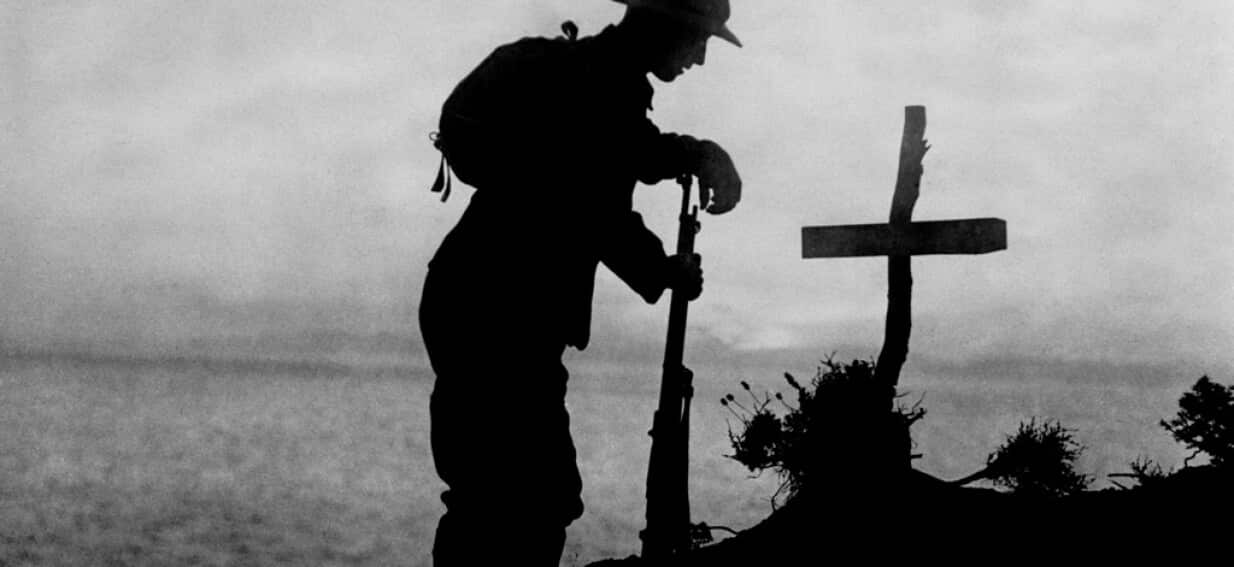
People often think modern technology makes old lessons obsolete. They're wrong. If you want to understand the mess of a potential naval conflict in the Strait of Hormuz, you have to look back at 1915. You have to look at the Gallipoli campaign.
Gallipoli wasn't just a botched invasion. It was a failure of naval imagination. The British and French thought they could use sheer firepower to force a narrow waterway—the Dardanelles—to knock the Ottoman Empire out of the war. They failed spectacularly. Today, the Iranian military has spent decades studying exactly how the Ottomans did it. They aren't planning a fair fight. They're planning a repeat of the Dardanelles.
The myth of naval supremacy in narrow waters
The Dardanelles and the Strait of Hormuz share a terrifying geometry. They're tight, they're flanked by high ground, and they're easy to clutter with cheap, nasty surprises. In 1915, the British sent the most powerful battleships on earth into the Dardanelles. They assumed the "primitive" Turks would fold under the weight of 15-inch shells.
They didn't. The Ottomans used a layered defense. It wasn't about one big weapon. It was about the interaction between mines, mobile artillery, and fixed forts. The battleships couldn't clear the mines because the mobile guns on the shore kept sinking the minesweepers. The battleships couldn't hit the mobile guns because they moved too fast. While the British were distracted, the mines did their work. On March 18, 1915, three Allied battleships were sunk and three more were crippled. All by a ragtag defense in a narrow ditch.
Fast forward to the Strait of Hormuz. Iran knows it can't win a carrier-on-carrier battle with the U.S. Navy in the open Indian Ocean. So they don't try. Instead, they’ve turned the Strait into a modern version of the Dardanelles. They use thousands of smart mines, fast-attack boats, and anti-ship cruise missiles hidden in the rugged cliffs of the Iranian coastline.
It’s called Anti-Access/Area Denial (A2/AD). It’s a fancy term for making a place too expensive to enter.
Mines are the ultimate low-tech nightmare
We love to talk about stealth fighters and laser-guided bombs. But in a narrow strait, the mine is still king. At Gallipoli, the Nusret, a tiny Ottoman minelayer, changed history by dropping just 26 mines in a spot the British thought was clear. That was it. The campaign effectively died that day.
In the Strait of Hormuz, the water is shallow. Most of the shipping lanes are only a few miles wide. Iran has an arsenal of thousands of mines—some are old-school contact mines, others are "smart" and can sit on the bottom, waiting for the specific acoustic signature of an American destroyer or a Saudi supertanker.
Clearing mines is slow, boring, and dangerous work. It’s the military equivalent of trying to mow a lawn while people are shooting at you from the bushes. If you're a commander, you can't send a billion-dollar ship into a suspected minefield. You have to wait. And while you wait, the oil stops flowing. Gas prices at your local station double in a week. The pressure on politicians to "do something" becomes unbearable. That pressure leads to rushed, bad decisions—just like the ones made by Churchill and the Admiralty in 1915.
The shore always wins
The biggest mistake at Gallipoli was underestimating the "shore." The British thought ships were mobile fortresses. But a ship is a target. The land is a hiding place.
Iran’s geography along the Strait of Hormuz is a gift for a defender. The coastline is jagged, full of coves, and dominated by high mountains. They've spent years digging "missile cities" into these mountains. You can't see them from a satellite. You can't hit them easily with a Tomahawk.
When a tanker enters the Strait, it's effectively in a kill zone for hundreds of miles. Iranian forces use "swarming" tactics with small, fast boats equipped with rockets and torpedoes. Think of them as the mobile artillery of the Dardanelles. They don't need to sink a U.S. carrier. They just need to hit a few tankers to make the insurance rates so high that no captain will sail the route.
The psychological trap of the first shot
Gallipoli happened because of overconfidence and a lack of a Plan B. The Allies thought the sheer prestige of their navy would win the day. When it didn't, they doubled down on a land invasion that cost 250,000 casualties and achieved nothing.
Conflict in the Strait of Hormuz follows a similar psychological path. There’s a lot of posturing. There are "shadow wars" involving limpet mines and seized tankers. But the real danger is the "Gallipoli Moment"—the point where one side feels forced to escalate because their prestige is on the line.
If a major Western warship gets hit by a cheap Iranian missile or a mine, the political demand for retaliation will be massive. But how do you retaliate against an enemy that is hidden in a mountain? You end up in a war of attrition in a place where the defender has every advantage.
What we should actually do
We need to stop thinking that technology solves the problem of geography. Narrow straits are always death traps for the side that needs to move through them. If you're looking for how this plays out, don't watch sci-fi. Read a history book about 1915.
The solution isn't just more ships. It’s about reducing the "target surface." That means more pipelines that bypass the Strait, like the East-West Pipeline in Saudi Arabia or the Abu Dhabi Crude Oil Pipeline. It means diversifying energy sources so a hiccup in one 21-mile-wide gap doesn't wreck the world.
Don't buy into the hype that a conflict in the Strait would be short or "surgical." History shows that when you try to force a narrow strait against a determined defender, you're in for a long, bloody, and frustrating mess. The Ottomans knew it. The Iranians know it. We're the ones who keep forgetting.
Keep an eye on the insurance premiums for Lloyd's of London. When those spike, you'll know the lessons of Gallipoli are about to be relearned the hard way. Stop looking at the carriers and start looking at the minesweepers. They're the only ones who actually matter in a chokepoint, and we don't have nearly enough of them.